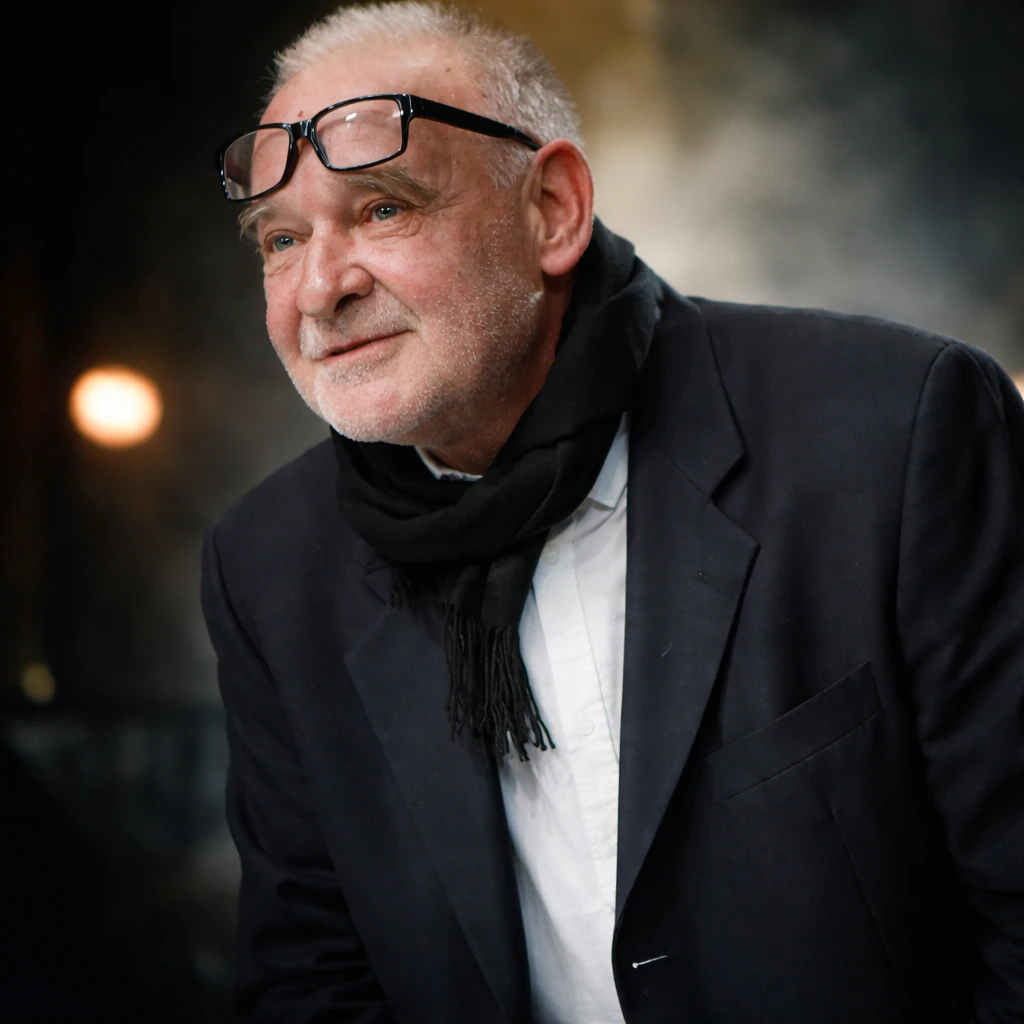

Béla Tarr, a Hungarian filmmaker celebrated for his deeply atmospheric and often somber cinema, has died at the age of 70. Renowned primarily for seminal works such as Sátántangó and The Turin Horse, Tarr's contributions to film spanned several decades and earned him a multitude of awards and international recognition.
His directorial career began in 1979 with the release of his first feature, Family Nest, which he completed at the young age of 23. That debut was recognized with the Grand Prize at the Mannheim-Heidelberg International Film Festival the same year, signaling the arrival of a distinct and powerful cinematic voice. Over the years, Tarr wrote and directed a total of nine feature films, culminating with The Turin Horse in 2011. This final film garnered the Silver Bear Jury Grand Prize at the Berlin International Film Festival, further solidifying his reputation on the global stage.
Tarr's storytelling was frequently intertwined with the literary works of Hungarian author László Krasznahorkai, who himself received the Nobel Prize in Literature. Notably, the two collaborated on adaptations such as Sátántangó and Werckmeister Harmonies. Their partnership enriched the films' narrative depth and complexity, earning honors at festivals throughout Europe and Asia and leading to Tarr's honorary professorships at universities in China.
The Hungarian Filmmakers’ Association confirmed Tarr's passing in a statement released Tuesday, expressing deep sorrow and acknowledging his long battle with serious illness. Born in 1955 in Pécs, a city in southern Hungary, Tarr spent most of his life based in the capital, Budapest. His pioneering film work was characterized by distinctive aesthetics, including the use of extensive black-and-white sequences, protracted single takes lasting up to ten minutes, and deliberate pacing. These elements combined to convey themes of despair and societal decay.
Sátántangó, his longest film at approximately 439 minutes (over seven hours), epitomizes this approach. Crafted with painstaking detail, Tarr’s films often depicted bleak and dystopian worlds, reflecting Hungary's socialist period and the turbulent years following the fall of Soviet influence in Eastern Europe. His film Damnation, co-written with Krasznahorkai and released in 1988, was a turning point that brought him significant international acclaim.
Throughout his career, Tarr developed a lasting collaboration with editor Ágnes Hranitzky, who contributed to the editing of all his films starting with The Outsider in 1981. Hranitzky also shared directing credit on Tarr's final three features: Werckmeister Harmonies, The Man from London, and The Turin Horse.
Tarr was not just an artist but also a public intellectual who voiced criticism against nationalist and populist figures such as Hungarian Prime Minister Viktor Orbán, U.S. President Donald Trump, and France’s Marine Le Pen. Additionally, he opposed government cultural policies in Hungary, supporting student protests at the University of Theatre and Film Arts in Budapest in 2020.
After completing his last feature film, Tarr relocated to Sarajevo, Bosnia, where he established film.factory, an academy dedicated to film education. There, he produced work by emerging filmmakers and split his time between Sarajevo and Budapest, fostering new talent and extending his influence on cinema beyond his own filmmaking.