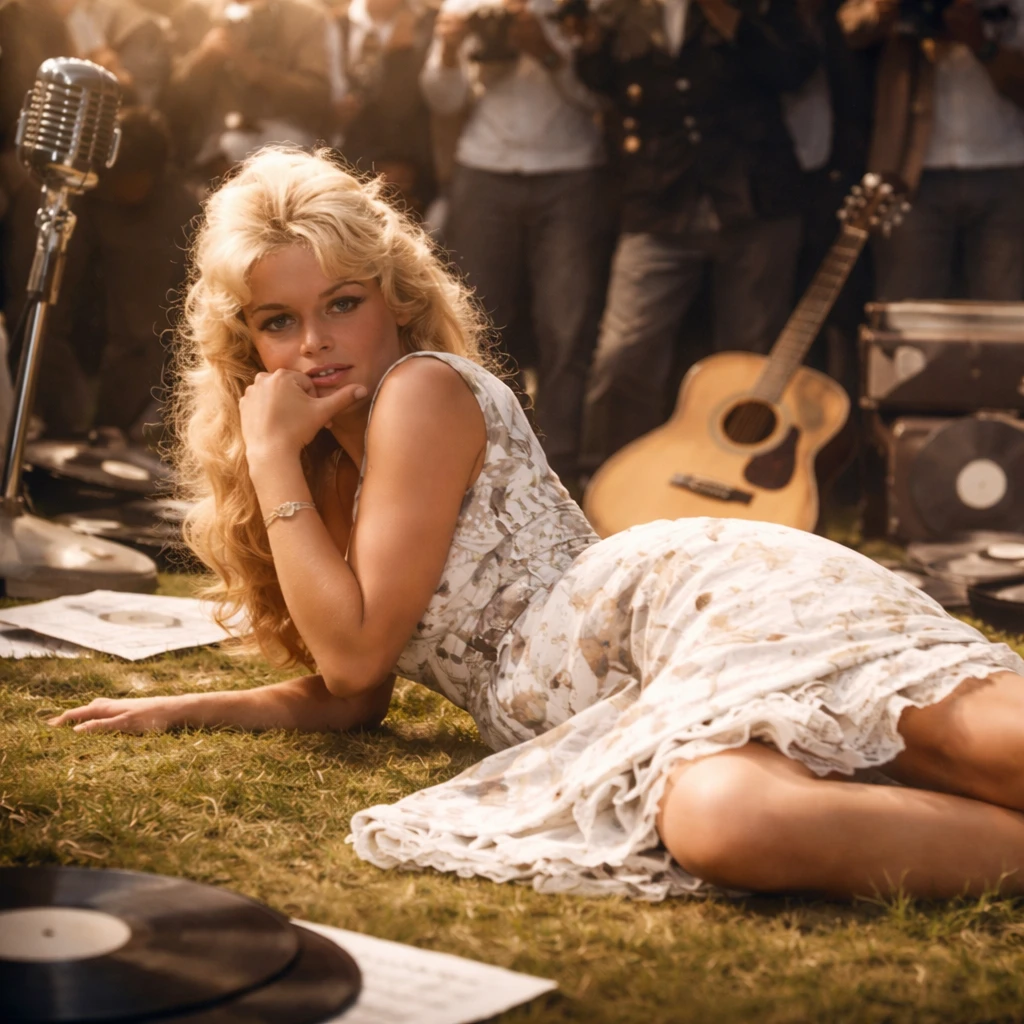

Brigitte Bardot will long be remembered not only for her status as a 1960s French sex symbol, actress, singer, and animal welfare advocate but also for her remarkable influence on musicians across decades. With her distinct name and iconic presence, Bardot became emblematic of classic beauty and desire, often invoked in songs more as a symbol than a direct representation of the woman herself. Even amid numerous controversies, including multiple convictions in French courts for inciting racial hatred and provocative statements about the #MeToo movement, Bardot's cultural footprint endures in music. Following her death this past Sunday in southern France, an array of songs spanning genres and languages stand as testaments to her lasting impact.
Bob Dylan's “I Shall Be Free” (1963)
Dylan's track from the renowned album The Freewheelin’ Bob Dylan exemplifies his witty and expansive folk style. The closing song interprets Bardot as a metaphor in a humorous exchange where Dylan imagines President Kennedy asking what is needed to foster national growth, to which Dylan replies with a list including Bardot alongside other famous actresses like Anita Ekberg and Sophia Loren.
Caetano Veloso's “Alegria, Alegria” (1967)
As a pioneering Brazilian artist launching the tropicalismo movement, Veloso's protest anthem integrates Bardot into a litany of vivid images. His lyrics place Bardot among presidents, expressions of love, and symbols such as flags and bombs, illustrating her as a cultural icon within a complex social and political tapestry.
Serge Gainsbourg and Brigitte Bardot's “Bonnie and Clyde” (1968)
This notable French pop collaboration channels the spirit of the infamous outlaw couple Bonnie Parker and Clyde Barrow. Gainsbourg crafted the duet specifically for Bardot, intertwining her image with themes of rebellion and romance captured poetically in Parker’s original writings.
Elton John's “I Think I’m Going to Kill Myself” (1972)
Contrasting upbeat piano arrangements with dark lyrics penned by Bernie Taupin, this song references Bardot as a figure whose presence the singer wishes for nightly, blending melancholy with the allure associated with her persona.
The Pretenders’ “Message of Love” (1981)
Frontwoman Chrissie Hynde praises Bardot’s evocative power in this track, equating the arrival of love to the commanding aura Bardot embodies — a celebration of her enduring association with passion and intensity.
Billy Joel’s “We Didn’t Start the Fire” (1989)
In this rapid-fire song citing numerous historical and cultural figures, Bardot earns a mention amid prominent names such as Princess Grace and Elvis Presley, underscoring her widespread recognition during a period defined by upheaval and change.
Liz Phair’s “Stratford-On-Guy” (1993)
Phair’s indie composition critiques male-dominated music scenes while using Bardot as a metaphor for a captivating flight attendant, capturing the feeling of cinematic grandeur and observation from a detached vantage.
Red Hot Chili Peppers’ “Warlocks” (2006)
Within the vibrant imagery of Los Angeles nightlife, Anthony Kiedis evokes Bardot’s likeness to accentuate the setting, further cementing her symbolic place in popular culture circles transcending generations.
Kali Uchis featuring Jorja Smith’s “Tyrant” (2017)
In a sensual duet describing a complex romantic encounter, Bardot’s name serves as shorthand for intimate encounters, highlighting her image as an emblem of French-style passion and allure.
Olivia Rodrigo’s “Lacy” (2023)
Known for her dynamic pop and power ballads, Rodrigo includes Bardot in this introspective track about jealousy and admiration, describing the subject as a “Dazzling starlet, Bardot reincarnate,” emphasizing Bardot’s timeless appeal.
Chappell Roan’s “Red Wine Supernova” (2023)
Opening with a mention of Bardot, Roan characterizes the figure as a captivating, influential presence tied to an addictive crush, layering modern pop sounds with references to iconic femininity.
These songs showcase a broad and persistent recognition of Bardot's image as a cultural and artistic influence. From folk and rock to indie and pop across multiple languages, her name resonates beyond her lifetime and multifaceted career.