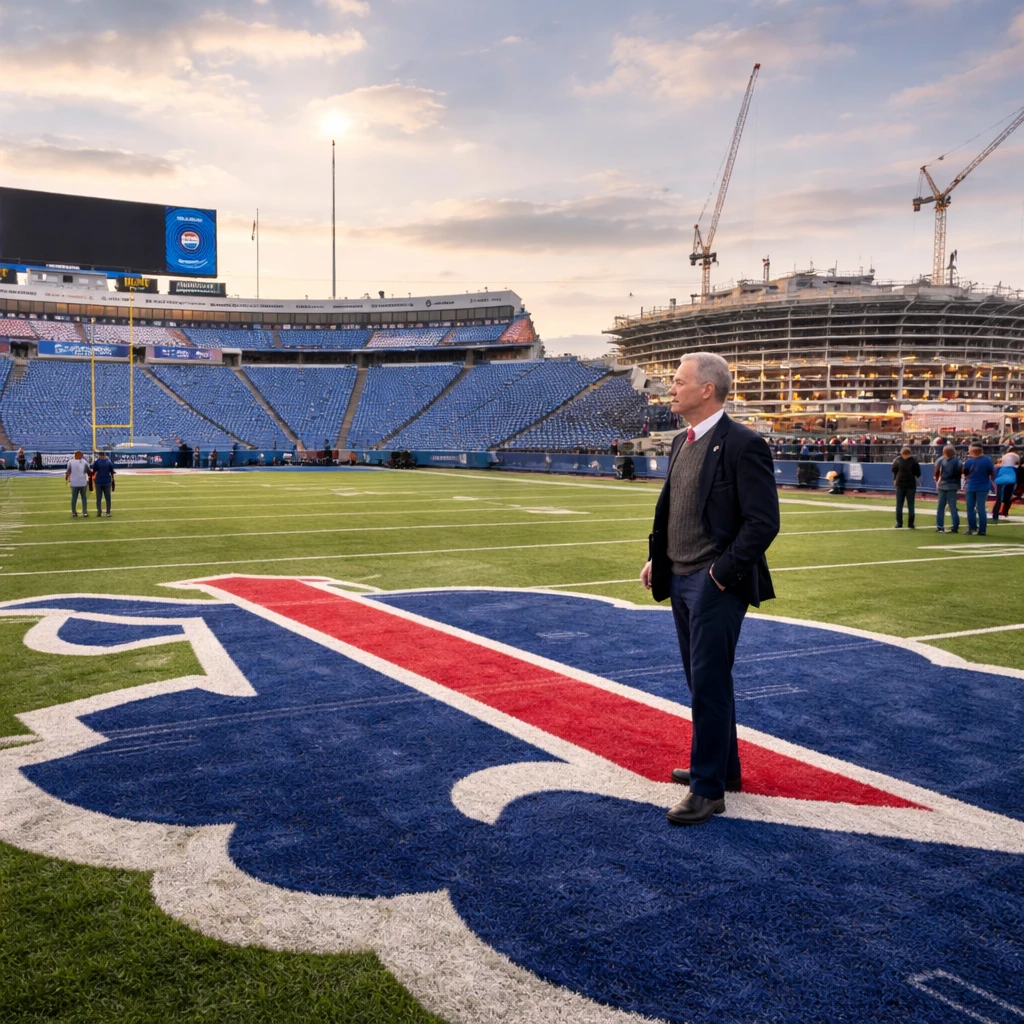

Standing near a window overlooking the Buffalo Bills' longstanding home, Highmark Stadium, Chris Clark visualizes the untouched landscape that existed before the stadium’s 1973 inauguration. At 73 years old and serving as the Bills’ vice president of security, Clark’s ties to the site stretch back far beyond the football franchise's rise to prominence.
During the 1960s, the area that would become the stadium was an abandoned farm and a former Dupont explosives testing ground. Clark recalls accompanying friends there under the guidance of Monsignor Leo McCarthy to release beagles for rabbit hunts, a strategy intended to keep the youth out of trouble. Clark reflects humorously on the lengths taken to keep him from youthful misadventures.
Clark's connection to the stadium spans decades, from roles such as directing traffic during 1970s game days to his ongoing responsibilities since 2006. Approaching the upcoming Sunday matchup against the New York Jets, which may mark the last regular-season game held at the venue, Clark approaches the occasion with a blend of nostalgia and solemnity.
He acknowledges the allure of the Bills' forthcoming new stadium—a $2.1 billion project situated just across the street—but likens departing the facility to leaving one's marital home, indicative of deep personal attachment to the current stadium. This venue has witnessed pivotal moments in the Bills’ history and broader entertainment events, hosting acts like the Rolling Stones, and inaugurating the NHL Winter Classic in 2008.
Unique anecdotes highlight the stadium’s character, including a 2000 concert incident when country stars Tim McGraw and Kenny Chesney were arrested after an escapade involving a sheriff’s department horse. Clark also recounts colleagues who narrowly survived vehicle accidents while managing traffic, and a particularly memorable 1992 wild-card playoff game when the Bills overcame a 32-point deficit against the Houston Oilers, watched from the stadium’s administration building roof.
Throughout his tenure, Clark has managed security for numerous figures, including coaches, general managers, former President Bill Clinton, and pop icon Taylor Swift. The sentiment surrounding the stadium, long nicknamed “The Ralph” in honor of founder Ralph Wilson, resonates with players and staff alike.
Hall of Fame quarterback Jim Kelly expresses affection for the nickname, emphasizing its appropriateness despite his occasional use of the stadium’s corporate name. For Kelly, the site evokes his earliest memories dating back to his 1986 debut and the supportive presence of his family in the stands.
Correspondingly, Hall of Fame running back Thurman Thomas characterizes the stadium’s imminent closure as bittersweet, hoping for a Super Bowl victory to provide an ideal farewell. Such an achievement would mark a high point following the franchise's historic runs of near-success during the 1990s.
The current team has secured its seventh consecutive playoff berth, although it faces an opening match on the road, holding the AFC’s No. 7 seed with a ceiling of No. 5.
Mary Wilson, wife of the late Ralph Wilson, shares personal reflections about the stadium, recalling her introduction to football linked to her relationship with Ralph starting years before their 1999 marriage. She praises the stadium’s design and fan experience, highlighting its three-tiered structure that offers intimacy, particularly in the lower bowl where spectators sit mere yards from the playing field.
While appreciating the facility's legacy, Wilson looks forward to games at the new stadium, signaling a shift toward embracing upcoming opportunities.
Bills head coach Sean McDermott expresses a mixture of emotion and resolve, acknowledging the stadium’s significance and the importance of concluding its tenure on a positive note. Following a recent loss to Philadelphia, McDermott lingered to honor the memories forged over nearly a decade in Buffalo.
The significance of the final home game is accentuated by its symmetry: the stadium's inaugural regular-season game was a 9-7 victory over the New York Jets, highlighted by kicker John Leypoldt's three field goals. Since then, the venue has witnessed thrilling highs and challenging lows, including fans storming the field in 1980 to end a long losing streak against Miami, a commanding 51-3 AFC championship win over the Raiders in 1990, and an overtime victory amid near-whiteout conditions against Indianapolis in 2017.
Reflecting on the transformation from perilous beginnings as an explosives site to an arena of iconic sports and cultural moments, Clark notes the enduring role the stadium has played in uniting the Western New York community. He points to the allegiance of Buffalo natives who continue to support the Bills fervently even after relocating elsewhere, passing fandom through generations.
Clark likens the stadium’s social significance to a