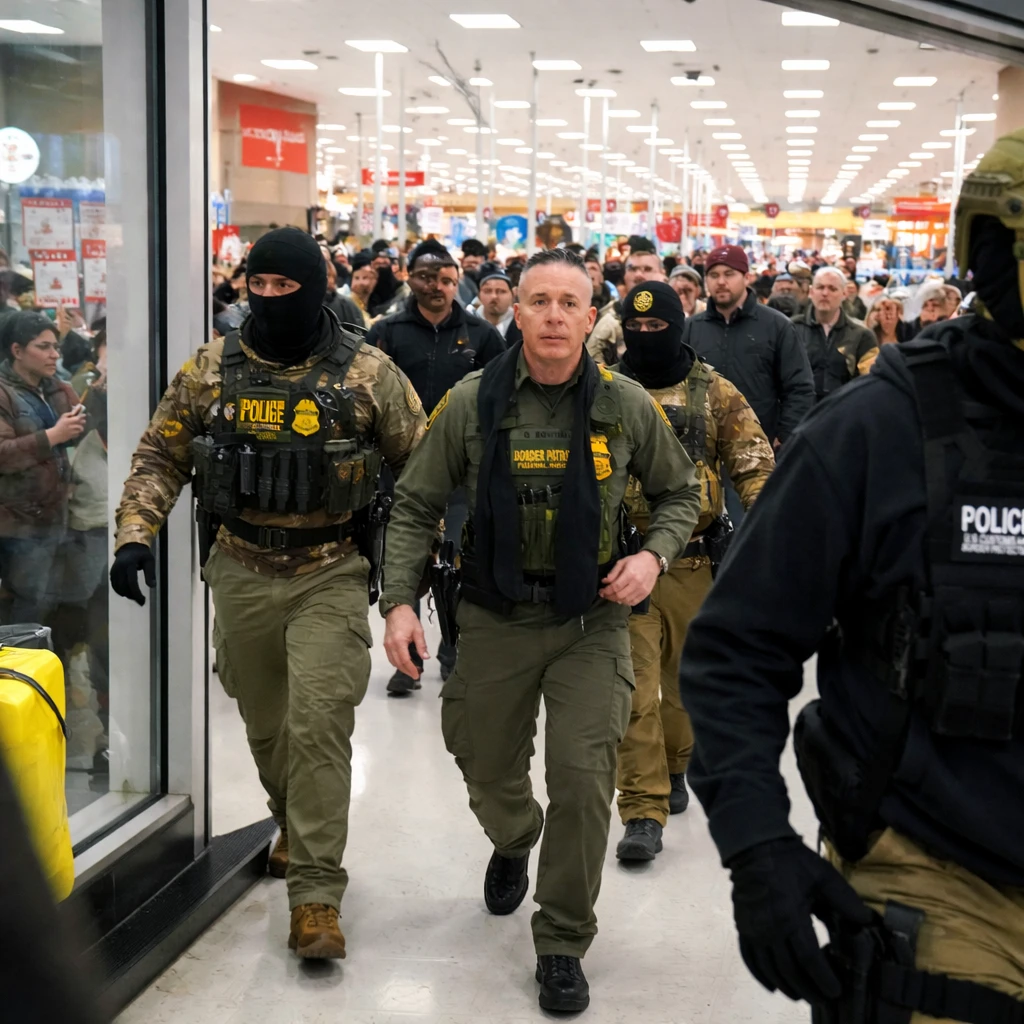

In Minneapolis, a city now spotlighted due to the Department of Homeland Security's announcement of its most extensive immigration enforcement operation ever, various business sectors including hotels, restaurants, and retail outlets have temporarily halted operations or ceased accepting reservations as protests swell. The atmosphere has intensified, especially following the fatal shooting of Alex Pretti by U.S. Border Patrol agents in the city, an event that prompted a coalition of more than 60 CEOs from major Minnesota-based corporations such as Target, Best Buy, and UnitedHealth to draft an open letter. The letter urges a swift reduction in tensions and calls upon federal, state, and local officials to collaborate on substantive solutions, though it notably refrains from explicitly referencing immigration enforcement or detailing recent business-site arrests.
Recent months have seen high-profile incidents underscoring the scope of federal actions: videos widely circulated that depict ICE apprehending two Target employees in Minnesota; roundups of day laborers in Home Depot parking lots and delivery personnel nationwide; and a 475-person detention during a raid at a Hyundai manufacturing plant in Georgia last year. These instances emphasize the growing exposure of workplaces to immigration enforcement activities.
Parameters of ICE Authority in Business Settings
Immigration and Customs Enforcement (ICE) agents have clear rights to access public business areas without judicial warrants. Such spaces include customer-accessible zones like dining rooms, parking lots, office lobbies, and retail aisles. According to Jessie Hahn, senior counsel at the National Immigration Law Center, law enforcement presence in these areas is permissible similar to any public visitor. In these settings, agents may question individuals, collect information, and make arrests.
However, entry into privately restricted areas within businesses—like back offices or kitchens—ordinarily requires a judicially issued warrant signed by a judge from an authorized court, specifying time and scope restrictions. These warrants differ distinctly from administrative warrants, which are signed internally by immigration officers and traditionally insufficient for warrant-based entry into private premises.
An internal ICE memorandum obtained separately states that administrative warrants now suffice to justify entry into homes to detain individuals with a final removal order, a policy shift that legal experts argue overturns established precedents and constitutional protections. In the workplace, ICE may bypass warrant requirements if employers consent to the entry or in urgent scenarios such as pursuing a suspect deemed to be in "hot pursuit."
Enforcement Actions Targeting Employers
Beyond raids, ICE enforcement also encompasses employment-related inspections, particularly through I-9 audits that verify employees’ eligibility to work in the United States. There has been a noticeable rise in ICE officials physically appearing at workplaces to commence these audits versus the prior norm of written notifications. Legal practitioners note that such inspections now sometimes mirror the intensity of raid operations, with ICE agents donning tactical gear and, at times, not immediately identifying themselves.
Employers must comply swiftly, responding to notices commonly within three days. However, aggressive agent conduct can pressure businesses into accelerated responses, heightening operational stress and legal risks.
Business Rights and Responses
Businesses retain the right to contest warrantless ICE presence by requesting agents to leave or refusing access based on internal policies, especially citing safety or operational disruptions. Yet actual enforcement experiences vary, with some locations, such as Minneapolis, reporting ICE persistence despite such requests. Consequently, businesses focus predominantly on managing potential legal infringements and setting protocols for ICE encounters, including designating private spaces clearly and conducting internal I-9 self-audits.
Industry representatives report increasing nationwide demand for preparedness measures to address the augmenting ICE activity. These include refining emergency plans and internal compliance reviews.
Public and Corporate Reactions
The visibility and firm enforcement actions have catalyzed public reactions, which often target companies perceived as insufficiently vocal or proactive. Smaller enterprises have tended to voice concerns about the effects on their workforce and clientele. In contrast, many larger corporations have maintained relative silence on enforcement activities occurring at their establishments.
For example, Target, headquartered in Minneapolis and a focal point in recent enforcement videos, has refrained from direct commentary on the federal detentions of its employees. Instead, its new chief executive, Michael Fiddelke, addressed staff regarding the prevailing violence without mentioning immigration enforcement specifically. He affirmed the company’s commitment to controlling manageable factors and signed support for state business groups advocating for de-escalation.
Activist groups have publicly urged firms—including Home Depot, whose premises have been frequent enforcement sites, and Hilton hotels implicated in accommodating federal agents—to adopt stronger public opposition to immigration raids. Responses from Home Depot and Hilton to these calls have not been forthcoming.
Labor organizations have strongly condemned ICE's intensified enforcement. The Culinary Union in Las Vegas highlighted concerns about unlawful ICE practices harming workers, tourism, and families, while the United Auto Workers expressed solidarity with affected communities resisting federal overreach.
Experts at the National Immigration Law Center underscore that while some companies may prefer private industry communications to avoid backlash, transparent public discourse on immigration enforcement’s impacts is crucial. They warn that unchecked raids may contribute to broader economic challenges like labor shortages and diminished retail activity, potentially transforming the economic landscape substantially.
Contributors to this analysis include transportation and labor law experts and on-the-ground corporate counsel in regions with heightened immigration enforcement.