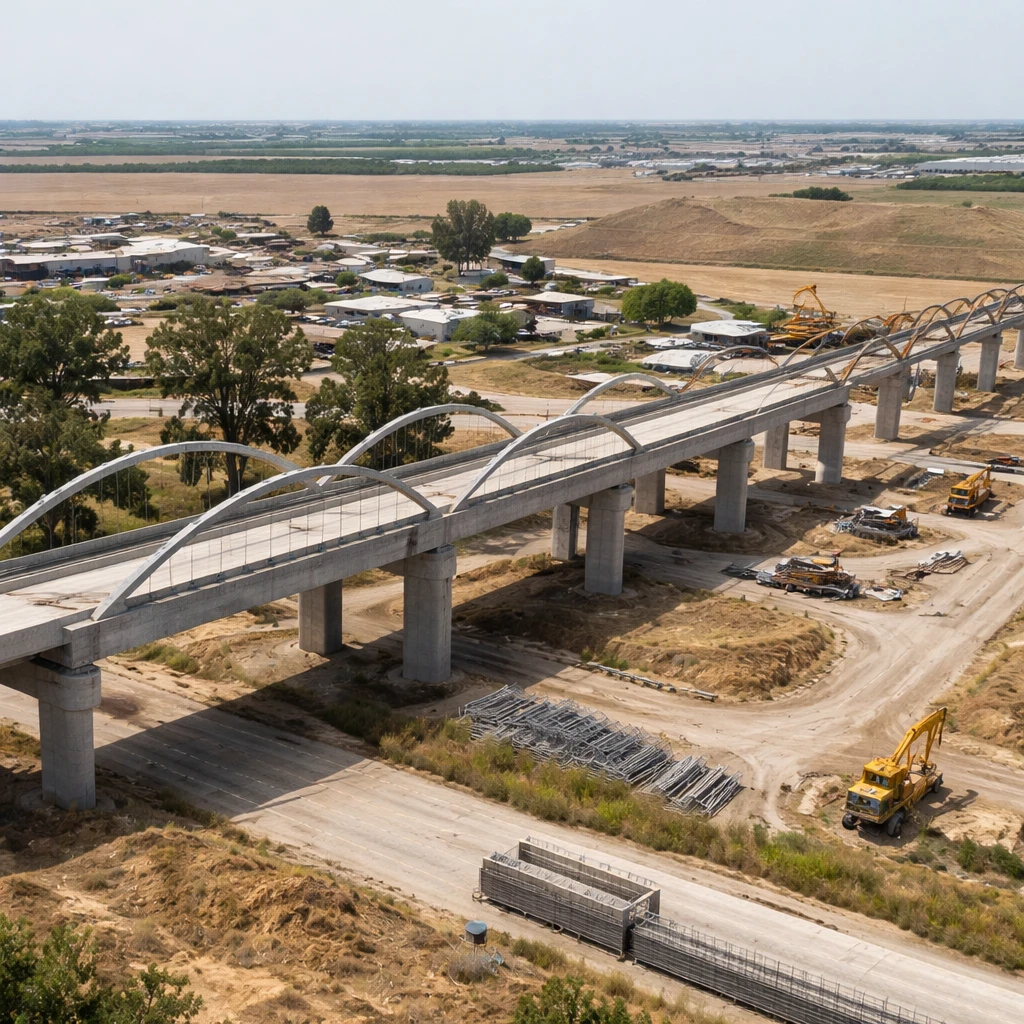

California officials have dropped their legal challenge against the federal government's move to rescind $4 billion in funding for the state's controversial, decades-long high-speed rail program. This development follows the U.S. Department of Transportation's decision in July to reduce the financial support for the rail system intended to link San Francisco and Los Angeles via a high-speed corridor.
The Trump administration justified the funding withdrawal by arguing that the California High-Speed Rail Authority lacked a credible plan to complete a significant portion of the project in the agricultural Central Valley.
In response, the state rail authority swiftly initiated a lawsuit, with California Governor Gavin Newsom denouncing the federal decision as "a political stunt to punish California." However, the authority has indicated a strategic pivot, now concentrating efforts on securing alternative financing to move the project forward.
A spokesperson for the authority stated, "This action reflects the State’s assessment that the federal government is not a reliable, constructive, or trustworthy partner in advancing high-speed rail in California." They further noted the plan to identify other funding avenues to complete the endeavor, which currently carries an estimated price tag exceeding $100 billion.
The U.S. Transportation Department did not provide a comment on the matter. Meanwhile, both former President Donald Trump and then-Transportation Secretary Sean Duffy had previously disparaged the project, labeling it a "train to nowhere." Trump specifically criticized the initiative on his platform Truth Social in July, declaring, "The Railroad we were promised still does not exist, and never will. This project was Severely Overpriced, Overregulated, and NEVER DELIVERED."
The authority’s withdrawal of its lawsuit coincides with efforts to attract private investors for the bullet train. Notably, the project recently received $1 billion annually from California’s cap-and-trade program, secured through 2045.
This cap-and-trade initiative imposes a progressively stricter cap on greenhouse gas emissions from major polluting entities statewide. Companies are required to lower their emissions, purchase allowances either from the state or other businesses, or support projects that neutralize their environmental impact. Revenue generated from this system funds climate change mitigation efforts, affordable housing developments, transit projects, and provides utility bill credits to California residents.
The rail authority views its shift away from reliance on federal funds as "a new opportunity." In their statement, they highlighted that continuing without the Trump administration’s involvement enables the agency to implement "proven global best practices used successfully by modern high-speed rail systems around the world."