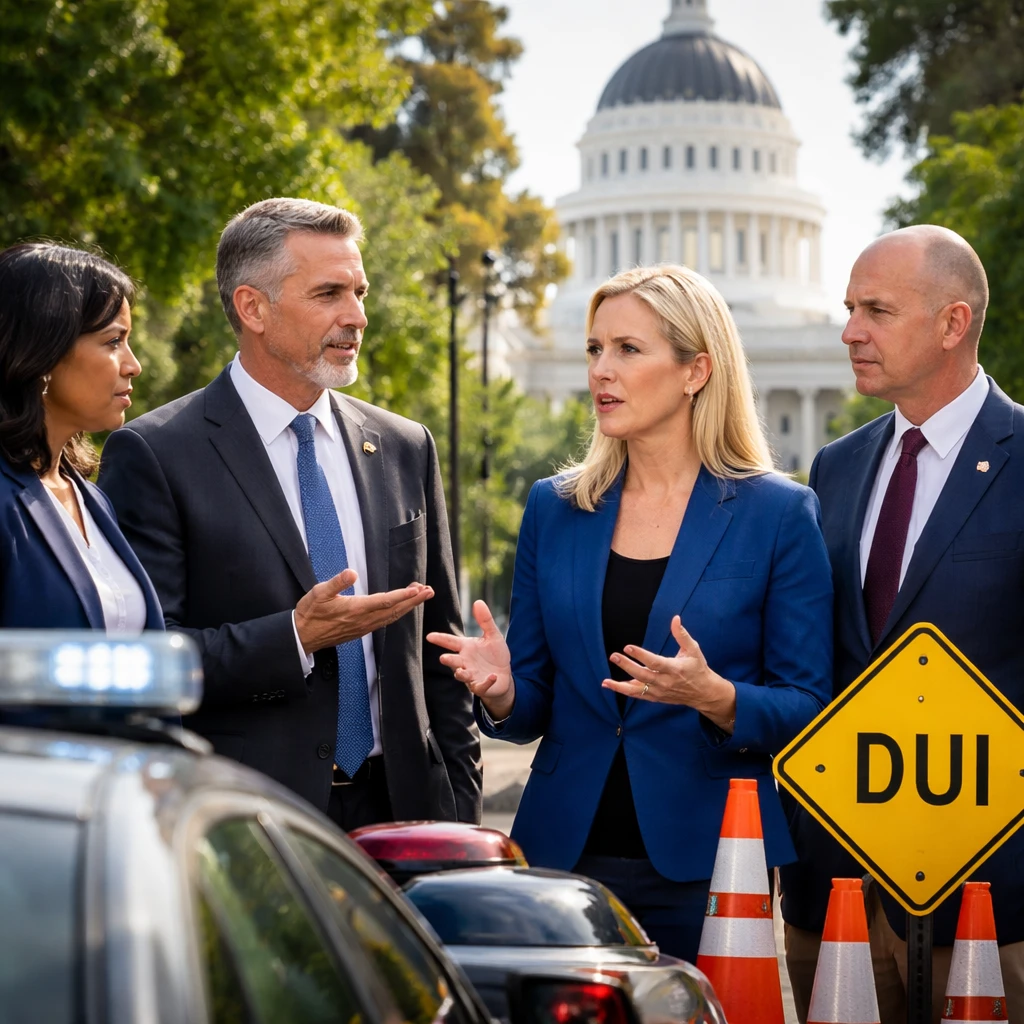

California faces a growing crisis involving dangerous driving, prompting a bipartisan group of state Assembly members to announce a series of legislative proposals to combat these issues. These bills aim to enhance roadway safety by addressing legal loopholes and enforcement challenges identified through recent analyses of traffic fatalities and driver misconduct.
Among the major actions proposed are requirements for first-time DUI offenders to equip their vehicles with ignition interlock devices, the extension of license suspension and revocation durations, increased training for law enforcement in DUI enforcement, and the closure of a diversion program loophole that has allowed certain offenders to avoid appropriate consequences.
Democratic Assemblymember Nick Schultz from Burbank, chairing the Assembly Public Safety Committee, emphasized the urgency and cooperative spirit driving these proposals. He stated, "Sacramento is listening. There is a clear problem on our roads, and we are committed to bridging partisan divides to implement effective solutions that immediately enhance safety for our communities."
This legislative package is part of a broader response within the state Capitol to a troubling increase in traffic deaths over recent years. An upcoming event is anticipated to provide more information on complementary bills pending in the California Senate, related fiscal plans, and testimonials from families affected by drunk driving tragedies.
Last month, Assemblymember Schultz introduced a bill aimed at heightening punishments for repeat DUI offenders. The recent press conference outlined additional initiatives including:
- Closing a diversion loophole: Research revealed that a criminal justice reform law passed some years ago unintentionally permitted judges to dismiss misdemeanor vehicular manslaughter charges when offenders entered diversion programs. This outcome not only dismisses criminal convictions but also preserves a clean driving record. Assemblymember Lori Wilson, Democrat from Suisun City and chair of the Assembly Transportation Committee, has proposed legislation mandating the Department of Motor Vehicles (DMV) to assign penalty points to licenses when misdemeanor diversion is granted.
- Revising the timing of license suspensions and revocations: Under current regulations, license revocations for serious offenses such as felony vehicular manslaughter often commence during incarceration. As a result, offenders may regain their driving privileges immediately upon release. Wilson disclosed ongoing work on a bill that would delay the start of license revocations until the individual is freed from custody to better reflect the intended period of disqualification. She noted, "Driving is a privilege. This bill package holds dangerous drivers accountable and safeguards all road users."
- Mandating ignition interlock devices for first-time DUI offenders: Assemblymember Cottie Petrie-Norris, a Democrat from Irvine, is advocating for the third time that all first-time DUI offenders be required to install in-car breathalyzer devices. These devices prevent a vehicle from starting unless the driver has a blood alcohol content below the legal limit. Presently, California is among the few states without this mandate for first-time offenses. Previous legislative efforts faced opposition due to budget constraints expressed by the DMV and concerns from civil liberties advocates about disproportionate impacts on marginalized communities. Petrie-Norris remarked, "California stands at the epicenter of America’s DUI epidemic. We must leverage proven methods to prevent tragedies and protect lives."
- Enhancing law enforcement training for DUI enforcement: Assemblymember Juan Alanis, a Republican from Modesto, highlighted that many police officers currently receive only fundamental training regarding impaired driving during their academy attendance. This often requires specialized officers to intervene for sobriety assessments. Proposed measures would provide advanced DUI enforcement training to a broader range of officers, enabling quicker identification and removal of impaired drivers from the roads.
Schultz described this legislative agenda as an initial step, indicating that upcoming Senate bills are expected to further address road safety challenges. In parallel, State Senator Bob Archuleta from Norwalk introduced legislation last month proposing increased penalties for DUI offenses and enabling prosecutors to charge repeat offenders with murder under certain circumstances. Archuleta is planning a press event later in the month alongside advocacy groups such as Mothers Against Drunk Driving to unveil additional safety initiatives.
By tackling issues such as legal loopholes, enforcement capabilities, and technological requirements for offenders, these legislative efforts seek to stem the growing tide of hazardous driving behaviors contributing to fatalities and injuries on California’s roads.