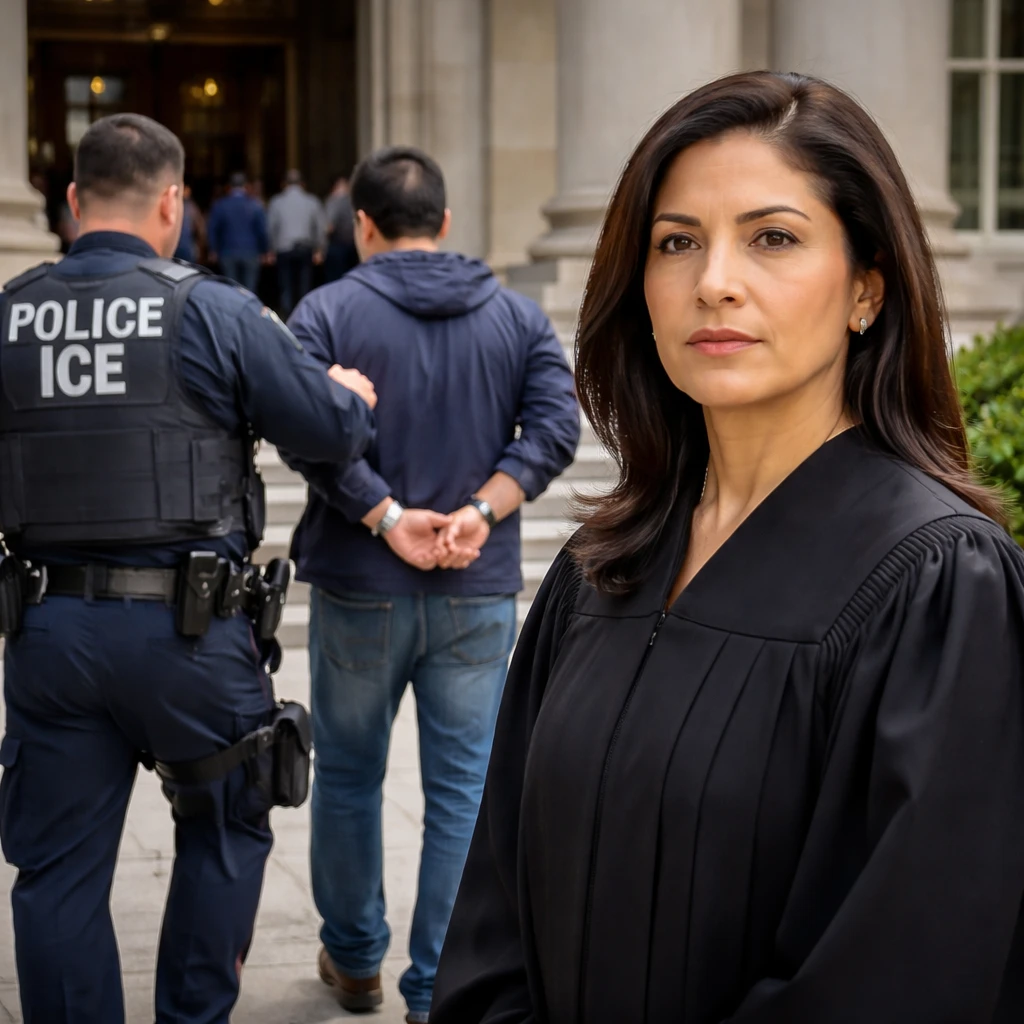

California's Supreme Court Chief Justice Patricia Guerrero has taken a strengthened approach to overseeing immigration enforcement activities occurring within and around courthouses across the state. Speaking at a press conference on Thursday, Guerrero, notable as the first Latina to hold the state's highest judicial leadership position, voiced apprehension about the discouraging impact that federal immigration arrests are having on court participants.
She highlighted how enforcement efforts create fear among witnesses and litigants, complicating their ability to utilize judicial services. "The type of immigration enforcement action that we've seen instills fear in witnesses, litigants that creates problems for them being able to access the courts," she stated.
During President Biden's tenure, immigration authorities largely refrained from making arrests in court settings to respect the safe participation of individuals in legal proceedings. However, with the transition to the Trump administration, this stance reversed, permitting agents to detain individuals on or near courthouse grounds.
Guerrero's office has recorded incidents of immigration enforcement in 17 courthouses, with the Superior Court of Shasta County reporting the highest volume. While these tracking efforts have been informal so far, the Judicial Council has scheduled a meeting for April 24 to consider a proposal that would require courts statewide to systematically report data on civil immigration arrests surrounding their premises.
The proposal, supported by the Trial Court Presiding Judges Advisory Committee and Court Executives Advisory Committee, aims to facilitate consistent and coordinated information gathering across California. Their stated goal is to "better assess broader implications for access to justice" by obtaining reliable data from superior courts.
Information collected will be shared with the state attorney general's office to prepare for any necessary legal or policy actions. Guerrero acknowledged that motivating the federal administration directly is unlikely, saying, "The president is not going to listen to me if I try to tell him what to do, so what really is the point of that?" She emphasized a pragmatic approach focused on ensuring courts are well-informed and capable of responding appropriately.
In this vein, Guerrero outlined strategies for asserting state court authority, such as facilitating remote hearings to minimize courthouse exposure and educating judicial personnel on legal protections and powers. Additionally, efforts include connecting the public to resources that enable them to seek alternative remedies when faced with enforcement actions.
In parallel, California's Democratic senators have introduced legislative initiatives geared toward strengthening protections within courthouses. Senator Susan Rubio of West Covina proposed a bill allowing remote appearances in most civil or criminal state court proceedings through January 2029. Senator Eloise Gómez Reyes of San Bernardino introduced legislation aimed at prohibiting Federal Immigration and Customs Enforcement (ICE) agents from engaging in "unannounced and indiscriminate" arrests within courthouse areas.
These concerted actions highlight the state's commitment to preserving fair and open access to justice amid fluctuating federal immigration enforcement policies affecting courts and their users.