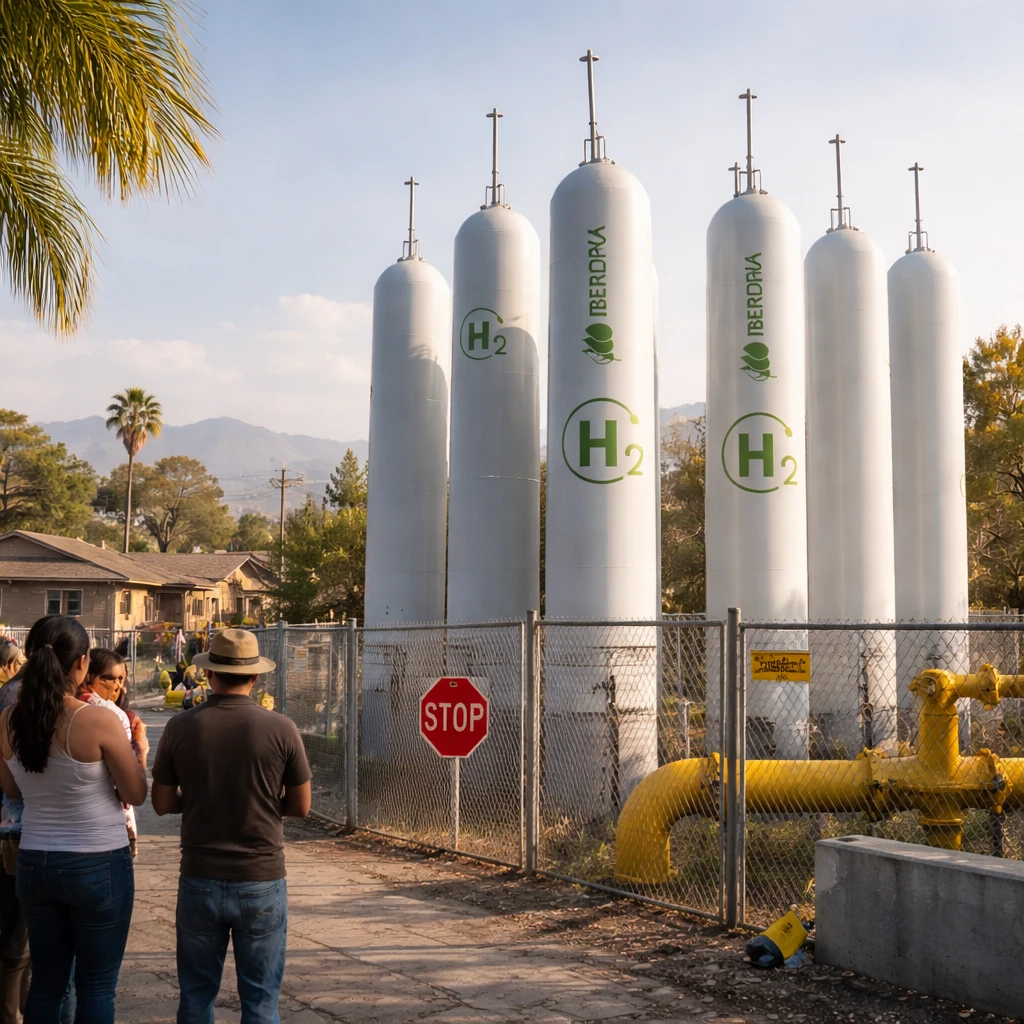

Residents of Orange Cove, California, have greeted with apprehension a proposal by Southern California Gas Co. to pilot hydrogen blending within the town’s natural gas system. Alma Figueroa, a 60-year-old lifelong resident battling asthma and lung cancer recurrence, voices concern over potential health impacts, stating she does not wish to become "anyone's experiment." The project aligns with a statewide directive from California’s utility regulator to explore hydrogen blending as a pathway to reduce greenhouse gas emissions linked to fossil fuel consumption.
Proponents highlight hydrogen blending as a promising strategy to deliver cleaner energy through existing gas pipelines. The initiative forms part of a broader agenda to develop safety standards for hydrogen integration within natural gas infrastructure. However, skepticism exists among opponents, especially within Orange Cove’s largely Latino and economically disadvantaged community, who note a lack of transparent communication and meaningful involvement in the project’s planning.
The initiative reflects heightened interest in hydrogen technologies, which gained momentum under the Biden administration but encountered setbacks following federal funding cuts during the prior administration, including the cancellation of a $1.2 billion hydrogen hub project in California. Orange Cove’s proposal is one among five in the state aimed at evaluating the durability of pipelines and household appliances when exposed to varying hydrogen concentrations. Hawaii’s longstanding use of hydrogen blending provides a reference point for these efforts.
Hydrogen blending involves mixing hydrogen—a carbon-free gas produced via renewable energy-powered electrolysis—into methane-dominant natural gas. Given methane’s significant role as a potent greenhouse gas exacerbating climate change and associated extreme weather events, the introduction of green hydrogen seeks to lower overall emissions from gas use. California Governor Gavin Newsom has emphasized hydrogen’s role in the state’s future energy mix and pollution reduction goals.
The projected Orange Cove pilot spans 18 months and intends to supply a mix containing up to 5% green hydrogen, generated by a solar-powered electrolyzer, to approximately 10,000 local residents and businesses. The $64.3 million cost is expected to be financed through utility ratepayer funds. Modeling by a Minneapolis utility suggests such a blend could reduce carbon dioxide emissions by roughly 1,200 tons annually, equating to the removal of 254 gasoline-powered vehicles from the roads each year. Advocates, including Janice Lin of the Green Hydrogen Coalition, stress the importance of hands-on pilots to validate hydrogen's potential within the United States’ extensive 3 million-mile gas pipeline network. Scaling this approach could offer cost advantages and reduce emissions in sectors that face electrification challenges.
Nonetheless, technical and safety uncertainties remain. Alejandra Hormaza, a renewable energy expert at California State Polytechnic University, Pomona, notes that while consensus supports hydrogen blending up to 20% by volume as safe, experimental data from actual gas infrastructure trials are needed to thoroughly assess impacts. In 2022, California gas utilities collectively applied to proceed with hydrogen blending tests, with regulatory decisions pending.
Originally, Southern California Gas proposed initial tests within the University of California, Irvine, but concerns from that community led to scaled-back plans. Orange Cove was subsequently identified as a suitable site due to its diverse pipeline materials and the presence of a single gas feed, allowing better blend control. Local officials unanimously endorsed the project, highlighting anticipated economic and employment benefits. However, outreach gaps persist, with many residents reporting limited engagement opportunities and unmet requests for informational town halls.
Orange Cove is predominantly home to Spanish-speaking Latino immigrants with 39% of residents living below the poverty line. The area experiences significant environmental pollution and holds Fresno County's highest asthma rates. These factors underpin community unease, underscoring fears that the pilot may proceed with insufficient input from those most affected.
Health concerns focus on the compatibility of existing appliances and infrastructure with hydrogen-blended gas. Studies indicate that burning such blends in older equipment may increase nitrogen oxide emissions—pollutants aggravating respiratory conditions—and exacerbate risks related to material degradation and gas leaks. Given hydrogen’s greater flammability compared to natural gas, elevated leak rates could heighten explosion hazards. Ryan Sinclair, an environmental microbiologist, points out that lower-income households with older appliances may face disproportionate vulnerability and have limited capacity to shift to electric alternatives, which could serve as the only means to opt out.
Research gaps also persist regarding hydrogen’s influence on leakage rates and its indirect warming effect through atmospheric chemical interactions. Environmental advocacy groups argue that hydrogen use should be reserved for sectors with limited electrification options, such as aviation and heavy industry, favoring appliance electrification as a more effective emission reduction strategy. Critics describe the pilot as an unnecessary risk to residents without clear benefits.
In response, project planners assert that rigorous safety protocols will be implemented, including leak detection technologies, containment measures to prevent hydrogen migration beyond designated zones, and comprehensive emergency response strategies. Yet residents like Francisco Gonzalez express frustration over exclusion from decision-making processes and emphasize a desire for transparent dialogue on clean energy transitions that do not undermine community health.