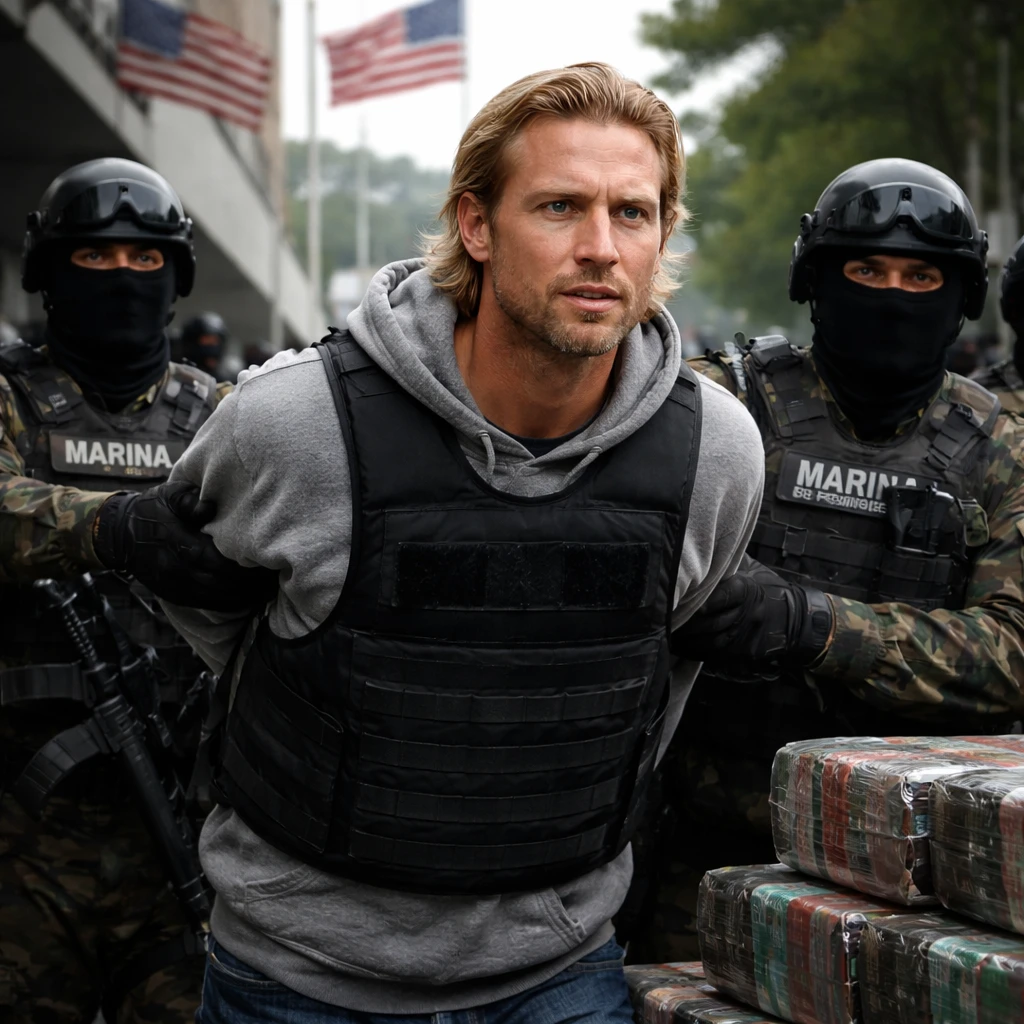

Ryan Wedding, once a Canadian Olympic snowboarder and now a prominent fugitive wanted by the FBI, was apprehended in Mexico after voluntarily surrendering at the U.S. embassy in Mexico City. At 44 years old, Wedding has been accused of directing the annual transport of approximately 60 tons of cocaine from Latin America into the United States along with masterminding multiple homicides, officials reported on Friday.
FBI Director Kash Patel described the arrest as the culmination of over a year of investigative efforts conducted in partnership with law enforcement agencies across Mexico, Canada, Colombia, and the Dominican Republic. Wedding was reportedly involved in trafficking routes traversing Colombia, Mexico, Canada, and Southern California, operating under the protection of the Sinaloa drug cartel — one of Mexico's most formidable criminal organizations. Law enforcement officials noted Wedding employed several aliases, including "El Jefe," "Public Enemy," and "James Conrad Kin."
In detailing the severity of Wedding's criminal profile, Patel drew a comparison to Joaquín "El Chapo" Guzmán, the infamous former leader of the Sinaloa cartel who is currently imprisoned in the United States following drug trafficking convictions. Patel referred to Wedding as "the modern-day El Chapo," underscoring the magnitude of his alleged criminal activities and influence.
Wedding's criminal record includes a 2010 conviction in the United States for conspiracy to distribute cocaine, resulting in incarceration. Currently, he confronts new federal indictments revolving around the management of a multinational drug trafficking organization and orchestrated killings, including those of a federal witness and three additional individuals. There is no current indication of legal representation for Wedding, as federal court documents do not list any attorneys for the pending cases.
Having represented Canada in a single snowboarding event during the 2002 Winter Olympics in Salt Lake City, Wedding is believed to have lived covertly in Mexico for more than ten years prior to his recent apprehension. The FBI formally placed him on its Ten Most Wanted Fugitives list in March of the previous year and established a reward totalling $15 million for information leading to his arrest and conviction.
Patel acknowledged the significance of international cooperation in the apprehension effort, praising the Mexican government and global partnerships for their roles. Mexican Security Secretary Omar García Harfuch confirmed that a Canadian citizen surrendered to the U.S. embassy, a source within Mexico’s Security Cabinet then identified the individual as Wedding, requesting anonymity due to lack of public authorization to speak on the matter. Wedding is slated to appear in a federal courtroom this coming Monday, according to Akil Davis, assistant director overseeing the FBI office in Los Angeles.
Law enforcement reports disclosed that 36 individuals connected to the drug operation have been detained. Authorities confiscated vast quantities of narcotics, firearms, cash, and assets including expensive vehicles, motorcycles, artwork, and jewelry linked to Wedding and his associates.
Wedding faces federal charges filed in 2024, including running a criminal enterprise, murder, conspiracy to distribute cocaine, among others. Prosecutors allege Wedding led a drug trafficking network valued at billions and serving as Canada’s largest cocaine supplier, sourcing narcotics from Colombia and collaborating with Mexican cartels to transport these drugs via boat and aircraft to Mexico before moving them into the U.S. via semitrucks. Southern California functioned as storage before distribution to Canada and other U.S. locales.
Murder charges further accuse Wedding of ordering two killings within a Canadian family in 2023 as retribution for a stolen drug consignment, in addition to sanctioning a 2024 killing over outstanding drug debts. A separate indictment from November 2023 charges Wedding with directing the murder of a witness in Colombia aimed at derailing extradition efforts. The act included utilizing a Canadian-based website called “The Dirty News” to publish the witness’s photograph, facilitating identification and subsequent assassination. The witness was slain by a firearm in Medellín in January.
The Canadian government also welcomed Wedding’s capture, noting outstanding drug trafficking charges dating back to 2015. Gary Anandasangaree, Canada’s Minister of Public Safety, described the arrest as a meaningful advance in international anti-drug initiatives.
Additionally, the FBI disclosed last week’s arrest of Alejandro Rosales Castillo, 27, an American citizen charged with the 2016 murder of a North Carolina woman and facing federal charges related to evading prosecution. This arrest took place in Mexico amid increased extradition efforts motivated partly by U.S. presidential demands targeting drug trafficking organizations along the southern border.
Contributors to this report include journalists based in Savannah, Georgia; San Diego; Washington, D.C.; and Mexico City.