
In a firm stance on his recent comments at the World Economic Forum in Davos, Canadian Prime Minister Mark Carney announced on Tuesday that he conveyed to U.S. President Donald Trump the sincerity of his remarks, underscoring Canada's intention to broaden its trade horizons with a dozen new agreements away from its southern neighbor.
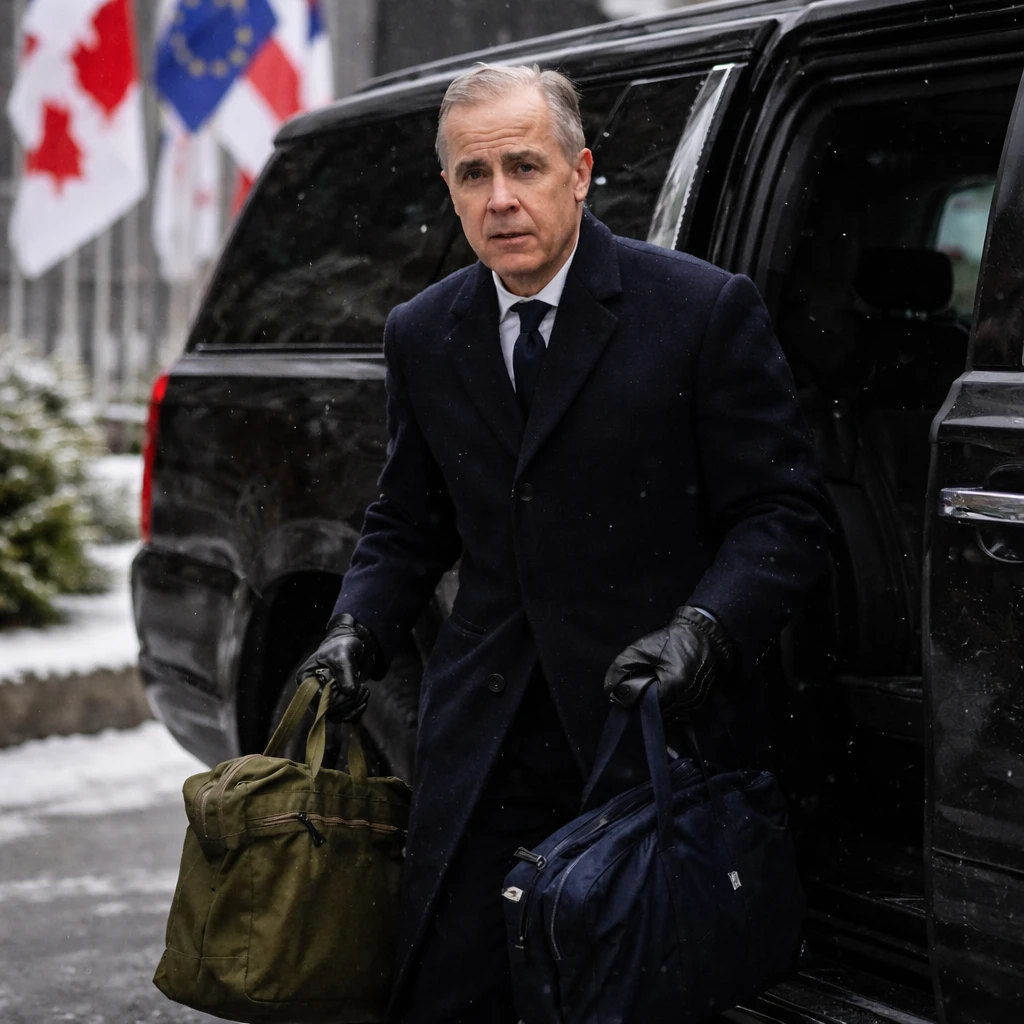
Arriving at a cabinet meeting in Ottawa, Carney dismissed claims by U.S. Treasury Secretary Scott Bessent on Fox News that he had softened his position during a Monday phone conversation with Trump. "To be absolutely clear, and I said this to the president, I meant what I said in Davos," the prime minister declared. He acknowledged that Canada was among the first to recognize changes in U.S. trade policies under Trump's administration and responded accordingly.
Last week in Davos, Carney openly criticized the economic dominance exerted by major powers over smaller nations, a pointed reference that garnered widespread acclaim and overshadowed Trump’s presence at the summit.
Speaking later in the House of Commons in French, Carney remarked, "The world has changed, Washington has changed. There is almost nothing normal in the U.S. now and that’s the truth." This statement reflects the shifting dynamics in North American trade relations and policy uncertainty emanating from U.S. leadership.
Amid these tensions, Trump recently threatened to impose a 100% tariff on Canadian goods should Canada pursue a comprehensive trade deal with China, a prospect Carney dismissed as unlikely given Canada’s disinterest in such negotiations. Carney relayed that he and Trump held a 30-minute telephone discussion, during which the prime minister clarified Canada's existing agreements with China and outlined plans to cultivate 12 new trade deals spanning six months and four continents. Trump reportedly responded with interest to these developments.
This exchange occurred against the backdrop of increased friction between the two nations, highlighted by Trump's prior overtures to purchase Greenland, which strained NATO relations and unsettled Canada, a neighbor with an extensive Arctic maritime border with Greenland. Additionally, Trump has provocatively suggested incorporating Canada as the 51st U.S. state.
Carney emphasized that the recent tariff adjustments with China merely reversed levies imposed on select sectors and reaffirmed Canada's focus on reducing its heavy dependence on the United States, which currently purchases over 75% of Canadian exports. He is preparing diplomatic trips to India, Australia, and other regions to advance this diversification.
The coming year will be pivotal, with the U.S.-Mexico-Canada Agreement due for renewal. Carney has set ambitious targets, aiming to double Canada’s export volume outside the United States within a decade.
Adopting a leadership role in forging alliances among middle powers, Carney warned at Davos, "Middle powers must act together because if you are not at the table, you are on the menu." His approach promotes global cooperation to counterbalance unilateral actions by dominant nations.
In addition to trade, Carney noted his talks with Trump encompassed issues like Ukraine, Venezuela, and Arctic security. Contrasting perspectives remain evident: Bessent characterized Carney's Davos remarks as "unfortunate" and accused him of pursuing a "globalist agenda" that overlooks the ingrained economic ties Canada has with the U.S., highlighting the substantial north-south trade relationship compared to east-west.
Canada’s Minister for U.S. Trade, Dominic LeBlanc, equated Canada’s recent trade understanding with China to a previous U.S.-China agreement, emphasizing reciprocal tariff reductions and policy shifts. Meanwhile, Trump's assertive rhetoric towards Canada, including provocative social media posts depicting altered maps annexing Canadian and other territories, exacerbates bilateral tensions on issues of sovereignty and alliance trust.