
Emerging from the aftermath of two devastating world wars, an international system was established to uphold a network of laws and agreements designed to prevent major conflicts. This system, notably centered at the United Nations headquarters in New York, is currently facing turmoil as actions reminiscent of "might makes right" seem to be reasserting themselves on the world stage.
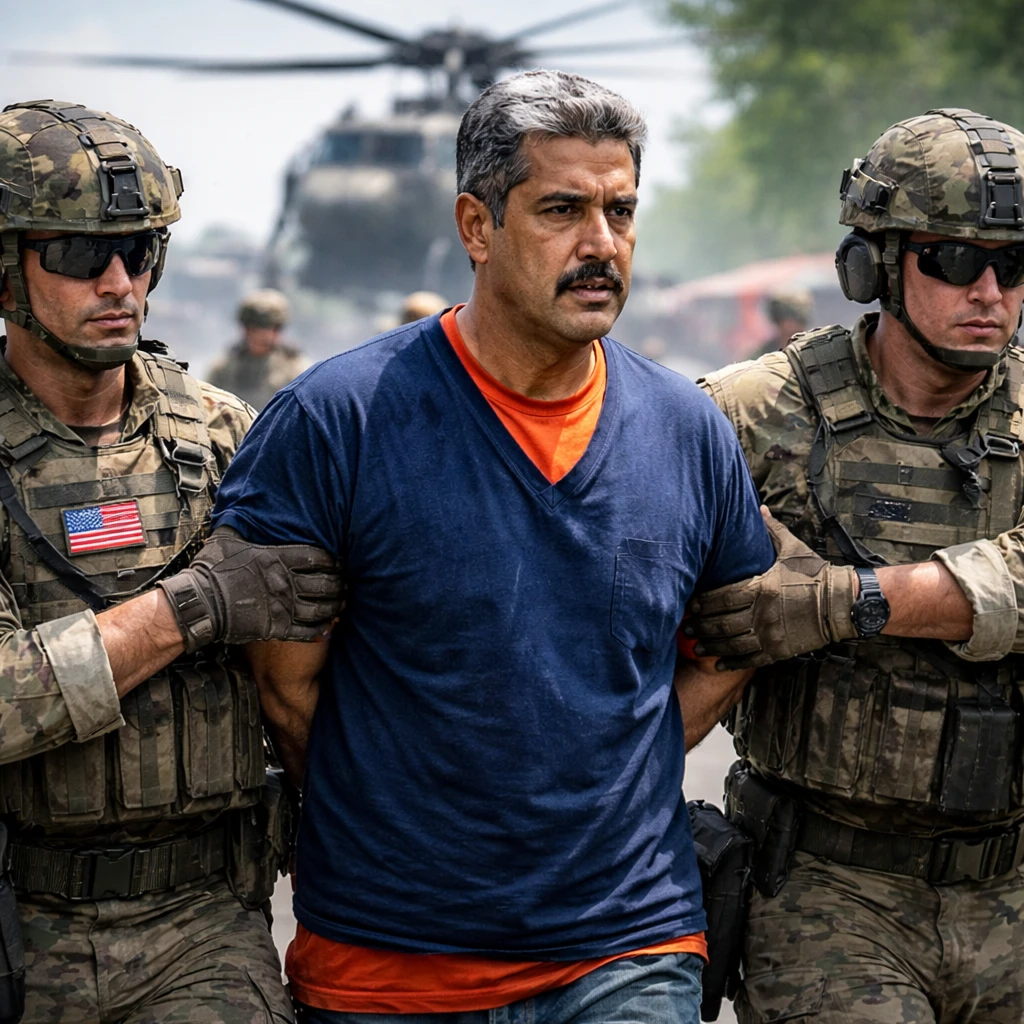
On Monday, Nicolás Maduro was arraigned following his removal from power in Venezuela, an event closely tied to this mounting uncertainty surrounding international law. Rosemary A. DiCarlo, U.N. Undersecretary-General, reminded the Security Council that sustaining global peace and security relies fundamentally on all member states’ adherence to the U.N. Charter.
The Trump administration maintains the legality of its mission to seize Maduro, framing the drug operations emanating from Venezuela as unlawful combatants engaged in armed conflict with the United States, as detailed in a memo obtained in October. The targeted military action extracted Maduro and his wife, Cilia Flores, from a Caracas military base, positioning them to face charges linked to a narco-terrorism conspiracy.
Mike Waltz, the U.S. ambassador to the U.N., labeled the operation a precise and justified law enforcement action, aligning with the administration’s National Security Strategy that emphasizes restoring American leadership within the Western Hemisphere during President Trump's anticipated second term.
Nevertheless, this development is fueling speculation about potential future military actions. On Sunday, President Trump criticized Colombian President Gustavo Petro, accusing him of drug-related misconduct. The U.S. administration has imposed sanctions against Petro and associates involved in narcotics trade, while Colombia is recognized as a central hub for cocaine trafficking globally.
This unilateral approach has drawn condemnation from global leaders and analysts, spanning nations from China to Mexico. The growing apprehension is that such interventions may undermine international legal principles and pave the way for further military incursions, ultimately destabilizing the established global order.
French Foreign Minister Jean-Noël Barrot underscored that the capture of Maduro contravenes the foundational principle against the use of force in international law. He warned that repeated breaches of this principle by powerful U.N. Security Council members risk serious repercussions for worldwide security.
Several ongoing geopolitical conflicts stand to be affected by shifts in international norms and legal attitudes. For example, the conflict in Ukraine, ongoing for almost four years, constitutes a significant challenge to international law, with Russia’s military engagement considered an aggressive breach requiring strong support from Western allies including the U.S. European Union reliance on American backing remains crucial even as the U.S. signals expectations for Europe to assume greater responsibility for its own security.
Russian U.N. ambassador Vasily Nebenzya criticized the Venezuela operation as a regression into lawlessness, calling upon the Security Council to reject unilateral U.S. military policies. Ukrainian analyst Volodymyr Fesenko acknowledged decades of Russian efforts to destabilize global legal frameworks and observed that current U.S. actions appear to continue similar patterns.
Further heightening European security concerns are President Trump’s remarks on Greenland, a strategic Danish territory. Citing significant Russian and Chinese maritime presence, Trump indicated the necessity of American access to Greenland for national security, despite Danish Prime Minister Mette Frederiksen’s assertion that the U.S. has ample existing agreements and no entitlement to annex the territory.
Another dimension of tension lies in Taiwan, where China has conducted military drills in response to U.S. arms sales and maintains a strategy of gradual pressure rather than overt targeting of President Lai Ching-te. Beijing denounced the U.S. capture of Maduro as a blatant violation of sovereignty and criticized American unilateralism, which it views as reckless, unpredictable, and damaging to international stability.
In the Middle East, the persistent conflict triggered by Hamas' October 7 attacks and Israel’s subsequent military responses exposes the fragility of international conflict resolution mechanisms. The United States’ use of veto power has stymied U.N. Security Council efforts to secure ceasefires. Additionally, the U.S. has conducted strikes against Iran over its nuclear program, warning against its suppression of domestic protests amidst economic hardship. Iran’s government, in turn, condemned the U.S. actions against Venezuela.
Within Europe and the broader transatlantic alliance, the U.S. approach challenges established partnership dynamics. The European Union, committed to upholding international law and the U.N. Charter, simultaneously faces critiques from leaders like Hungary’s Prime Minister Viktor Orbán, who questioned the effectiveness of international legal norms over the conduct of major powers.
The Maduro operation and the international reactions it triggered illustrate a contested geopolitical landscape where legal norms, sovereignty, and great-power politics intersect, presenting enduring risks for global security, economic stability, and diplomatic relations.