Captured Moment: Armed Woman on Motorcycle Highlights Venezuelan Tensions
January 8, 2026
News & Politics

Captured Moment: Armed Woman on Motorcycle Highlights Venezuelan Tensions

Photojournalist Documents Post-Strike Atmosphere in Caracas and La Guaira

Summary

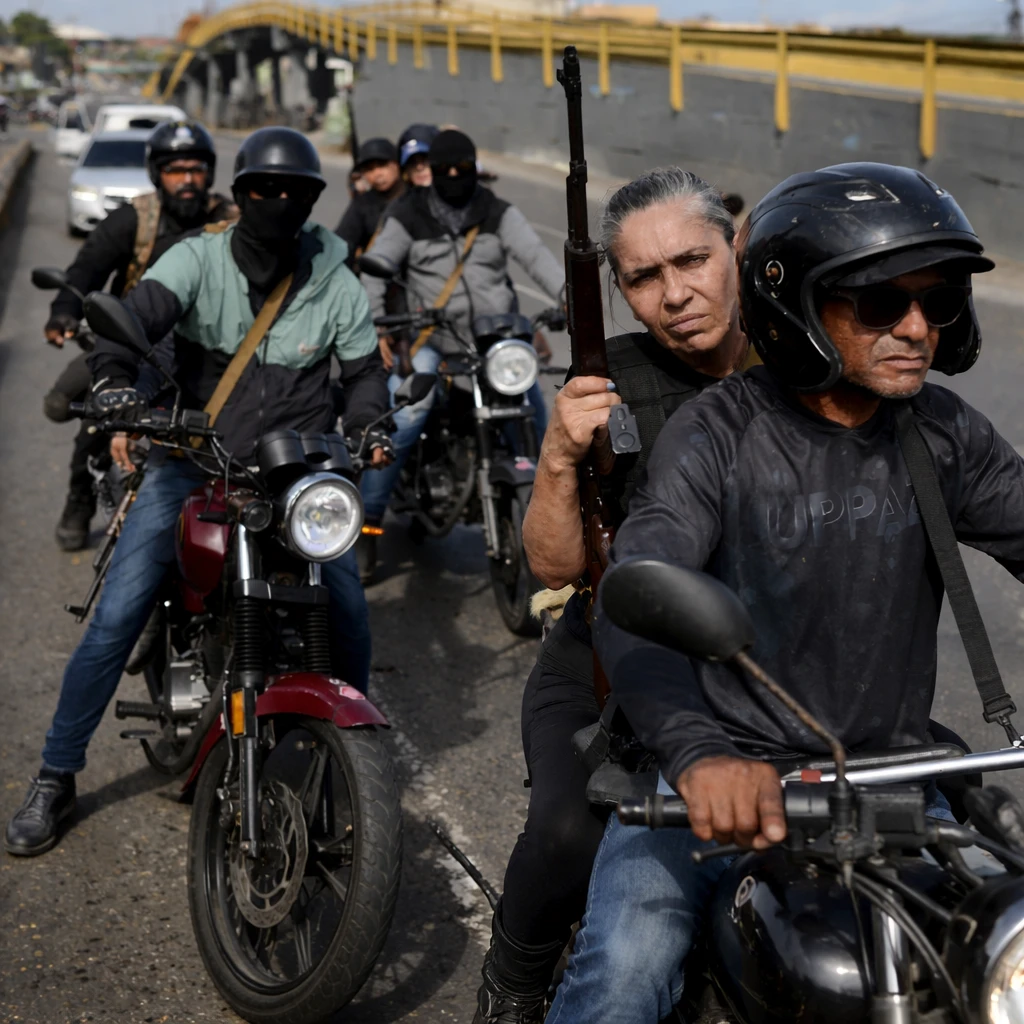
In the volatile days following U.S. strikes linked to the capture of Venezuela's President Nicolás Maduro, a striking image emerged — a woman armed and riding on a motorcycle through the streets. Captured by Matias Delacroix, a photojournalist with experience across Latin America, this photo encapsulates the uneasy blend of civilian and militarized presence in Venezuela's capital, reflecting broader instability. Delacroix's access and approach provide insight into the immediate environment after the attacks, framing a critical moment of uncertainty.

Key Points

The photograph poignantly captures an armed woman on a motorcycle during post-strike unrest in Caracas, symbolizing the mixing of civilian and militant roles in Venezuela's current security landscape.
The image was taken at a gas station guarded by armed personnel, highlighting increased militarization in public spaces following U.S. attacks on President Maduro.
The photojournalist’s use of motorcycle transport allowed rapid movement to key locations, reflecting the fluid and volatile conditions in Venezuelan urban centers post-attack.

Matias Delacroix, a photojournalist originally from Chile and currently residing in Panama, spent this week documenting events in Venezuela, capturing scenes that reveal the nation’s tense atmosphere following recent U.S. military strikes. One photograph in particular drew his attention for its remarkable resemblance to a historic image from the 1990s depicting an armed woman, but now set against the modern backdrop of Caracas.

Delacroix explained that upon witnessing an armed woman occupying the passenger seat of a motorcycle, he was reminded of a similar powerful visual captured decades earlier by another Chilean photographer, featuring a woman brandishing a submachine gun. This visual parallel compelled Delacroix to stop and take the shot, recognizing a poignant recurrence amid vastly different historical circumstances.

The context for this scene traces back to the aftermath of U.S. operations targeting President Nicolás Maduro, which triggered unexpected reactions on the streets of Venezuela. Groups loyal to the government appeared publicly, some carrying weapons, marking a blur between civilian presence and armed defense. Capturing this moment was critical, Delacroix notes, as it offered insight into the profound shock and uncertainty gripping the populace.

The photograph was taken at a gas station under the watch of armed civilians and local police forces. A contingent of motorcyclists, varying widely in age and carrying weapons, arrived at this location. They initially scrutinized Delacroix, seeking to identify and understand his purpose for being there. After Delacroix transparently shared that he was working for an international press agency to cover the fallout following the U.S. strikes, they permitted him to continue his photography unabated.

Delacroix had been working intensively during this turbulent period. Following coordination with his photo editor early in the morning, he expanded his assignment beyond Caracas to include La Guaira’s port area, which had reported damages. His mobility method—traveling by motorcycle akin to the armed groups—enabled quick access to key locations and rapid exit capability should the situation deteriorate.

This photograph succinctly illustrates a moment of heightened tension: armed groups in public spaces epitomize a breakdown of traditional civil order; motorcycles signify immediate response and control; and the figure of a woman carrying weaponry demands attention and challenges expectations. Together, the image conveys the ambiguous and unstable environment arising in the hours after the strikes, expressing the fusion of civilian life and militarized action without requiring additional explanation.

Risks
  • Escalating instability and uncertainty in Venezuelan urban areas pose risks to civilian safety and complicate governance, affecting public security and order sectors.
  • The visible presence of armed civilian groups alongside police raises concerns about blurred lines of authority and potential for violent confrontation, impacting law enforcement and security markets.
  • Ongoing political and military tension can disrupt local economy hubs such as ports and transport networks, triggering risks for trade and logistics industries dependent on these infrastructures.
Disclosure
The article exclusively reflects the firsthand observations and photographic coverage of the events in Venezuela following U.S. military strikes, with no additional commentary or speculative conclusions beyond documented facts.
Search Articles
Category
News & Politics

News & Politics

Related Articles
Partisan Divide Deepens as White House Excludes Democratic Governors from NGA Meeting

The longstanding bipartisan forum of the National Governors Association (NGA) is facing disruption a...

Commerce Secretary Lutnick Clarifies Epstein Island Lunch Amid Scrutiny Over Relationship

Commerce Secretary Howard Lutnick acknowledged having a family lunch with convicted sex offender Jef...

FDA Initiates Review of BHA Food Additive Safety

The U.S. Food and Drug Administration (FDA) has announced plans to conduct a comprehensive reassessm...

Using Fireplace Ashes in Your Garden: Benefits and Considerations

Amidst a notably cold winter leading to increased fireplace use, many homeowners are seeking sustain...