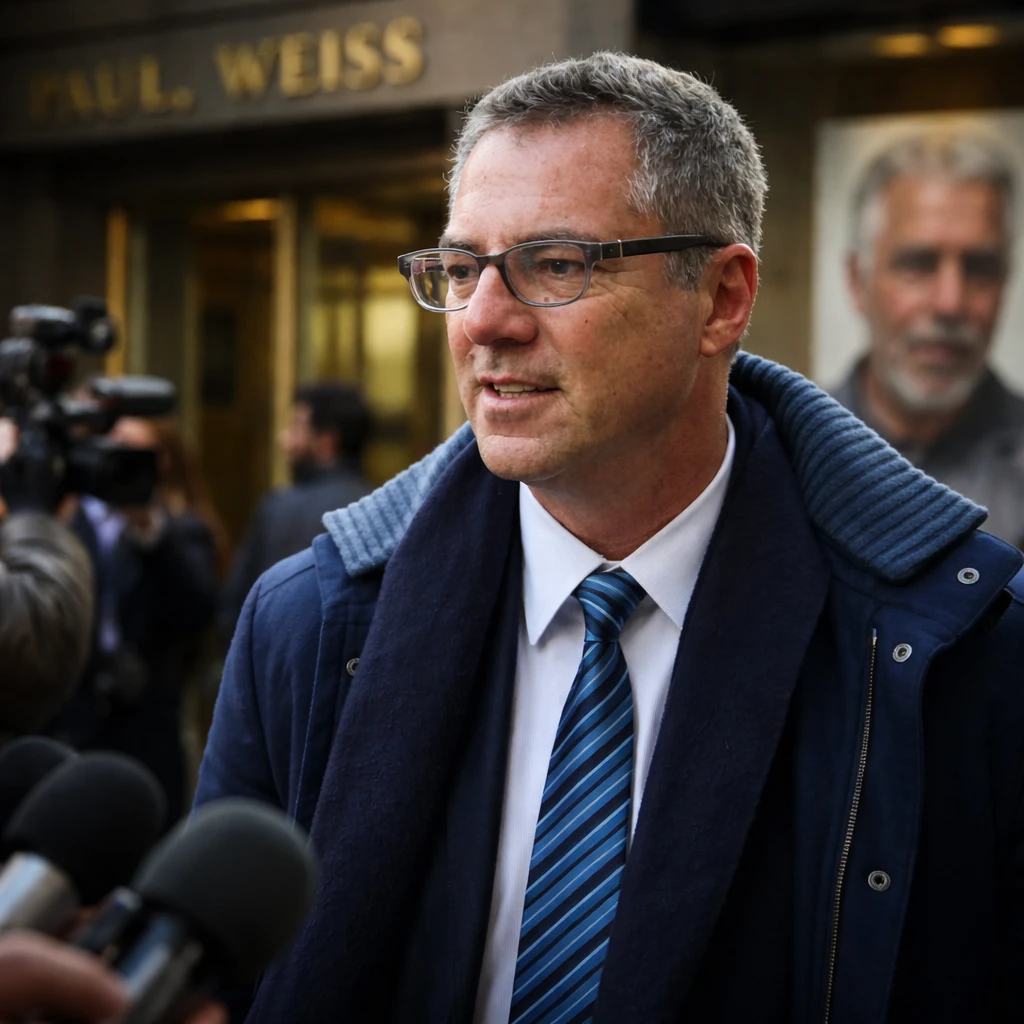

Brad Karp, who has served as chairman of Paul, Weiss, Rifkind, Garrison & Wharton since 2008 and has been with the firm for 40 years, announced his resignation from the leadership post following the publication of emails exchanged with Jeffrey Epstein. Although the firm clarified it had never represented Epstein, these revelations have sparked intense scrutiny. Karp stated that current media attention has become a distraction and that the focus on him is not in the firm's best interest.
The disclosures arrived as the Department of Justice released a significant tranche of documents connected to its investigation into Epstein. This release was mandated by a new law aiming to expose the extent of government knowledge regarding Epstein's abuse of young girls, as well as his interactions with influential individuals.
Among those brought into public view are former President Bill Clinton and former Secretary of State Hillary Clinton, both of whom agreed to testify before a House committee examining Epstein-related matters after facing potential charges for criminal contempt of Congress from Republican lawmakers. While Bill Clinton, similar to former President Donald Trump and others, maintained a noted association with Epstein in the late 1990s and early 2000s, neither he nor Trump have been credibly charged with misconduct in connection with Epstein.
The ramifications extend internationally. In Slovakia, a high-ranking official resigned following revelations of meetings with Epstein post-incarceration. Likewise, the British Prime Minister Keir Starmer apologized for appointing a Washington ambassador with Epstein-related ties.
Documents revealed a July 22, 2015, email where Karp expressed gratitude to Epstein for hosting an unforgettable evening, describing it as "once in a lifetime." Epstein reciprocated, welcoming him back and promising many evenings of unique talent with frequent invitations.
That same day, Epstein offered to introduce Karp to Larry Summers, a former treasury secretary and Harvard president, known for his closeness to Epstein. In 2016, Karp sought Epstein's assistance to connect his son to filmmaker Woody Allen, with messages exchanged but uncertain outcomes.
Further correspondence shows a 2018 dinner invitation from Epstein to Karp, with arrangements made to accommodate Karp's commitments. Over the years, their exchange continued, including a 2019 email from Karp seeking Epstein's advice for John Havens, ex-president of Citigroup, related to a Florida massage parlor investigation. Epstein also offered to help find legal representation for New England Patriots owner Robert Kraft, who, along with Havens, was implicated among men accused of patronizing establishments engaged in prostitution.
In March 2019, Karp reviewed and praised a draft court filing authored by Epstein's lawyers arguing against reopening a decade-old federal sex abuse case in Florida. Karp called the motion persuasive, noting a particular argument that the accusers had delayed their claims strategically while Epstein was incarcerated.
Epstein had pled guilty to state charges in the case, served 13 months in jail, compensated victims, and became a registered sex offender.
Founded in 1875, Paul Weiss is a storied New York law firm with a history of involvement in civil rights advancement, corporate legal affairs, and growth into a multibillion-dollar entity.
The firm previously faced challenges during the Trump administration, which sought punitive measures against legal entities involved in cases it opposed. In March 2025, an executive order by then-President Trump threatened Paul Weiss with suspension of security clearances for its attorneys and termination of federal contracts. The order also referenced former Paul Weiss attorney Mark Pomerantz's role in a Manhattan district attorney probe of Trump's finances.
Karp initially planned legal action against the administration but later reached an agreement to avoid prolonged conflict that could jeopardize the firm’s integrity. This compromise was met with criticism both outside the firm and from more than 140 alumni, who expressed disapproval through a letter.
The disclosures arrived as the Department of Justice released a significant tranche of documents connected to its investigation into Epstein. This release was mandated by a new law aiming to expose the extent of government knowledge regarding Epstein's abuse of young girls, as well as his interactions with influential individuals.
Among those brought into public view are former President Bill Clinton and former Secretary of State Hillary Clinton, both of whom agreed to testify before a House committee examining Epstein-related matters after facing potential charges for criminal contempt of Congress from Republican lawmakers. While Bill Clinton, similar to former President Donald Trump and others, maintained a noted association with Epstein in the late 1990s and early 2000s, neither he nor Trump have been credibly charged with misconduct in connection with Epstein.
The ramifications extend internationally. In Slovakia, a high-ranking official resigned following revelations of meetings with Epstein post-incarceration. Likewise, the British Prime Minister Keir Starmer apologized for appointing a Washington ambassador with Epstein-related ties.
Documents revealed a July 22, 2015, email where Karp expressed gratitude to Epstein for hosting an unforgettable evening, describing it as "once in a lifetime." Epstein reciprocated, welcoming him back and promising many evenings of unique talent with frequent invitations.
That same day, Epstein offered to introduce Karp to Larry Summers, a former treasury secretary and Harvard president, known for his closeness to Epstein. In 2016, Karp sought Epstein's assistance to connect his son to filmmaker Woody Allen, with messages exchanged but uncertain outcomes.
Further correspondence shows a 2018 dinner invitation from Epstein to Karp, with arrangements made to accommodate Karp's commitments. Over the years, their exchange continued, including a 2019 email from Karp seeking Epstein's advice for John Havens, ex-president of Citigroup, related to a Florida massage parlor investigation. Epstein also offered to help find legal representation for New England Patriots owner Robert Kraft, who, along with Havens, was implicated among men accused of patronizing establishments engaged in prostitution.
In March 2019, Karp reviewed and praised a draft court filing authored by Epstein's lawyers arguing against reopening a decade-old federal sex abuse case in Florida. Karp called the motion persuasive, noting a particular argument that the accusers had delayed their claims strategically while Epstein was incarcerated.
Epstein had pled guilty to state charges in the case, served 13 months in jail, compensated victims, and became a registered sex offender.
Founded in 1875, Paul Weiss is a storied New York law firm with a history of involvement in civil rights advancement, corporate legal affairs, and growth into a multibillion-dollar entity.
The firm previously faced challenges during the Trump administration, which sought punitive measures against legal entities involved in cases it opposed. In March 2025, an executive order by then-President Trump threatened Paul Weiss with suspension of security clearances for its attorneys and termination of federal contracts. The order also referenced former Paul Weiss attorney Mark Pomerantz's role in a Manhattan district attorney probe of Trump's finances.
Karp initially planned legal action against the administration but later reached an agreement to avoid prolonged conflict that could jeopardize the firm’s integrity. This compromise was met with criticism both outside the firm and from more than 140 alumni, who expressed disapproval through a letter.