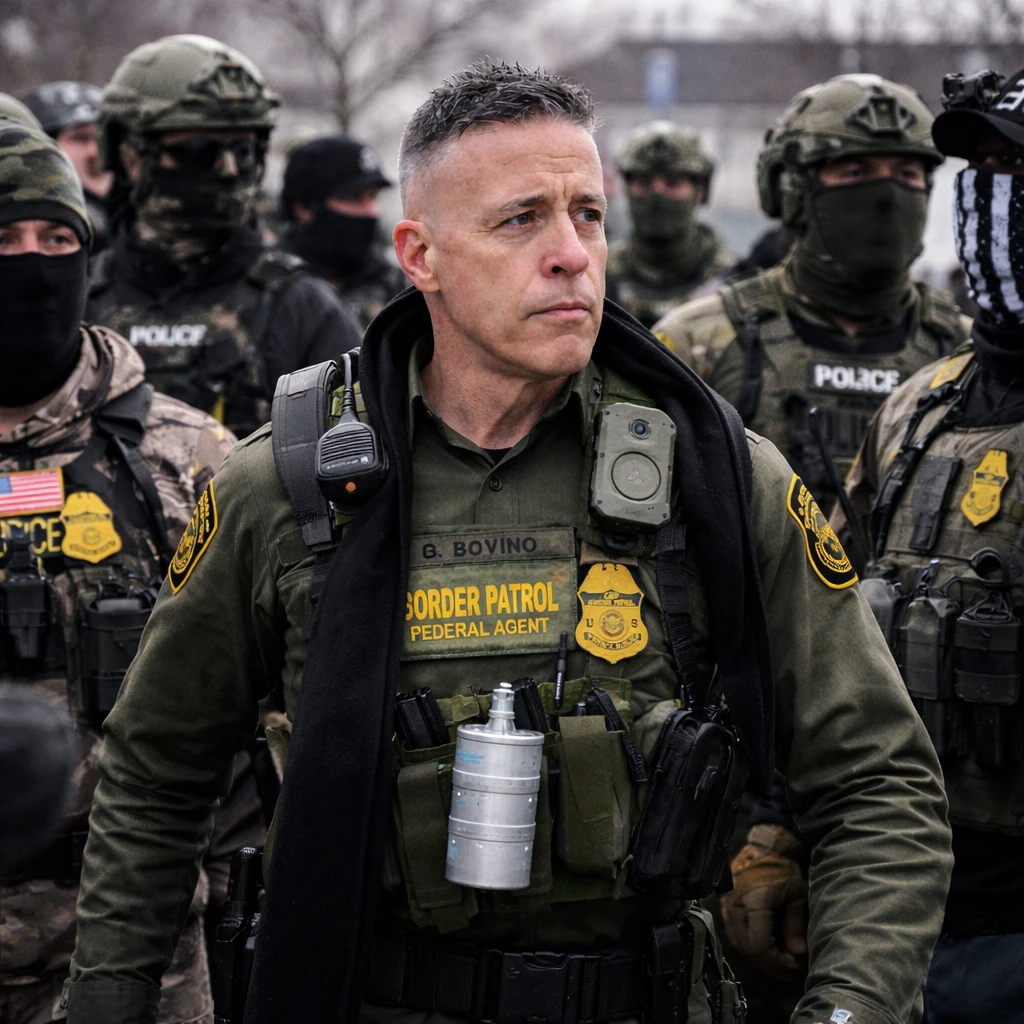

In Chicago, a 37-year-old carpenter named Juan Espinoza Martinez was acquitted on Thursday of charges alleging he offered a $10,000 bounty for the life of a prominent Border Patrol official via Snapchat. This verdict marks the first criminal trial resulting from the intensified immigration enforcement efforts in the Chicago metropolitan area initiated last year.
The jury reached its decision in under four hours, resulting in a not guilty verdict for Espinoza Martinez who faced a murder-for-hire charge carrying a potential prison sentence of up to a decade. The compressed duration of testimony during the federal proceeding underscored the ongoing scrutiny of the Trump-era federal immigration surge strategies implemented across various states from Minnesota to Maine.
Throughout the trial, Espinoza Martinez maintained a composed presence, dressed formally in a suit and tie, and after the court’s adjournment, he exchanged embraces and handshakes with his defense attorneys. Both his legal counsel and the prosecution refrained from commenting publicly following the verdict, as did the jurors.
The prosecution’s case relied heavily on digital evidence, specifically Snapchat messages that Espinoza Martinez sent to his younger brother and to an acquaintance who was cooperating with federal authorities. The messages included a statement offering "$10,000 if you take him down," accompanied by a photograph of Gregory Bovino. Bovino is a senior Border Patrol agent known for spearheading rigorous immigration crackdowns nationwide, including in the Chicago region.
U.S. First Assistant Attorney Jason Yonan emphasized the gravity of the messages during closing arguments, insisting that they should not be dismissed as jokes or trivial remarks, but rather viewed as serious and meaningful threats.
Conversely, the defense argued that the messages were no more than neighborhood gossip conveyed casually, with no intention or plan to act upon them. They portrayed Espinoza Martinez as an ordinary individual who was simply expressing hearsay while relaxing after work, possibly with alcoholic beverages, and lacking the financial means or intent to pursue such a violent undertaking.
Defense attorney Dena Singer contended that such communications did not amount to a federal offense, asserting, "Sending a message about gossip that you heard in the neighborhood, it’s not murder for hire." Neither the defense team nor federal authorities provided further comment after the trial concluded.
The prosecutors described Espinoza Martinez as having an obsessive fixation on Bovino, citing other messages critiquing the intensified enforcement operations. The defendant was initially detained in October amidst heightened federal immigration activities in Chicago, particularly affecting immigrant-rich neighborhoods such as Little Village where Espinoza Martinez resides.
He chose not to testify, but his recorded interview with law enforcement was introduced, in which he expressed confusion about the charges, admitted to sending the messages without much deliberation while browsing social media, and denied issuing threats or inciting harm.
Originally from Mexico and a long-term Chicago resident, Espinoza Martinez does not possess U.S. citizenship.
The Department of Homeland Security publicized his arrest on social media, labeling him a "depraved" gang member and releasing unredacted images. Bovino has cited cases like this to illustrate the heightened risks faced by federal immigration personnel. Jason Yonan, the second-ranking federal prosecutor in Chicago, was involved in the prosecution.
However, skepticism persists in the community and legal circles, as various lawsuits have challenged the credibility of federal narratives. Nearly half of the around 30 cases arising from Operation Midway Blitz have seen charges dismissed or withdrawn. In one high-profile lawsuit, a judge found that Agent Bovino provided false testimony, including misstatements about gang-related threats. Notably, Bovino did not appear as a witness in this trial.
Espinoza Martinez was initially described by prosecutors as a "ranking member" of the Latin Kings street gang, but a lack of corroborating evidence led Judge Joan Lefkow to prohibit gang-related testimony during the trial. The complaint suggested he sent messages on behalf of the gang, but this was never legally substantiated.
References to gang affiliations in court were limited, with Espinoza Martinez denying involvement and his brother testifying that the messages appeared to be jokes or recycled from social media platforms such as Facebook. Defense counsel criticized the prosecution's key witness, Adrian Jimenez, a construction firm owner who had communicated with the defendant and simultaneously acted as a government informant. Jimenez’s physical limitations and federal cooperation cast doubts on the reliability of his testimony.
Attorney Singer questioned the plausibility of Espinoza Martinez orchestrating a murder-for-hire plot through an informant who was physically impaired, highlighting inconsistencies in the government's case.