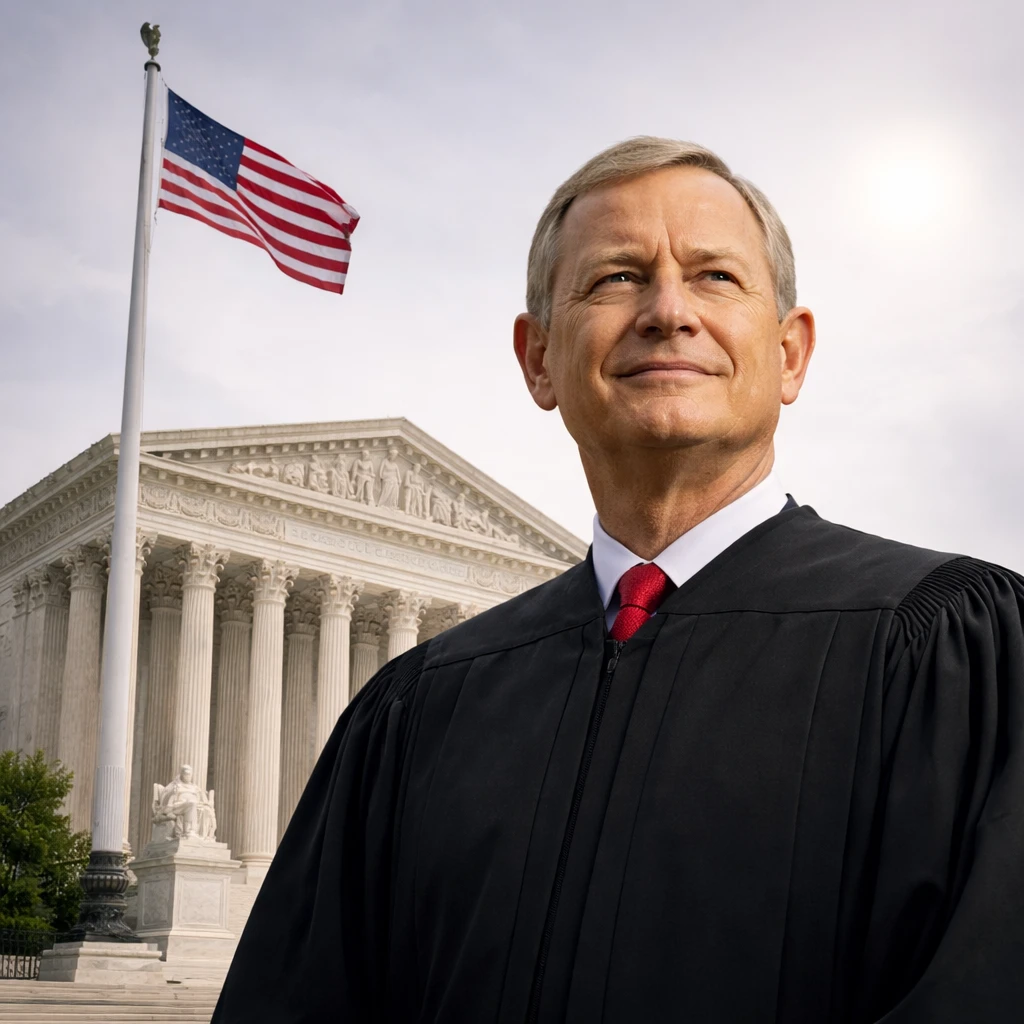

Chief Justice John Roberts delivered an assertive statement on Wednesday highlighting the Constitution’s enduring role as a steadfast foundation for the United States. His remarks arrive in the context of a recent period of heightened judicial and political turmoil, as the Supreme Court faces consequential cases that could significantly influence the nation's legal landscape.
In his annual letter addressed to members of the judiciary, Roberts invoked a historic quote from President Calvin Coolidge, noting that the nation's founding legal framework is “firm and unshaken.” He affirmed, “True then; true now,” emphasizing the ongoing robustness and relevance of the Constitution.
This communication follows a year marked by intense concern from both legal experts and Democratic lawmakers about a potential constitutional crisis. These apprehensions emerged amid contentious reactions from conservative factions supportive of then-President Donald Trump, particularly following judicial decisions that curtailed aspects of his broad conservative policy objectives.
Notably, Chief Justice Roberts made public comments in March to address tensions when President Trump called for the impeachment of a federal judge involved in rulings that challenged his administration's deportation of Venezuelan migrants suspected of gang affiliation. Such interventions by the Chief Justice are infrequent, indicating the gravity with which he regarded the situation.
Roberts’ most recent letter placed considerable emphasis on the historical evolution of the nation’s legal system. He referenced a landmark early 19th-century case which established the important precedent that judges must not be removed simply due to unpopular or controversial decisions rendered during their tenure.
Furthermore, Roberts urged judges to adhere closely to their oaths by adjudicating cases impartially, irrespective of the litigants' socioeconomic status. He stressed the necessity for judges to faithfully execute their responsibilities under the Constitution and U.S. laws.
During the tenure of the Trump administration, the federal judiciary, particularly lower courts, was often resistant to several executive initiatives. Nevertheless, the Supreme Court’s conservative majority granted the administration about two dozen significant victories through its emergency docket. Key rulings during this period permitted actions such as the temporary military ban on transgender individuals, reversal of billions of dollars of spending authorized by Congress, stringent immigration policies, and the dismissal of independently appointed federal agency leaders confirmed by the Senate.
Despite the administration’s many triumphs in the Supreme Court, it experienced several notable legal setbacks, including rulings against Trump's efforts to deploy National Guard troops to American cities. Looking ahead, the court faces high-stakes cases in 2026, such as assessing proposals to terminate birthright citizenship and evaluating the president’s authority to independently impose tariffs on numerous foreign nations.
The Chief Justice’s letter made limited direct reference to these upcoming matters. Instead, he opened with reflections on the influential 1776 pamphlet "Common Sense," authored by Thomas Paine, a recent immigrant to the British colonies in North America, drawing a connection to foundational democratic ideals. He concluded by reiterating Coolidge's counsel to seek reassurance from the Constitution and Declaration of Independence amidst the divisiveness of contemporary partisan politics.