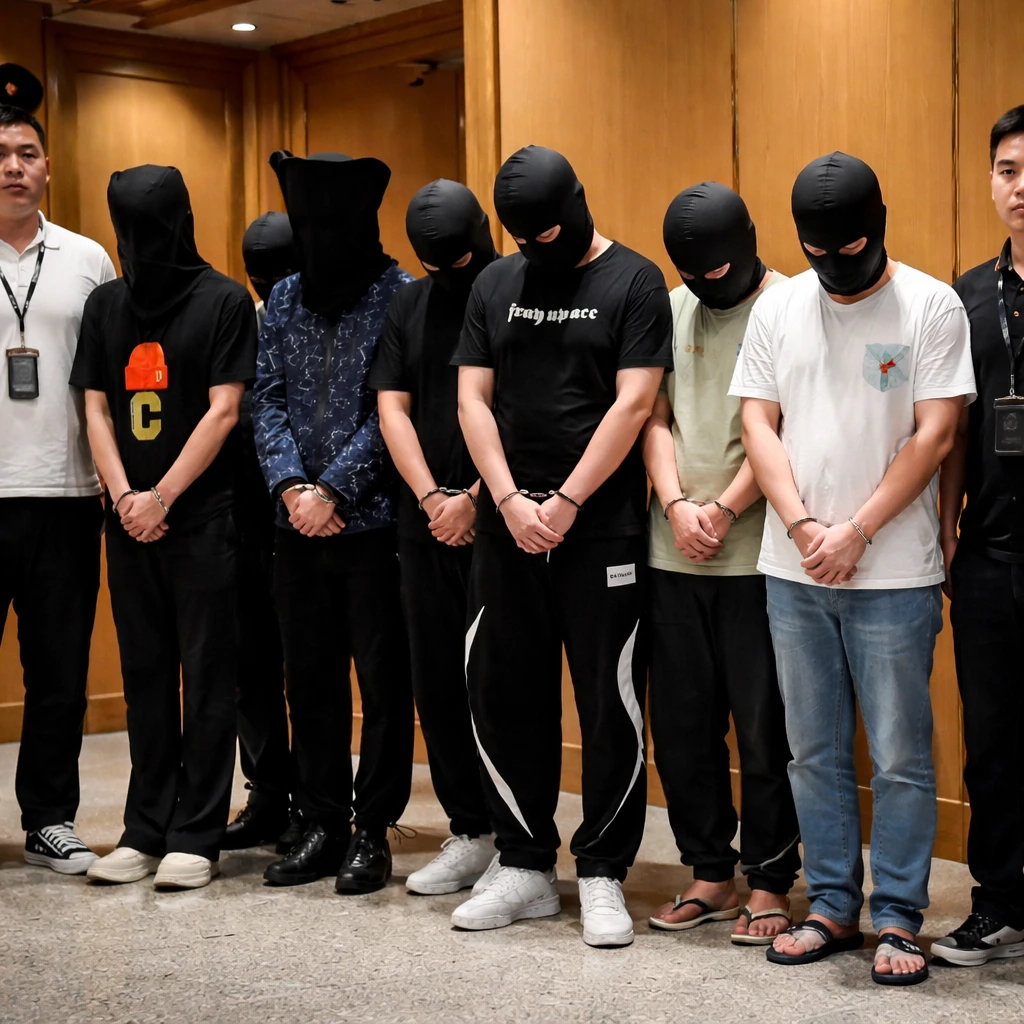

In a recent development, the Intermediate People’s Court of Wenzhou city in China has executed eleven individuals found guilty of orchestrating and operating large-scale scam and gambling enterprises, which also caused the death of 14 Chinese citizens. These executions were announced in an official statement released on Thursday morning, following the court's sentencing in September of the previous year.
The group included prominent figures such as Ming Guoping and Ming Zhenzhen, who are members of the Ming family and were identified by the court as leaders behind the illicit schemes. Other central figures included Zhou Weichang, Wu Hongming, and Luao Jianzhang, who were also adjudged to be significant contributors to the criminal operations. After sentencing, the defendants filed an appeal which was rejected by the court in November, although the judicial documents related to the appeal were not disclosed publicly at that time.
These individuals were initially detained in November 2023 following intensified pressure by Chinese authorities on the neighboring border regions shared with Myanmar. This pressure was part of a wider crackdown targeting scam networks operating across these borders.
Within Southeast Asia, scam parks have escalated into an industrial-scale business model, widely prevalent in Myanmar, Cambodia, and Laos. These operations frequently involve a combination of trafficked individuals and volunteers orchestrating digital scams aimed at victims throughout the world. Authorities in the implicated regions are consequently facing increasing international demands from China, the United States, and other countries to take decisive action against the proliferation of these criminal activities.
The crackdown and executions signify a stern approach by Chinese judicial and border enforcement agencies to suppress cross-border fraud and associated violent crimes. However, the issue remains complex due to the involvement of multiple nations and the transnational nature of these scam networks.