
China intensified its trade conflict with Japan on Wednesday through a newly announced investigation into imported dichlorosilane, a chemical gas essential in semiconductor production. This development comes just one day after China imposed restrictions on the export of dual-use items that could potentially be utilized by Japan's military forces.
The Chinese Ministry of Commerce disclosed the investigation, which was initiated after representatives from the local industry submitted an application citing a significant 31% price drop in dichlorosilane imports from Japan between 2022 and 2024.
According to the ministry, the influx of discounted Japanese products has adversely affected domestic industry operations and production. This action directly follows Beijing’s earlier decision to prohibit exports to Japan of certain dual-use goods that can have military applications.
The escalation is set against a backdrop of growing friction between Beijing and Tokyo. Japanese Prime Minister Sanae Takaichi, inaugurated late last year, suggested potential Japanese military intervention if China were to take measures against Taiwan—an island democracy claimed by Beijing as its territory.
The atmosphere worsened on Tuesday when Japanese lawmaker Hei Seki visited Taiwan, referring to it as an independent country. Hei Seki, also known as Yo Kitano, has been previously sanctioned by China for disseminating what it deems misinformation about Taiwan and other contested regions, and has been barred from entering China. His visit underscored political sensitivity, as he declared Taiwan’s distinct status publicly.
In response, Mao Ning, a spokesperson for China’s Foreign Ministry, dismissed Hei Seki’s remarks as unworthy of serious commentary, labeling them as ‘nasty words of a petty villain.’
Japan’s Foreign Ministry, represented by Masaaki Kanai, cautioned Beijing against continuing its unilateral trade restrictions, describing such measures that target Japan exclusively and contravene international norms as unacceptable. However, Japan has not yet announced any formal retaliatory actions.
Amid these escalating tensions, speculation has surfaced regarding China's potential to impose controls over rare earth element exports to Japan, reminiscent of previous restrictions implemented during trade tensions with the United States. Rare earth elements, particularly heavy ones, are critical in manufacturing durable magnets used in defense systems and electric vehicle technologies. Although official Chinese sources have not confirmed new rare earth curbs, reports from the state-controlled China Daily cite unidentified officials indicating possible export tightening to Japan, though independent verification is lacking.
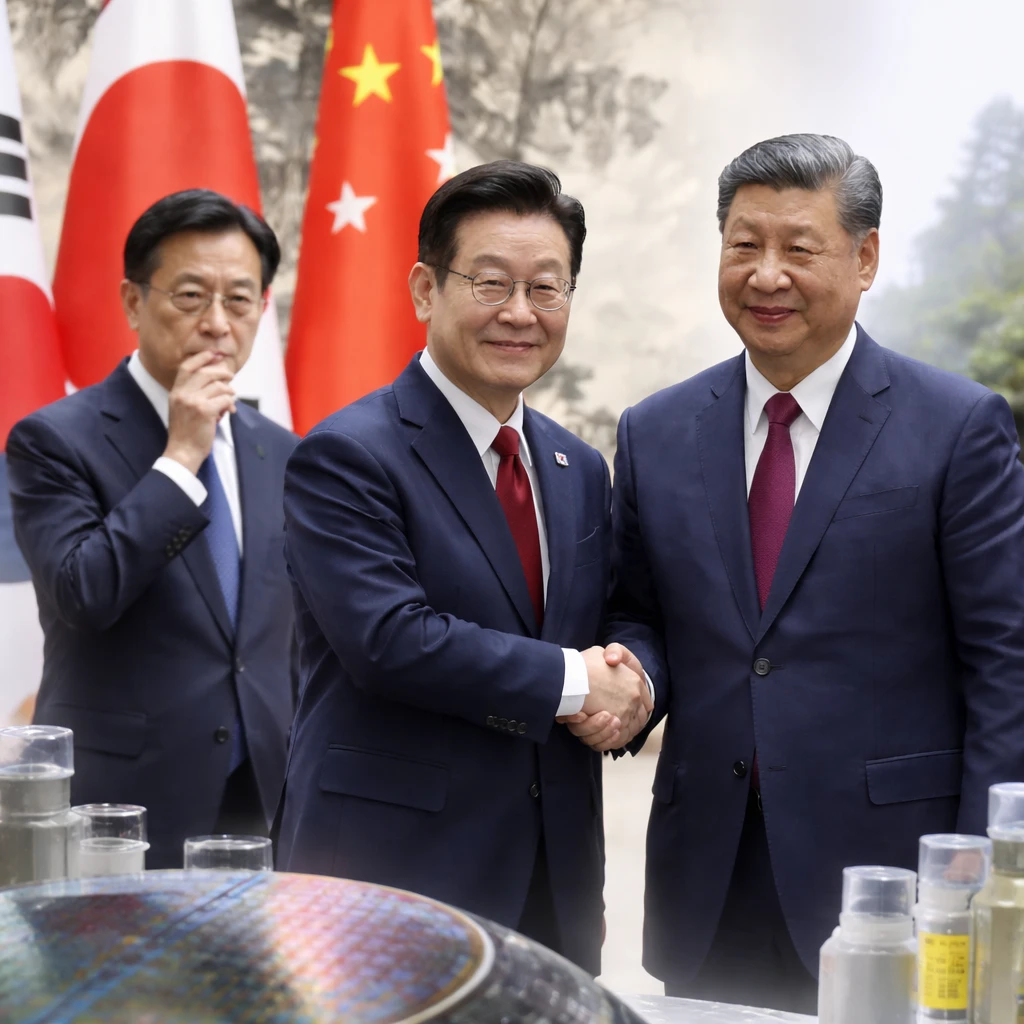
Simultaneously, China is enhancing relations with South Korea—a strategic regional contrast to its discord with Japan. South Korean President Lee Jae Myung recently concluded a four-day diplomatic mission to China, his first as president. During this visit, President Lee and Chinese President Xi Jinping endorsed multiple cooperation agreements encompassing technology, trade, transportation, and environmental initiatives.
The visit highlighted burgeoning business partnerships between South Korean and Chinese companies, with two significant business events cementing commitments to collaboration. The two countries formalized 24 export contracts totaling approximately $44 million, as per South Korea's Ministry of Trade, Industry, and Resources.
Further reflective of growing China-South Korea ties, Chinese media reported an increase in outbound flights to South Korea from the Chinese mainland, surpassing Japan as the primary destination during the New Year holiday period. This shift occurs amid China’s discouragement of travel to Japan, citing Japanese leaders’ remarks on Taiwan as creating considerable risk to Chinese citizens’ safety in Japan.