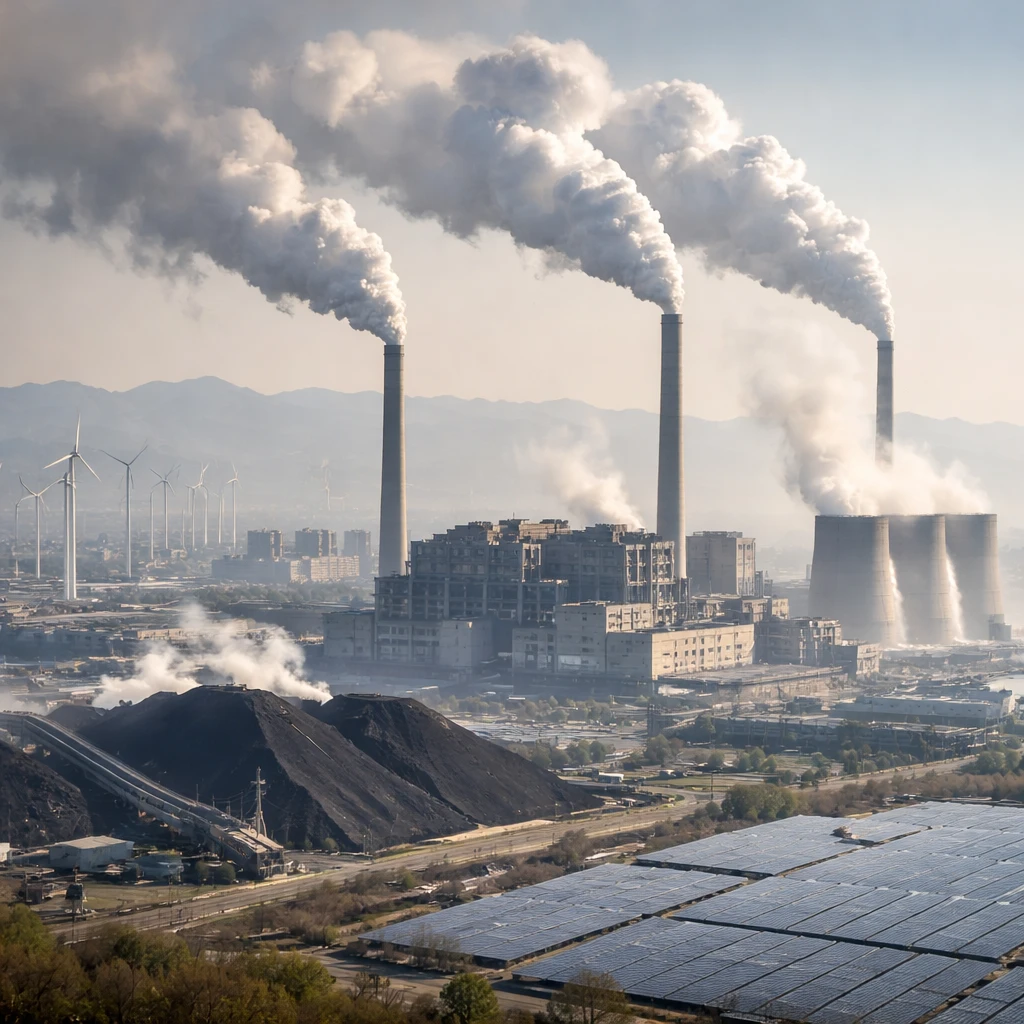

In a notable development in China’s energy sector during 2025, the country substantially expanded its coal-fired power capacity despite simultaneously accelerating investments in renewable energy sources such as solar and wind. More than 50 new coal power units, each with a capacity of at least 1 gigawatt, were brought online last year. This figure marks a significant increase from under 20 such units annually over the prior ten years, according to findings from a recent joint study by the Centre for Research on Energy and Clean Air and Global Energy Monitor.
This increase in coal capacity amounted to a total of 78 gigawatts, representing a considerable uptick when contrasted with past years. To contextualize, a single gigawatt can power hundreds of thousands to over two million homes depending on consumption levels, underscoring the magnitude of this coal expansion. Christine Shearer, co-author of the report and representative of Global Energy Monitor, remarked on the unprecedented scale by highlighting that China’s 2025 coal commissioning outpaced India's cumulative coal additions over the entire preceding decade.
At the same time, the expansion of renewable energy was even larger, with China adding 315 gigawatts of solar capacity and 119 gigawatts of wind power. These increases contributed to a slight decline of approximately 1% in coal’s share of total electricity generation, as renewable sources met all the growth in electricity demand throughout the year. Official data from China’s National Energy Administration confirms the sizeable increments in green energy infrastructure during this period.
The juxtaposition of rising coal capacity with fast-growing clean energy sources raises an intricate question: why does China continue to add coal-fired generation facilities at such a pace? The answer is multifaceted. China remains at a developmental stage where energy consumption must grow to sustain economic advancement and urbanization. The expanding middle class in a population of 1.4 billion means increased demand for energy-intensive appliances and industrial output, placing pressure on the power system. Additionally, burgeoning electricity needs stem from efforts to bolster artificial intelligence and other emerging technologies prioritized by the government.
Energy security concerns were heightened by power shortages in certain regions during 2021 and 2022, which led to factory shutdowns and intermittent blackouts. These events prompted Chinese authorities to endorse increased coal plant construction, resulting in a surge of applications and permits for new coal projects. Qi Qin, co-author of the report from the Centre for Research on Energy and Clean Air, pointed out the difficulty of reversing these projects once permits are granted. Supporting the report's findings, construction on coal-fired capacity reached 83 gigawatts in 2025, indicating that additional capacity is likely to come online in the near future.
The role of coal within China’s power generation mix is officially described as a necessary complement to renewable sources, which are subject to intermittency due to weather and diurnal cycles. For example, a drought impacting hydropower output in western China exacerbated power supply challenges in 2022. Consequently, the National Development and Reform Commission has recommended that coal retain an important balancing function for years ahead, while its environmental footprint be reduced through cleaner and more efficient technologies.
The China Coal Transportation and Distribution Association articulated similar views, emphasizing coal’s ongoing importance for grid stability even as alternative energies progressively replace it. However, industry analysts warn that the substantial buildout of coal plants brings risks of delaying the energy transition. Political commitments and financial incentives may result in prolonged operation of the new coal fleet, constraining the expansion potential for renewable capacity and complicating emissions reduction efforts.
To mitigate such risks, the report urges China to accelerate the retirement of obsolete coal facilities and to make firm commitments in its upcoming five-year plan—set for approval in March—to prevent an increase in power-sector emissions between 2025 and 2030. Ultimately, the environmental impact of China’s coal expansion will depend on whether coal plants primarily serve as flexible backup resources or continue functioning as baseload power sources.
China’s energy landscape in 2025 thus reflects a complex balance between expanding clean energy capacity and maintaining robust coal generation to ensure energy security and support economic growth. How effectively the country manages this balance will likely influence emissions trajectories and the broader global challenge of climate change.