
Chinese Imports Surge into Latin America Amid Strategic Economic Shifts
February 2, 2026
News & Politics

Chinese Imports Surge into Latin America Amid Strategic Economic Shifts

Electric vehicles and e-commerce goods from China press local markets in Brazil, Mexico, and Chile

Summary

Chinese electric vehicles (EVs) and low-cost goods are rapidly expanding their presence in Latin American markets such as Brazil, Mexico, and Chile. Supported by substantial government subsidies and competitive production costs, Chinese brands dominate new sectors like EVs and online retail. This influx prompts protective responses from regional governments eager to shield local industries. The trend illustrates China's growing technological capabilities and strategic economic partnerships in Latin America, although challenges remain around market competition and regulatory responses.

Key Points

Chinese electric vehicles constitute over 80% of the EV sales market in Brazil in 2024, with brands like BYD and GWM leading.
Mexico’s automotive market saw approximately 15% of its vehicle sales come from Chinese manufacturers last year, reflecting substantial import penetration.
Latin American governments, including those of Mexico, Brazil, and Chile, have introduced policies aimed at restricting some cheap Chinese imports to protect local industries.

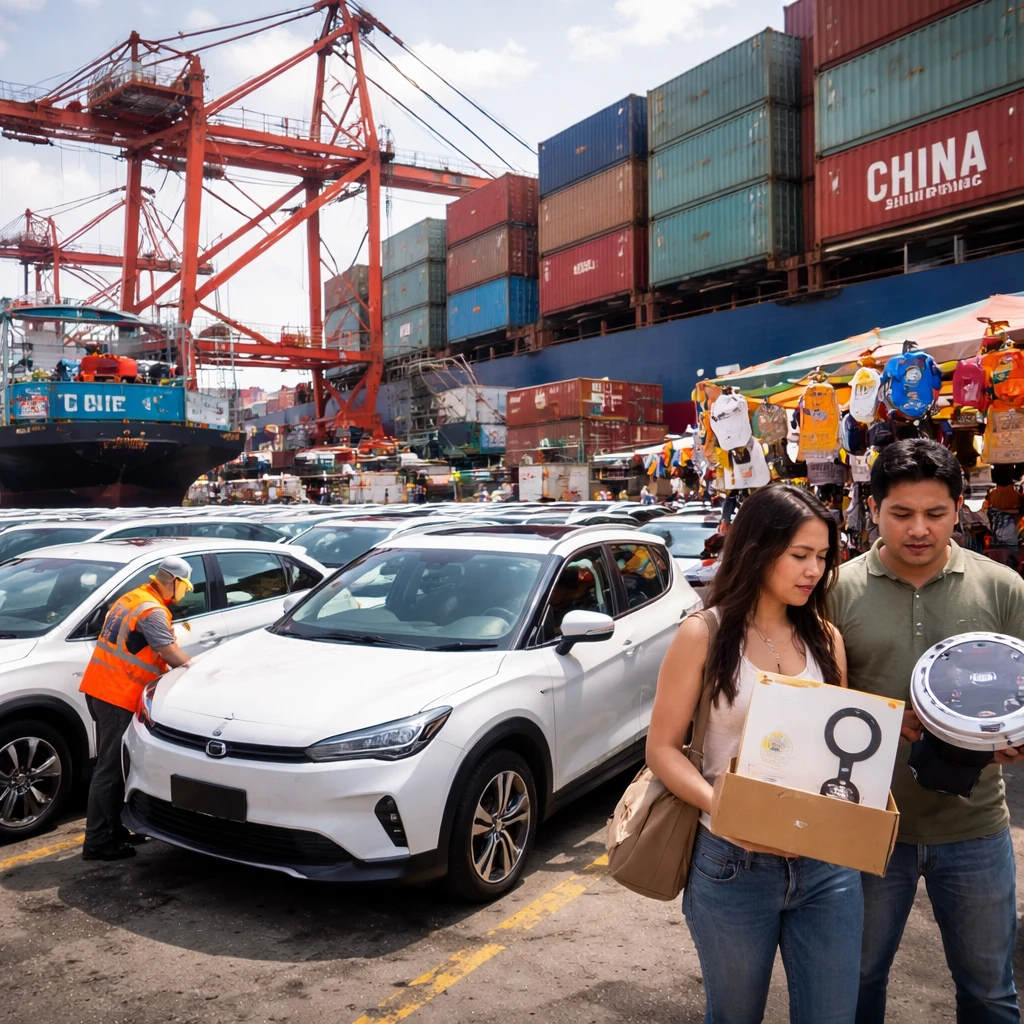
Chinese-manufactured electric vehicles (EVs) and inexpensive e-commerce products are increasingly penetrating Latin American markets, notably in countries such as Brazil and Mexico, raising concerns among local officials and industry stakeholders over competitive pressures.

Latin America holds a vital strategic position for China, which is actively strengthening its economic relationships with rapidly developing markets including Brazil and Chile. Amid slowing demand in its domestic economy, Chinese automakers and producers are redirecting efforts to expand their customer base internationally.

Countries like Mexico, Brazil, and Chile have implemented measures intended to limit certain low-cost Chinese imports. These initiatives aim to safeguard domestic industries vulnerable to competition fueled by Chinese products benefiting from substantial governmental subsidies, robust state support, and lower manufacturing costs.

Chinese automotive brands, in particular, have made significant inroads into the Latin American EV market. In Brazil, Chinese brands such as BYD and Great Wall Motor (GWM) accounted for more than 80% of the over 61,000 electric vehicles sold in 2024. In Mexico, Chinese-made vehicles represented roughly 15% of total domestic automobile sales in the previous year, a figure substantially higher than in the United States, where tariffs have largely restricted Chinese car imports.

Notably, BYD, which surpassed Tesla as the global leader in EV production, recently offloaded a shipment exceeding 5,800 electric and hybrid vehicles in Argentina. This surge aims to capitalize on an Argentine policy permitting tariff exemptions for imports of up to 50,000 EVs and hybrids annually, reflecting a strategic move by the Chinese automaker to expand its presence in the Latin American market.

Beyond automobiles, affordable goods distributed through Chinese e-commerce platforms such as Temu and Shein are increasingly prevalent in Latin American consumer markets, further intensifying local industry concerns.

José Manuel Salazar-Xirinachs, the executive secretary of the Economic Commission for Latin America and the Caribbean headquartered in Chile, emphasized China’s rapid progress in technological advancements and product innovation, particularly referencing the EV sector. He remarked that China should no longer be perceived primarily as an exporter of basic goods, highlighting the evolving nature of its export economy.

Risks
  • Continued influx of low-priced Chinese goods may undermine the competitiveness of domestic manufacturers in Latin America, especially in the automotive and retail sectors.
  • Relaxation or gaps in tariff and import policies, such as Argentina’s tariff-free allowance for EVs, might accelerate market disruptions affecting local producers and employment.
  • Dependence on imports of technologically advanced products like EVs from China may expose Latin American economies to external economic vulnerabilities and constrain local industrial development.
Disclosure
This article reflects analysis based on available data up to mid-2024 and incorporates statements from regional economic officials without speculative or forward-looking assertions.
Search Articles
Category
News & Politics

News & Politics

Related Articles
Intel Shares Experience Downward Pressure Amid Supply Constraints in Chinese Market

Intel Corp.'s stock slipped on Tuesday, diverging from modest gains in major market indices. The dec...

FDA Initiates Review of BHA Food Additive Safety

The U.S. Food and Drug Administration (FDA) has announced plans to conduct a comprehensive reassessm...

Partisan Divide Deepens as White House Excludes Democratic Governors from NGA Meeting

The longstanding bipartisan forum of the National Governors Association (NGA) is facing disruption a...

Using Fireplace Ashes in Your Garden: Benefits and Considerations

Amidst a notably cold winter leading to increased fireplace use, many homeowners are seeking sustain...