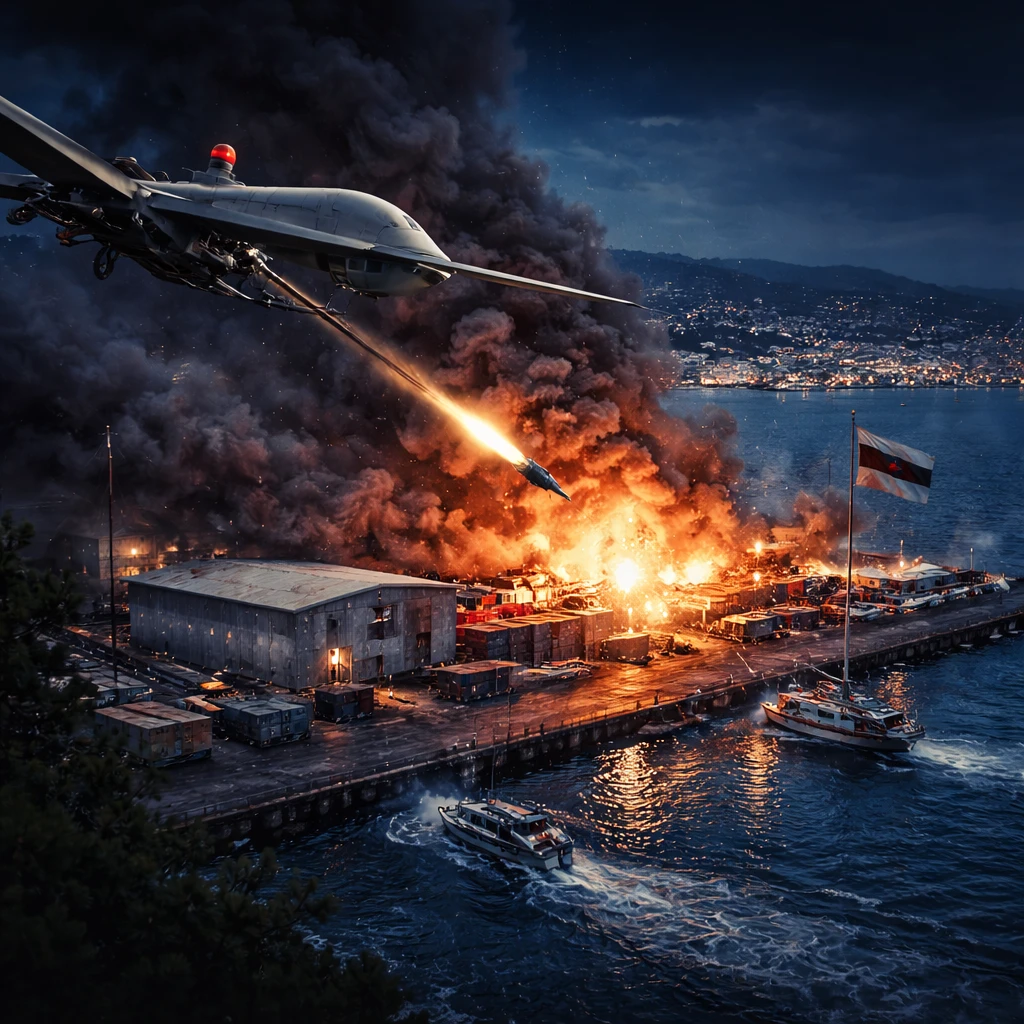
Last week, a drone strike executed by the Central Intelligence Agency (CIA) targeted a docking location suspected to be utilized by Venezuelan drug trafficking networks, according to two informed individuals who spoke anonymously due to the classified nature of the operation. This event constitutes the first reported direct U.S. operation conducted on the mainland of Venezuela since the administration intensified its counter-narcotics efforts in September.
The strike notably escalates the ongoing pressure campaign against Venezuelan President Nicolás Maduro’s administration, although authorities in Venezuela have yet to acknowledge the incident publicly.
President Donald Trump referenced the operation during a radio interview with John Catsimatidis on WABC in New York. He described the target as a significant "facility where ships come from." Later, while hosting Israeli Prime Minister Benjamin Netanyahu at Mar-a-Lago, Trump specified that the strike was directed at a docking area used to load vessels with narcotics. When questioned whether the military or the CIA conducted the attack, the president refrained from confirming either option.
Both the CIA and White House officials declined to provide further details about the mission. Additionally, Col. Allie Weiskopf, spokesperson for the U.S. Special Operations Command—which is responsible for operations in the Caribbean region—stated that Special Operations forces did not support the strike in any capacity, including intelligence assistance.
This operation is part of a larger increase in U.S. military presence in the Caribbean Sea beginning in August, characterized by a series of approximately 30 air and maritime strikes against alleged drug trafficking vessels in the Caribbean and eastern Pacific regions. More recently, President Trump has implemented a quasi-blockade targeting sanctioned Venezuelan oil tankers, asserting the need to interrupt illicit economic activities tied to Maduro's government.
CNN initially reported the CIA's involvement in the strike. Over several months, Trump had threatened initiating attacks on targets within Venezuelan territory and broke from tradition by publicly acknowledging he authorized the CIA to carry out covert actions inside Venezuela’s borders.
U.S. intelligence activities of this nature require notification to senior congressional intelligence leaders. However, by assigning this land-based strike to the CIA, the administration may anticipate reduced legislative scrutiny compared to conventional military operations.
In October, Trump explained his approval of CIA operations with two primary reasons: the influx of individuals released from Venezuelan prisons into the United States and the significant volume of drugs entering the country via maritime routes linked to Venezuela.
The president has frequently asserted that Maduro’s regime is nearing its end. Since 2020, Maduro and several close associates have been indicted in U.S. federal courts on charges including narcoterrorism.
Despite these charges and a doubled U.S. Justice Department reward of $50 million for information leading to Maduro's arrest, the Venezuelan leader has denied all allegations. Notably, Maduro did not address the reported CIA operation in his recent one-hour address at an international leadership event for women.
This covert strike thus signals a marked intensification in U.S. tactics toward challenging Venezuela’s government, combining intelligence-led interventions with military and economic pressure to disrupt drug trafficking and sanctions evasion networks associated with the Maduro administration.