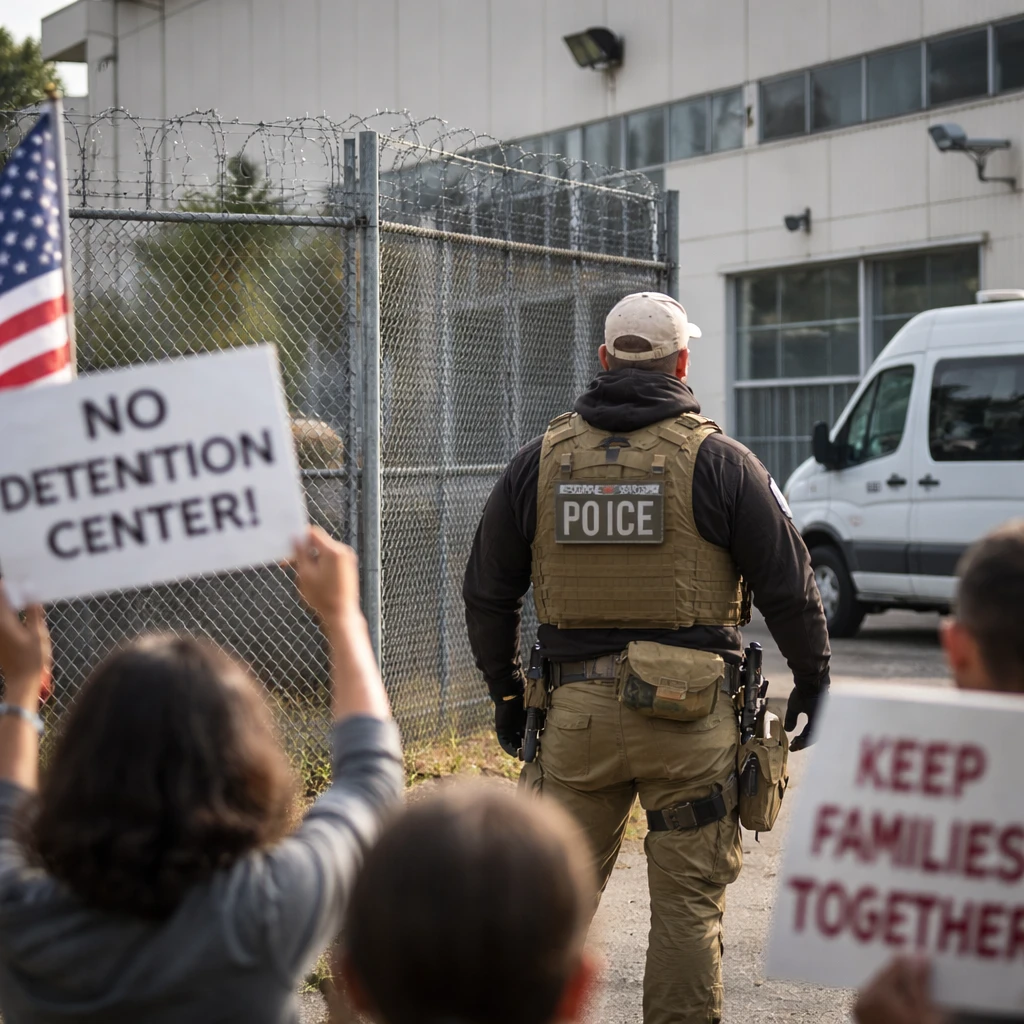

Across the United States, federal immigration agencies are actively seeking out and purchasing warehouse properties with the intent to develop new detention and processing centers. This initiative has prompted considerable unease and opposition from cities, elected officials, and community advocates, some of whom have influenced property owners not to proceed with sales or leases to Immigration and Customs Enforcement (ICE). Additionally, some municipalities have formally expressed their opposition or enacted moratoriums to prevent the establishment of such facilities within their jurisdictions.
ICE has acknowledged an ongoing need to expand detention capacity but has offered few concrete details regarding the specific properties in question or the nature of their intended conversion. The agency emphasizes that these sites will not merely function as traditional warehouses but will be transformed into "well structured detention facilities." Despite these assurances, many local governments remain critical, stressing a lack of consultation in the process.
Arizona
Last month, ICE acquired a large warehouse on the northwestern edge of Phoenix for $70 million, as documented in a deed filed with Maricopa County. The City of Surprise, near the property, stated it was unaware of any procurement efforts and had not been informed by ICE or Homeland Security regarding potential usage of the facility. The city also highlighted that federal projects are generally not subject to local zoning laws.
Florida
In Orlando, Mayor Buddy Dyer clarified that local authorities have limited legal recourse to prevent ICE from establishing a facility. Although federal officials and private contractors were observed inspecting a substantial industrial warehouse, ICE senior advisor David Venturella described the visit as exploratory, with no definitive decisions made. The city attorney affirmed that ICE operations are exempt from local regulatory interference that would conflict with federal mandates.
Indiana
The Merrillville town council formally opposed an ICE plan to convert a newly built 275,000-square-foot warehouse into a detention or processing center. The council noted that while there had been site inspections, no formal communication from federal authorities regarding acquisition or development plans had been received. The city is currently reviewing zoning and occupancy considerations in light of these developments.
Maryland
ICE purchased a warehouse northwest of Baltimore for $102.4 million, revealed through a deed discovered by the Maryland ICE oversight group Project Salt Box. Officials in Washington County received a letter from Homeland Security indicating potential use of the site as a Baltimore processing facility with amenities like cafeterias, health services, tents, and guard posts. However, the county acknowledged it cannot impose zoning restrictions that would deter federal government activities dictated by federal law.
Minnesota
Public resistance in Minneapolis suburbs led warehouse owners in Woodbury and Shakopee to withdraw from discussions with ICE. Woodbury's Mayor Anne Burt confirmed that a local warehouse would not be leased or sold to the federal government following community feedback. Similarly, a state representative shared that objections from residents influenced the decision in Shakopee.
Mississippi
Federal personnel were observed evaluating a privately owned facility in Marshall County. Local officials indicated they were unaware of the visit beforehand and declined further comment due to ongoing local priorities. The property is advertised for sale and lease by a commercial realty firm.
Missouri
The Kansas City council enacted a five-year moratorium on detention facilities not operated by the city on the day ICE representatives toured a large warehouse near the city. State representative Manny Abarca recounted being initially threatened with trespass at the facility but was later allowed inside, where ICE officials disclosed scouting for a 7,500-bed location. Abarca has proposed similar restrictions at the county level to address community concerns.
New Hampshire
Merrimack’s town council expressed opposition through a letter directed to Homeland Security Secretary Kristi Noem, citing potential detrimental impacts on local tax revenues and public services. Though the federal agency responded that reviews of detention infrastructure were ongoing without public announcements, the American Civil Liberties Union revealed that ICE engaged with state historic preservation offices regarding a 43-acre site. Local legislators expressed unease over the lack of transparency and anticipated infrastructural strain.
New Jersey
Roxbury township officials, responding to observations of ICE personnel touring a warehouse, passed a resolution opposing any detention facility. The property falls under zoning regulations preventing such uses. Despite no formal communication from ICE, township officials circulated engineering analyses regarding site infrastructure. State Senator Cory Booker also inspected the site amid community attention.
New York
Local leadership in Chester, north of New York City, has mobilized against a federal plan to acquire a warehouse for ICE activities. Proposed modifications include a guard structure and an outdoor recreation area within a flood-prone area. State Senator Michelle Hinchey has pledged support for local boards to utilize legal and environmental regulations to challenge the project.
Oklahoma
Oklahoma City’s mayor announced that negotiations to purchase a warehouse for ICE operations have ceased after the city council sought federal engagement in local permitting procedures. The property owners confirmed ending discussions with Homeland Security, garnering praise from the mayor for their community consideration amidst local opposition.
Pennsylvania
ICE paid $87.4 million for a roughly 520,000-square-foot warehouse in Berks County. The property had been marketed as a high-tech logistics center within accessible distance to major metropolitan areas. County officials learned of the transaction through public records but have not received details regarding future facility plans.
Texas
In El Paso County, local commissioners formally opposed ICE detention facility construction reportedly under consideration and are collaborating to acquire more information. Other Texas cities named in speculation have yet to receive official federal communication.
Utah
Salt Lake City’s mayor expressed appreciation when a developer declined to sell or lease a warehouse previously eyed by ICE. The mayor reiterated opposition to detention centers within city limits, emphasizing that zoning restrictions alone do not encapsulate community resistance.
Virginia
Hanover County officials have requested legal analysis after Homeland Security notified them of its intent to establish an ICE processing center in a commercial and hospitality district. County leadership recognized limited capacity to influence federal land use but acknowledged significant public debate, with both supporters and critics voicing their perspectives at public meetings.
Overall, these developments underscore a growing divide between federal immigration enforcement objectives and local community responses. While ICE pursues increased detention capacity through warehouse acquisitions nationwide, municipalities grapple with limited consultation, legal exemptions for federal projects, and concerns about economic, social, and infrastructural impacts.