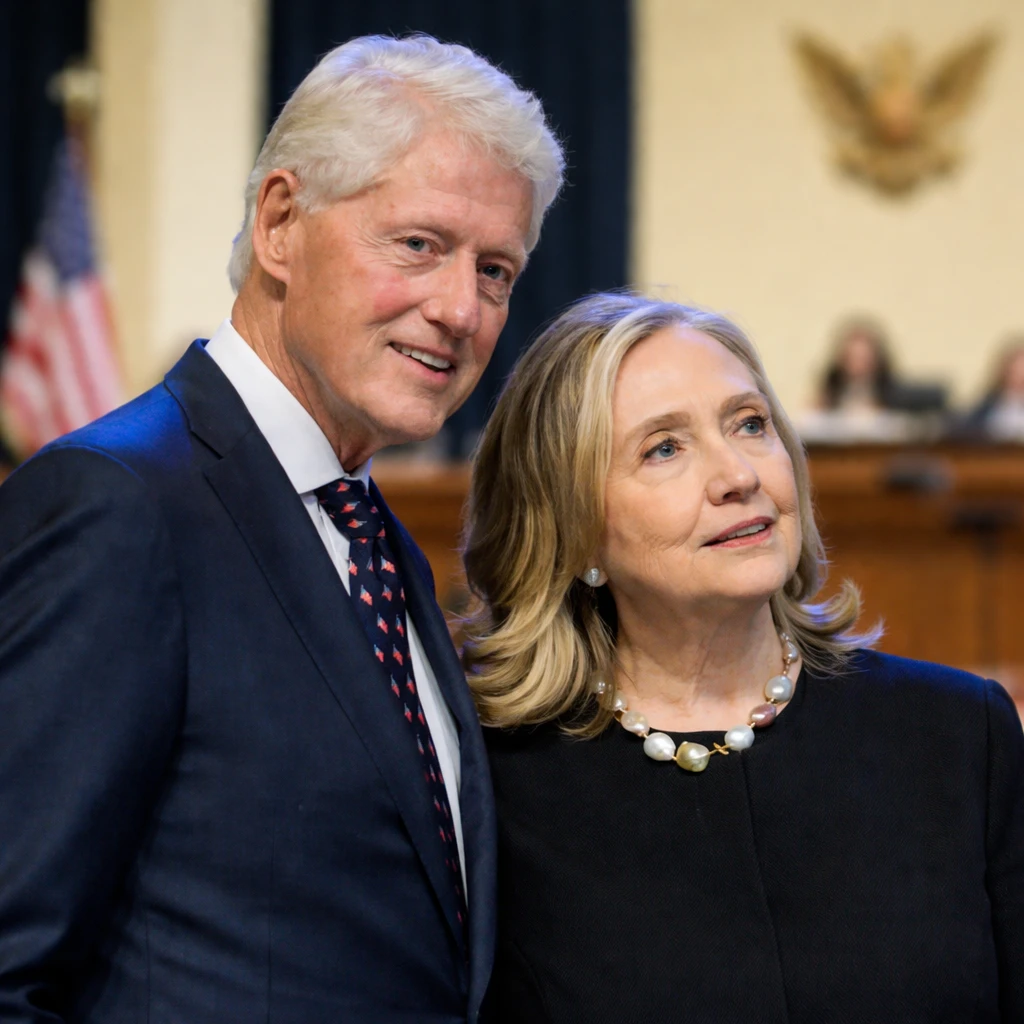

In a significant development in the congressional inquiry into Jeffrey Epstein, former President Bill Clinton and former Secretary of State Hillary Clinton have agreed to provide testimony before the House Oversight Committee this February. This agreement comes after extended negotiations between the Clintons’ legal team and House Republicans, who had escalated pressure by advancing potential contempt of Congress charges against the couple.
The hearings are slated for February 26 for Hillary Clinton and February 27 for Bill Clinton. These dates represent a historic moment, as it is the first occasion on which a former president has been compelled to testify under oath before the legislative body. The House Oversight Committee’s investigation centers on Epstein, a convicted sex offender who died in jail in 2019, and his associate, Ghislaine Maxwell, focusing on the network Epstein established among wealthy and powerful individuals.
Representative James Comer, chair of the Oversight Committee, emphasized the committee’s commitment to transparency and accountability, stating his anticipation for questioning the Clintons within the framework of the broader investigation into heinous abuses committed by Epstein and Maxwell.
The journey to securing the Clintons’ cooperation involved prolonged resistance from their side, with initial refusals to comply with subpoenas followed by debates over their validity. Republican lawmakers, backed by a faction of Democrats eager for transparency, proceeded to consider criminal contempt citations that could have led to serious legal penalties including fines and imprisonment.
House Speaker Mike Johnson intervened to place contempt proceedings on hold following the agreement, signaling a temporary de-escalation of the conflict. Notwithstanding the eventual cooperation, negotiations were marked by mutual skepticism and disagreement over procedural elements such as whether depositions would be recorded and transcribed, with agreement finally reached on both.
Comer conveyed to press that Republicans view this inquiry as crucial for uncovering the mechanisms through which Epstein cultivated relationships with elite individuals. While the Clintons preferred public testimony, Comer insisted on private depositions with subsequent public transcript release, remaining open to the possibility of a future public session should the Clintons request it.
The Clintons’ connection to Epstein, while acknowledged, has not led to accusations of misconduct against them. Both have denied awareness of Epstein’s sexual abuse of minors prior to legal actions against him. Their earlier legal stance sought to limit testimony to written declarations rather than personal appearance, but mounting congressional pressure altered their position.
Both Bill and Hillary Clinton have criticized the conduct of the investigation by Comer, pointing to a perceived focus on their involvement rather than on federal transparency pertaining to Epstein-related documents from the Trump administration era. However, the advancement of contempt charges by the Oversight Committee garnered support from a number of Democrats alongside Republicans, indicating a bipartisan willingness to push for the Clintons’ testimony.
The dynamics within the Oversight panel, including the votes of progressive Democrats less connected to the Clintons' longstanding leadership role in the party, contributed to the pressure culminating in the Clintons’ compliance. House Democratic leadership indicated little intention of mobilizing robust opposition to the contempt resolutions, narrowing the Clintons’ options.
Observers note that this situation could establish a precedent requiring former presidents to comply with congressional subpoenas, a departure from historic deference traditionally afforded to former officeholders. Representative Daniel Goldman expressed optimism about applying this precedent in future congressional sessions.
By contrast, former President Donald Trump’s legal team successfully resisted a congressional subpoena in 2022 regarding investigations into the January 6 Capitol riot, invoking long-standing legal protections for ex-presidents. That effort resulted in withdrawal of the subpoena without compelling testimony.
In a separate setting recently, President Joe Biden referred to the Clintons' forthcoming depositions as "a shame" while expressing personal regard for Bill Clinton and acknowledging Hillary Clinton’s debating skills and intelligence, highlighting the nuanced political relationships involved.