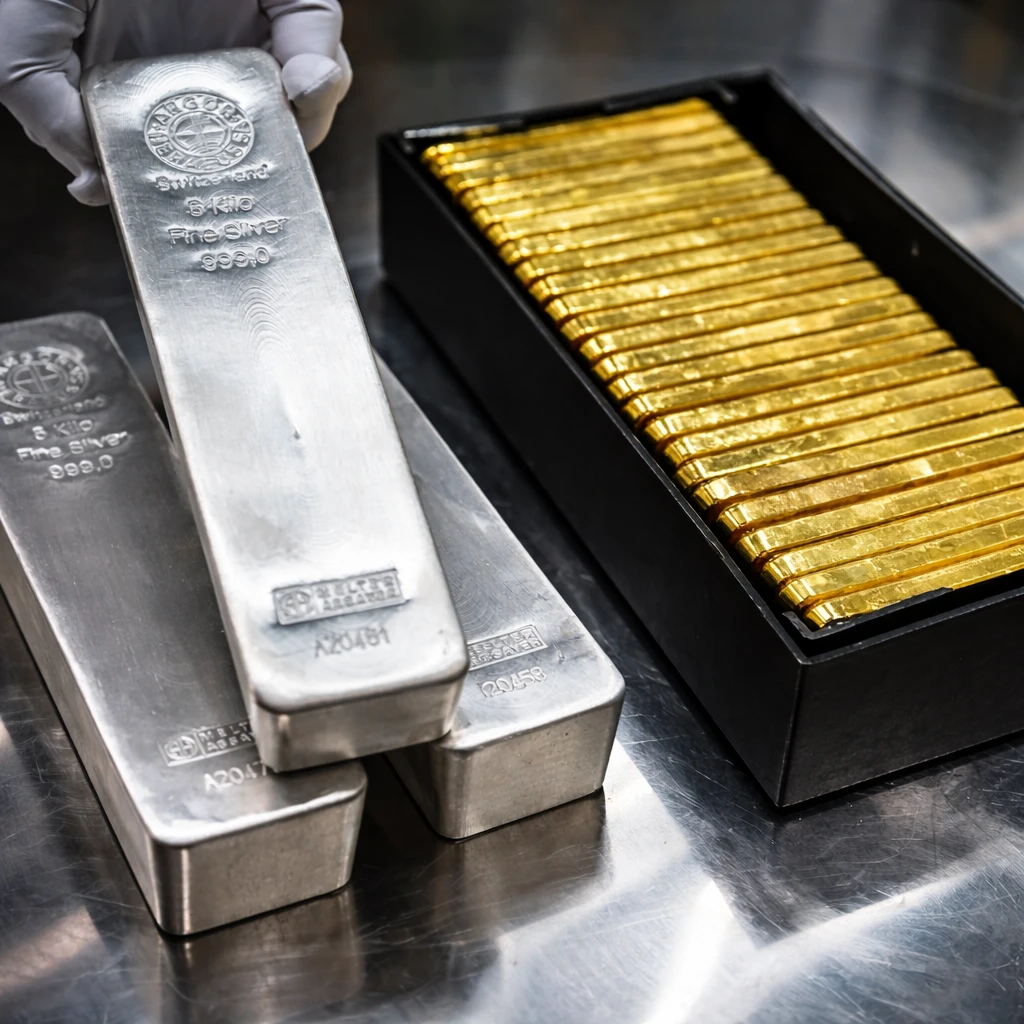

On Monday, futures for gold and silver dropped markedly after the Chicago Mercantile Exchange (CME) implemented higher margin requirements for commodities trading on its platform, signaling a cautionary approach amidst soaring precious metals prices. This year's rally has been substantial, with gold prices increasing by 65% and silver more than doubling in value.
The CME publicized the adjustments in margin requirements on Friday via its website, stating that the change was in response to their standard evaluation of market volatility. Margin requirements represent the cash deposits traders must provide to cover potential losses and ensure they fulfill obligations related to their contracts.
Such increases by exchanges are common when assets experience swift and considerable price advancements, serving as protective measures against default risks during contract delivery. Following the announcement, silver futures nosedived approximately 8% early Monday, while gold slipped nearly 5%. This represents a noteworthy retracement after months of robust gains.
Silver's meteoric rise has brought prices to levels surpassing historical peaks from the early 1980s, a period marked by intense speculative activity that ultimately collapsed. Factors driving current prices include tightening supply as mining outputs from major producers have slowed considerably. Additionally, silver's expanding industrial applications, particularly in solar energy technologies and data center infrastructures, have heightened demand, contributing to the upward price pressure.
At the dawn of 2025, silver futures were trading near $30 an ounce but approached $80 an ounce before the CME's margin adjustment. Gold's rally is partly attributed to geopolitical tensions and investor concern over inflated valuations in certain equity markets. Investors often view silver as the "poor man's gold" due to its price accessibility while exhibiting price dynamics somewhat aligned with gold. However, silver's greater usage in industry makes its price more volatile and sensitive to economic cycles compared to gold.