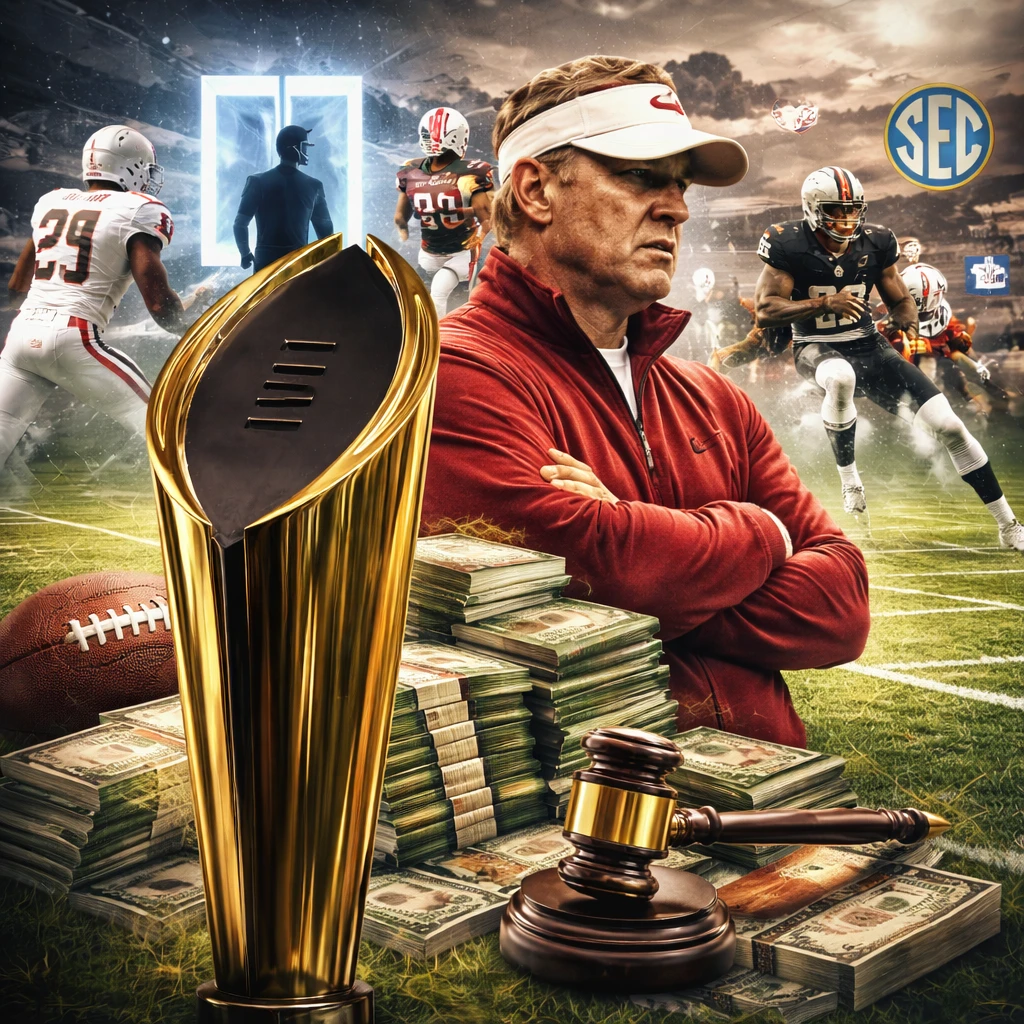

College football concludes its tumultuous season this Monday with a championship matchup between Indiana and Miami, a pairing unexpected amid a season marked by significant upheaval both on and off the field. Once the complex legal battle over player compensation concluded last summer, there was optimism that the sport might stabilize, even if briefly. However, that hope has been quickly tempered by a series of ongoing challenges evolving in rapid succession.
NCAA President Charlie Baker attributed the complexity of the situation to the volume and speed of developments, noting stakeholders are "trying to find clarity within it." At the epicenter is a recent federal court settlement permitting universities to compensate athletes up to $20.5 million, alongside efforts by institutions to circumvent the compensation ceiling through affiliated third-party arrangements. This financial shift is straining athletic budgets at major programs and impinging on donor allocations, serving as a fulcrum for the broad disruptions evident in college sports this season.
A notable facet of this financial landscape is the increasing involvement of private investors in collegiate athletics. This issue surfaced prominently in the Big Ten Conference, where member institutions Michigan and Southern California opposed a proposed deal to centralize the league’s media rights spanning through 2036. The plan included a significant infusion of approximately $2.4 billion from a University of California pension fund affiliate. Allegations emerged from Michigan regarding coercion attempts by the conference to secure consent, accusations which the conference has denied. Consequently, the proposal is currently suspended.
Simultaneously, the Big 12 Conference is exploring comparable investment strategies, while the University of Utah secured a landmark agreement potentially providing up to $500 million from private equity to bolster its athletic department’s finances.
The NCAA's attempt to regulate athlete mobility by eliminating one of the transfer portal windows earlier this year has had a muted effect. Despite a 23% reduction in overall transfer numbers compared to the prior year, approximately 3,000 top-level football players entered the portal beginning January 2, right in the middle of the playoffs. High-profile cases captured headlines, such as Washington quarterback Demond Williams Jr., who initially sought to transfer despite a reported $4 million name, image, and likeness (NIL) deal, only to subsequently remain following institutional objections. Meanwhile, Texas Tech quarterback Brendan Sorsby’s transfer and associated NIL agreement, reportedly valued between $5 million to $6 million, was publicly announced via a digital billboard in Times Square, illustrating the escalating market and promotional complexities underpinning transfers.
The newly established College Sports Commission issued guidance aimed at curtailing the misuse of NIL funds, emphasizing that disbursements should directly support legitimate advertising efforts rather than being held for speculative future use. Athletic directors are now required to approve and clear such expenditures to ensure compliance.
Legislative attempts to codify elements of the player compensation settlement into federal law have stalled. The SCORE Act, championed in the House, encountered bipartisan opposition due in part to contentious provisions such as the NCAA’s request for a narrow antitrust exemption concerning eligibility regulation—an area untouched by the prior settlement. The NCAA has reported 49 active eligibility lawsuits, with trial proceedings estimated to cost between $5 million and $10 million each. Skeptics including sports philanthropist Cody Campbell express reservations about expanding NCAA authority, citing past governance concerns.
Coaching turnover further underscores financial volatility within collegiate football. This season witnessed 32 coaching changes at the highest level, including 17 across the Power Five conferences, involving substantial contractual payouts. Penn State faced potential liabilities up to $45 million after dismissing James Franklin, which subsequently decreased to $9 million following his employment at Virginia Tech. LSU reportedly owes $54 million to former coach Brian Kelly following his October termination. The Knight Commission estimates buyouts for this season alone totaled $225 million. Notably, Lane Kiffin's controversial mid-season move from Ole Miss, a playoff contender, to assume the head coaching position at LSU exemplifies the ongoing compensation and contractual dynamics affecting leadership continuity.
The College Football Playoff format remains unsettled. Miami secured an unexpected place in the 12-team bracket over Notre Dame, igniting debate. Post-championship, ESPN has tasked conference commissioners and presidents with deciding between retaining the current 12-team structure or expanding to 16 or more teams. Deep-seated divisions persist, particularly between the Big Ten and Southeastern Conferences, complicating consensus. Miami coach Mario Cristobal summarized the ongoing challenge, noting that annual adjustments are standard, yet new changes are required each season.
Additional headlines characterize the wider environment: Michigan coach Sherrone Moore’s termination followed revelations of an extramarital affair; some Power Four institutions resisted signing the College Sports Commission’s participation agreement, citing concerns over a no-litigation clause criticized by state attorneys general; gambling-related infractions, primarily within basketball, have intensified NCAA calls to prohibit prop betting; and the passing of influential administrators Roy Kramer and Chuck Neinas closed chapters on pivotal figures instrumental in shaping modern college football.
As college football awards its next champion, these layers of legal, financial, and structural complexities indicate a sport still navigating significant transformation and uncertainty.