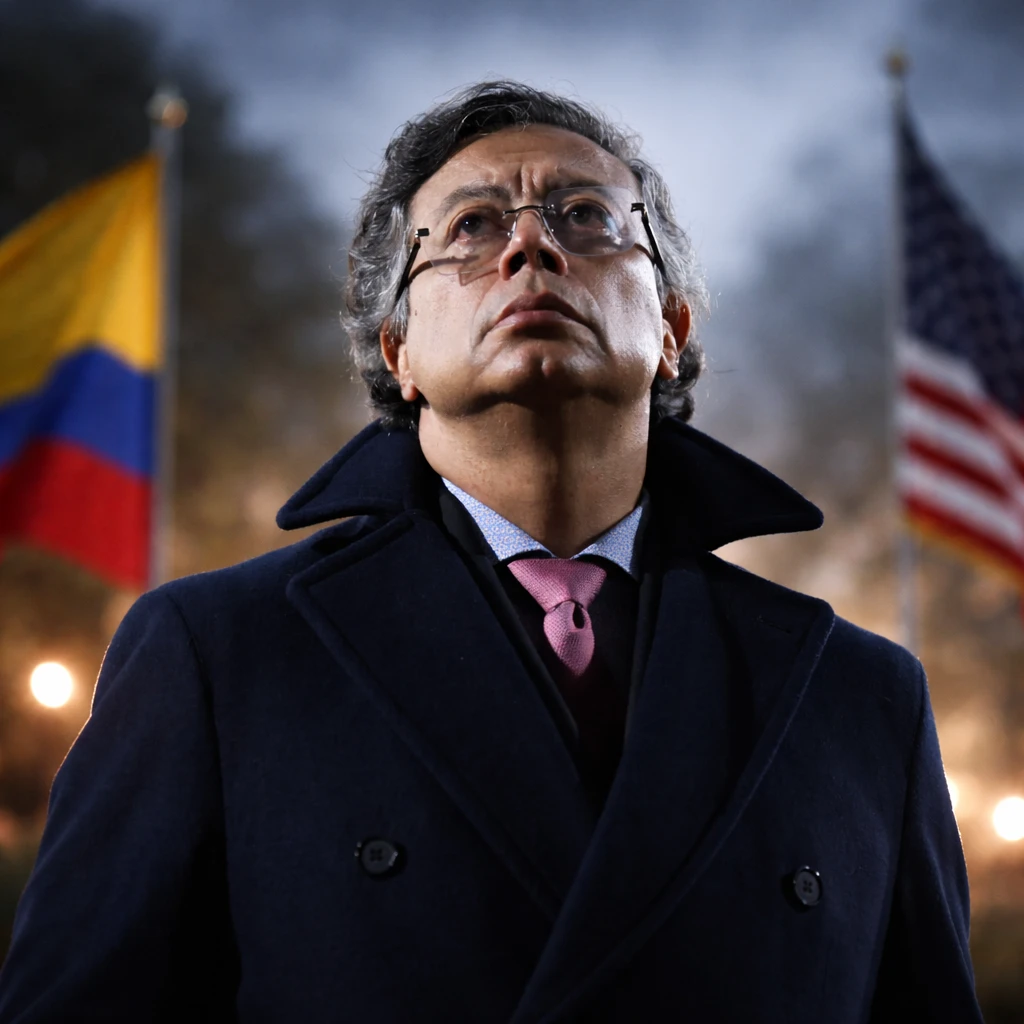
In Bogotá, Colombia’s capital, President Gustavo Petro has emerged as one of the most vocal critics of the Trump administration's military threats against Venezuela, sharply condemning the actions as a violation of Latin American sovereignty. He described the U.S. attack on Venezuela in forceful terms, likening it to historical atrocities such as Nazi Germany’s 1937 bombing of Guernica, Spain, and branding the perpetrators as “enslavers.” Petro’s stance represents a striking divergence from Colombia's historic position as a key ally of the United States in the region.
For over three decades, Colombia has partnered closely with the U.S., particularly in combating drug trafficking and insurgency, as well as spurring rural economic development. This relationship has been fundamental given Colombia's status as the world’s largest producer of cocaine and the strategic role it plays in regional security and counternarcotics efforts.
Recently, the rapid escalation of tensions between Petro and President Donald Trump has drawn significant attention. Trump publicly affirmed that a U.S. military operation on Colombian territory “sounds good to me,” a declaration that intensified hostilities amid ongoing criticisms of Petro.
Responding to Petro’s call for public demonstrations, thousands of Colombians assembled in city squares across the nation, asserting a collective defense of Colombia’s sovereignty against what they view as U.S. military imperialism. These protesters chanted slogans such as “Long live free and sovereign Colombia!” reflecting widespread concern and solidarity with Petro’s position.
Defying expectations of further confrontation, Petro instead extended a gesture of reconciliation toward Trump, who has repeatedly denounced Petro with accusations—including claims of drug leadership—that lack supporting evidence.
Addressing the sizeable crowd in Bogotá, Petro disclosed a shift in his prepared remarks from harsh criticism to a conciliatory message, prompted by an unprecedented friendly phone conversation with Trump. During their dialogue, Petro insisted that his administration’s only association with drug issues was its commitment to combating trafficking, urging the restoration of direct communication channels between their governments. He warned, “If there is no dialogue, there will be war.”
Trump reciprocated by releasing a social media statement subsequently. He described the call as a “Great Honor” and extended an invitation for Petro to visit the White House, highlighting his flexible approach in diplomatic engagements with once-adversarial figures.
This unexpected thaw in relations reveals a pragmatic inclination on both sides to prioritize national interests, even when ideological differences are pronounced. For Colombia, U.S. assistance remains vital, especially in military operations against leftist guerrillas and drug traffickers. Washington has funneled approximately $14 billion to Bogotá over the past two decades, harnessing Colombia’s intelligence capabilities and regional positioning as an asset in the larger counternarcotics strategy.
Experts highlight Colombia’s savvy in leveraging political and private sector ties within Washington to maintain support despite leadership frictions. Analysts caution that while punitive measures against Petro might be contemplated, they risk undermining the shared goals of drug interdiction and regional stability, thereby adversely impacting both nations.
The personal animosity between Petro and Trump, cultivated over months, stems from profound policy disagreements. Petro has actively opposed deportation flights involving U.S. military personnel and criticized American military actions aimed at drug vessels, labeling such strikes as “murder.” He has also openly defied Trump’s immigration policies and expressed solidarity with causes counter to U.S. priorities, including a pro-Palestinian rally in New York urging disobedience among American troops.
Trump has retaliated with aggressive rhetoric, branding Petro as a “lunatic” and a leading figure in drug operations, actions that included revoking visas for Petro and his inner circle, imposing sanctions on key officials, threatening to halt U.S. aid, and signaling economic punitive measures such as tariffs on Colombian imports.
With heightened tensions following Venezuelan President Nicolás Maduro’s ousting—an event that Trump celebrated—hostilities between the two leaders intensified. Trump insulted Petro further, accusing him of drug trade connections and warning explicitly about prospective U.S. military actions on Colombian territory.
Petro convened emergency sessions at international forums such as the United Nations and Organization of American States, framing himself as a defender of Colombia’s sovereignty and organizing mass protests with slogans condemning U.S. intervention as the “biggest threat to world peace.” Petro, a former leftist guerrilla, even suggested readiness to mobilize armed defense against potential U.S. incursions.
This high-stakes confrontation thrust Colombia—a long-standing American ally—into a diplomatic quandary. The government has had to balance showcasing national resolve against Washington with maintaining indispensable security cooperation, particularly ahead of Colombia’s forthcoming presidential and legislative elections.
Petro appears to have leveraged this rivalry to his advantage, positioning himself as a symbolic opponent to Trump and consolidating support amidst legislative challenges and unmet ambitions for comprehensive peace with armed groups.
Although Petro is constitutionally barred from seeking another presidential term in the upcoming elections, he aims for his left-leaning coalition to retain power in the face of a right-wing resurgence critical of his governance and security record.
On the day of a nationwide protest, Petro's decision to pivot from confrontation toward dialogue seemed to stabilize a volatile situation, preventing escalation into open military conflict—which would pose grave risks to Colombia’s critical security partnership with the United States.
“The priority is peace, and peace is achieved through dialogue,” Petro assured his nation. “Colombia can sleep soundly.”
Despite concerns, experts doubt the likelihood of a U.S. military strike against Petro, recognizing his democratic legitimacy, in contrast to Venezuela's Maduro.
Nevertheless, Trump's militaristic rhetoric about Latin America, grouping Colombia with Venezuela as compromised areas linked to narcotics and migration challenges, complicates matters for Colombian officials striving to maintain alliance stability and public order.
Within this fraught context, President Petro’s personal rapport with U.S. intelligence community remains strained, with some Colombian ministers proactively reassuring Washington of continued cooperation in drug enforcement efforts.
Defense Minister Pedro Sánchez emphasized the importance of this key moment as an opportunity to move past conflict towards greater collaboration.
Still, Foreign Minister Rosa Villavicencio’s acknowledgment of preparations for potential U.S. aggression underscores the seriousness with which Colombia is approaching the threat. She cited the country’s well-trained military, benefitting from longstanding U.S. support, as a crucial deterrent.
Significantly, by the end of the week, diplomatic tension appeared to ease as Villavicencio prepared to visit the United States to arrange President Petro’s visit to the White House—though an outstanding issue remained securing her visa for travel.