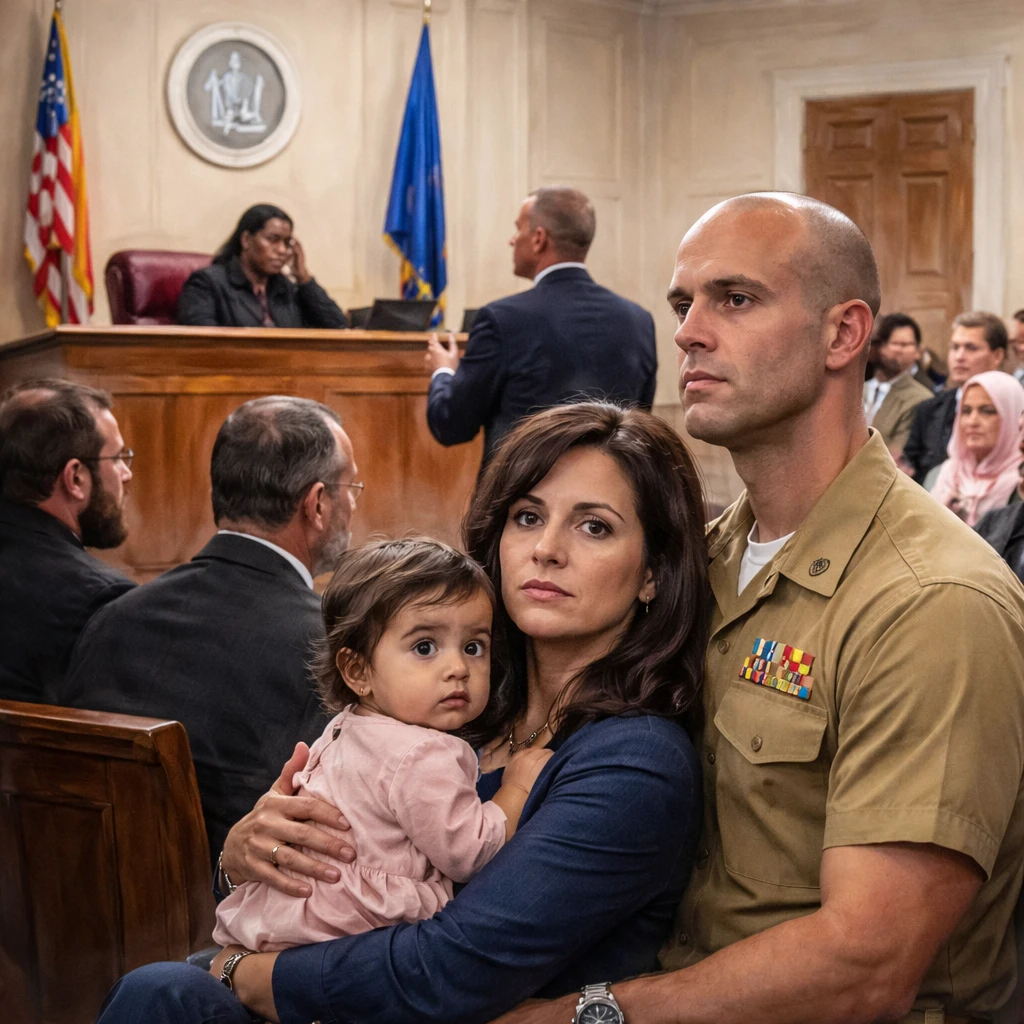
In a Virginia courtroom, Fluvanna County Circuit Court Judge Richard Moore authorized the emergency adoption of an Afghan war orphan to an American Marine, believing the infant to be critically ill and lacking any familial ties or national claim. However, government lawyers representing the federal position contested this narrative, asserting that the Afghan government was actively looking for the child’s relatives, and that many of the judge’s assumptions about the child’s status were inaccurate.
The adoption emerged as part of an ongoing dispute involving U.S. military officials, the State Department, and local Afghan authorities. The child became an orphan in September 2019 following a raid in rural Afghanistan led by U.S. Army Rangers and Afghan forces, during which the baby’s parents were killed. The infant, estimated to be about two months old then, sustained serious injuries including burns, a fractured skull, and a broken leg, and was transported to a hospital near Kabul.
The child’s presence among U.S. troops made her a poignant symbol amid years of conflict. Some soldiers questioned whether she was truly Afghan, pondering the possibility of bringing her to the United States. Despite this, the State Department emphasized that international law mandated reunification with her family and convened meetings with military and Afghan government representatives to stress this point. Joshua Mast, a military lawyer temporarily assigned to Afghanistan who had met the baby just days before, expressed his determination to bring the child to his family in Virginia.
The Masts, a family with three sons and evangelical Christian beliefs, pursued custody aggressively. Mast’s brother, a lawyer affiliated with a conservative Christian law firm, filed for custody soon thereafter, and a juvenile court judge swiftly approved the petition, declaring the child stateless and expecting Afghan authorities to relinquish jurisdiction — a waiver that never materialized.
Shortly after, Judge Moore granted an emergency adoption order during a weekend, enabling the issuance of a new birth certificate listing the Masts as her parents. This rapid legal maneuvering bypassed standard safeguards typically involved in adoption cases, such as thorough investigations, mandatory child presence, and notification requirements. The federal government contended it was not informed of the adoption proceedings and, had it been, would have clarified that the child was neither stateless nor in medical crisis but was, in fact, under the Afghan government's care and being matched to relatives.
Internal communications among U.S. military and diplomatic personnel unearthed tensions as some viewed Mast's actions as diverging from official policy. By late 2019, an Afghan man, claiming to be the child's uncle, came forward, asserting familial ties and describing a case situation divergent from earlier claims about the child's origins and status. Afghan authorities vetted and endorsed this claim, which the U.S. government accepted.
As Mast's deployment ended, he returned to Virginia, preparing to welcome the child he was certain would join his family. The couple received political support domestically, with lawmakers advocating expedited immigration processing for the child. Mast had enrolled the baby in the military healthcare system, representing her as living with them since September 4, 2019, despite the child never having set foot on U.S. soil.
Secretary of State Mike Pompeo eventually challenged the custody orders issued by the Virginia court as flawed, warning of geopolitical repercussions should the child’s transfer be delayed or blocked. Mast filed a lawsuit to prevent reunification with the Afghan family, but a federal judge rejected his claims. The child was subsequently sent to relatives in Afghanistan, who testified to the deep emotional bond they established upon receiving her.
The Masts have disputed the legitimacy of the Afghan family’s relationship to the child and questioned the vetting process, emphasizing differences in marital status and familial connections as reasons to doubt ancestries. For privacy and safety reasons, legal protections shield the identities of the Afghan family from public disclosure.
Following the U.S. military withdrawal in 2021 and the Taliban’s resurgence, Mast re-engaged efforts to bring the child and her caretakers to the United States. Assisted by an Afghan Christian translator, Mast assured colleagues that the child’s legal status had been cleared on the Afghan side and initiated evacuation efforts. Despite some military officials questioning the legality of removing the child from Afghanistan, coordination continued, culminating in the family's transport first to Germany and then to a U.S. military base in Virginia.
At the refugee center, State Department and health officials facilitated the transfer of the child from her Afghan caretakers to the Masts, despite emotional pleas from the Afghan woman to retain custody. These events unfolded against a backdrop of contradictory positions within U.S. agencies, with some employees unaware of prior attempts to prevent the child’s removal.
Legal contests resumed in Virginia courts as the Afghan family challenged the adoption’s validity. Judge Moore, nearing retirement, presided over hearings filled with conflicting testimony regarding lineage, custody, and the appropriateness of an American court assuming jurisdiction over a foreign child without her home country’s consent. Moore acknowledged procedural shortcomings but believed the Masts acted out of a desire to protect the child.
The subsequent judge, Claude Worrell, reviewed the case and criticized the federal government’s inconsistent stance, observing divergent actions by its agencies. Worrell ultimately nullified the adoption in March 2023, emphasizing the sovereignty of Afghanistan in determining the child’s status.
Throughout the process, both the Masts and Afghan family have faced scrutiny regarding credibility and intentions, with legal filings highlighting disputes over documentation, family relationships, and allegations of threats or deception. The child’s welfare remains enmeshed in these complex legal and diplomatic proceedings, underscoring challenges inherent in international adoptions, especially involving war-affected children in politically sensitive contexts.
February 6, 2026
News & Politics
Complexities Surround U.S. Adoption of Afghan War Orphan Amid Interagency Disagreement
A Fluvanna County Court Judge’s Emergency Adoption Raises Legal and Diplomatic Challenges

Jordan Park
Healthcare & Biotech Analyst
Summary
In a case marked by conflicting views between a Virginia judge and the U.S. government, American Marine Joshua Mast and his wife adopted an Afghan war orphan under emergency circumstances. Despite the judge’s conviction that the child was stateless and in urgent need, the federal government asserted that Afghan officials were still seeking the child’s family. The case highlights fractured communication among U.S. agencies and legal ambiguities surrounding international adoptions, particularly involving war orphans in conflict zones.
Key Points
An emergency adoption was authorized by a Virginia judge under the belief that an Afghan war orphan was stateless and critically ill, but the U.S. government disputed this assessment and asserted the child was being sought by her family in Afghanistan.
The case revealed conflicting actions within U.S. government agencies, including military and diplomatic personnel, which contributed to the adoption proceeding despite federal opposition and legal ambiguities surrounding international custody rights.
Judicial decisions on the adoption were contested, leading to a subsequent judge’s decision to annul the adoption based on Afghanistan’s claim to citizenship and custodial rights over the child.
Risks
- Interagency miscommunication and conflicting policies risk diplomatic tensions and undermine the U.S. government’s credibility in international family law and human rights matters, potentially affecting foreign relations and international law enforcement sectors.
- Legal ambiguities and procedural irregularities in international adoptions can expose courts and families to prolonged litigation, complicating immigration, child welfare, and international family law practices.
- Uncertain outcomes in custody and parentage disputes involving foreign nationals can create emotional distress and uncertainty for children involved, impacting social services and humanitarian aid organizations dealing with vulnerable populations.
Disclosure
This article is based exclusively on information contained within official court documents, government declarations, and testimony recorded during legal hearings related to the Afghan war orphan’s custody and adoption proceedings.