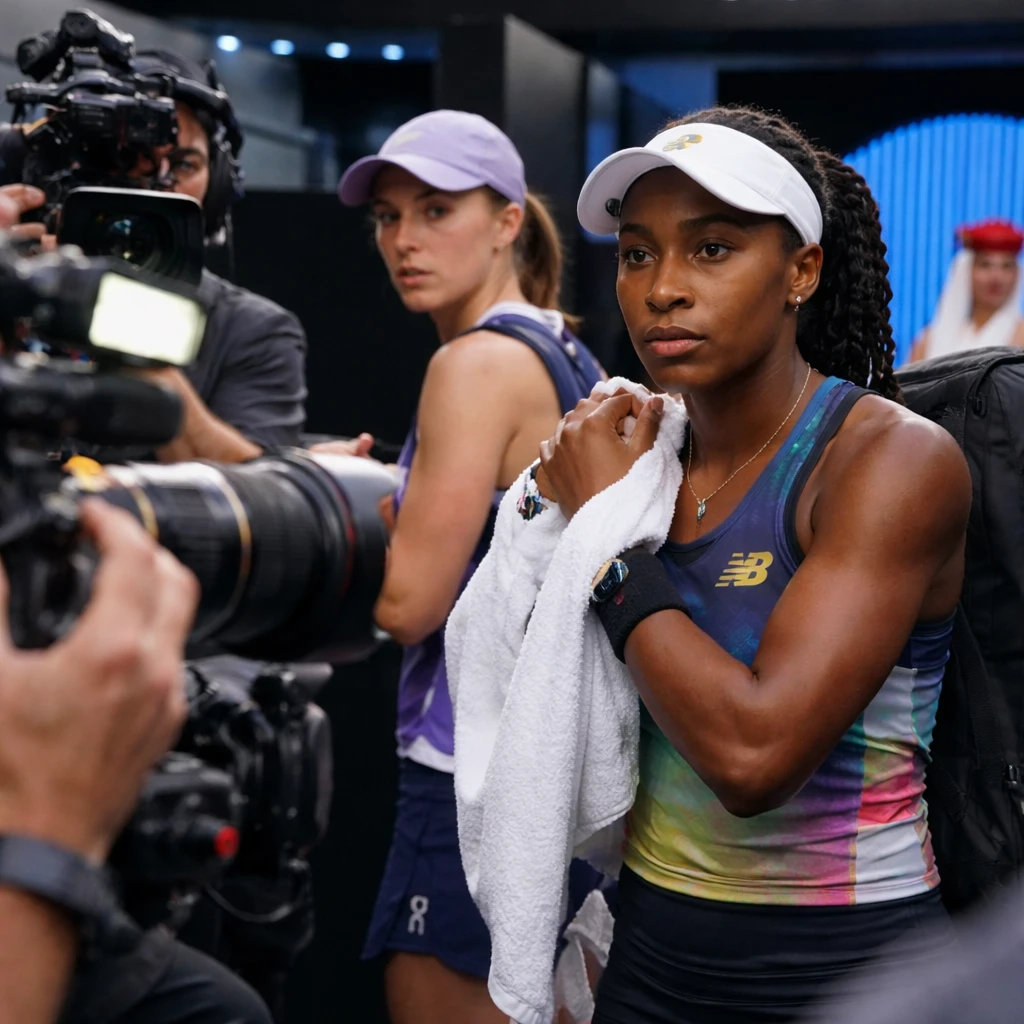

At the Australian Open in Melbourne, two of women's tennis leading figures, Iga Swiatek and Coco Gauff, have expressed concerns about the extensive camera access afforded to broadcasters and organizers throughout the venue. This ongoing access, which tracks players from private spaces such as locker rooms to the competitive courts and every location in between, has sparked debate about player privacy and the boundaries of constant public observation.
Swiatek, responding after her quarterfinal defeat to Elena Rybakina, echoed sentiments first voiced by 21-year-old American Gauff, whose moments of frustration, including a racket-smashing episode off the court, went viral online. The Polish athlete questioned whether tennis players are being treated more like public spectacles without any private refuge, metaphorically comparing it to being observed "even when they poop," though she acknowledged this as an exaggeration. She emphasized a desire for some reserved space where players can prepare and compose themselves without omnipresent cameras.
Gauff, after losing her quarterfinal match to Elina Svitolina, smashed her racket into the ground multiple times in a rare display of emotion away from the immediate public eye, trying to find a secluded camera-free zone. However, she remarked that such areas are nearly nonexistent within the Rod Laver Arena, aside from locker rooms. This prompted her to suggest potential discussions about limiting indiscriminate surveillance, as she does not typically endorse visible displays of such frustration during matches.
The Australian Open has embraced a festival atmosphere around the season-opening major tennis event, integrating numerous fan engagement opportunities and aggressively employing camera content from locations traditionally considered private. Although footage from these nonpublic stadium areas is not always broadcast, the players remain acutely aware that moments captured can rapidly circulate online due to their entertainment or dramatic appeal.
Swiatek, a multiple Grand Slam champion including four French Opens, Wimbledon, and the U.S. Open, acknowledged that remaining under public scrutiny is an intrinsic part of being a top player, particularly on court and during press engagements, but questioned where the line should be drawn to preserve athlete dignity. Her perspective conveyed the tension between embracing public exposure correlated with sporting success and retaining personal boundaries.
Gauff's public expressions of frustration have drawn support from tennis legend Serena Williams, who empathized with her dislike of losing and humorously offered advice on racket destruction. Such incidents highlight the emotional intensity behind high-stakes competition and the players' desire for private moments of release away from public consumption.
Further commentary from fourth-seeded American Amanda Anisimova underlined the dichotomy facing athletes: public enjoyment of their successes contrasts with discomfort over involuntary exposure during vulnerable, less favorable times. She pointed to the example of Gauff's incident being shared without consent as a particularly difficult aspect.
Novak Djokovic, the male tennis star with 24 major titles, reflected on how player experiences regarding privacy have evolved. He expressed sympathy for Gauff and noted his preference for the pre-cameras era but acknowledged the challenge in reversing current trends due to society’s emphasis on continuous content generation. While he light-heartedly noted the locker rooms remain camera-free spaces, he recognized even those boundaries might eventually erode under growing content demands.
Overall, this chorus of concern from top-level athletes highlights escalating tensions between sport event organizers’ strategies to maximize fan interaction through pervasive video content and players’ need for private respite areas during intense competition. Establishing a respectful balance remains a contemporary challenge within professional tennis environments.