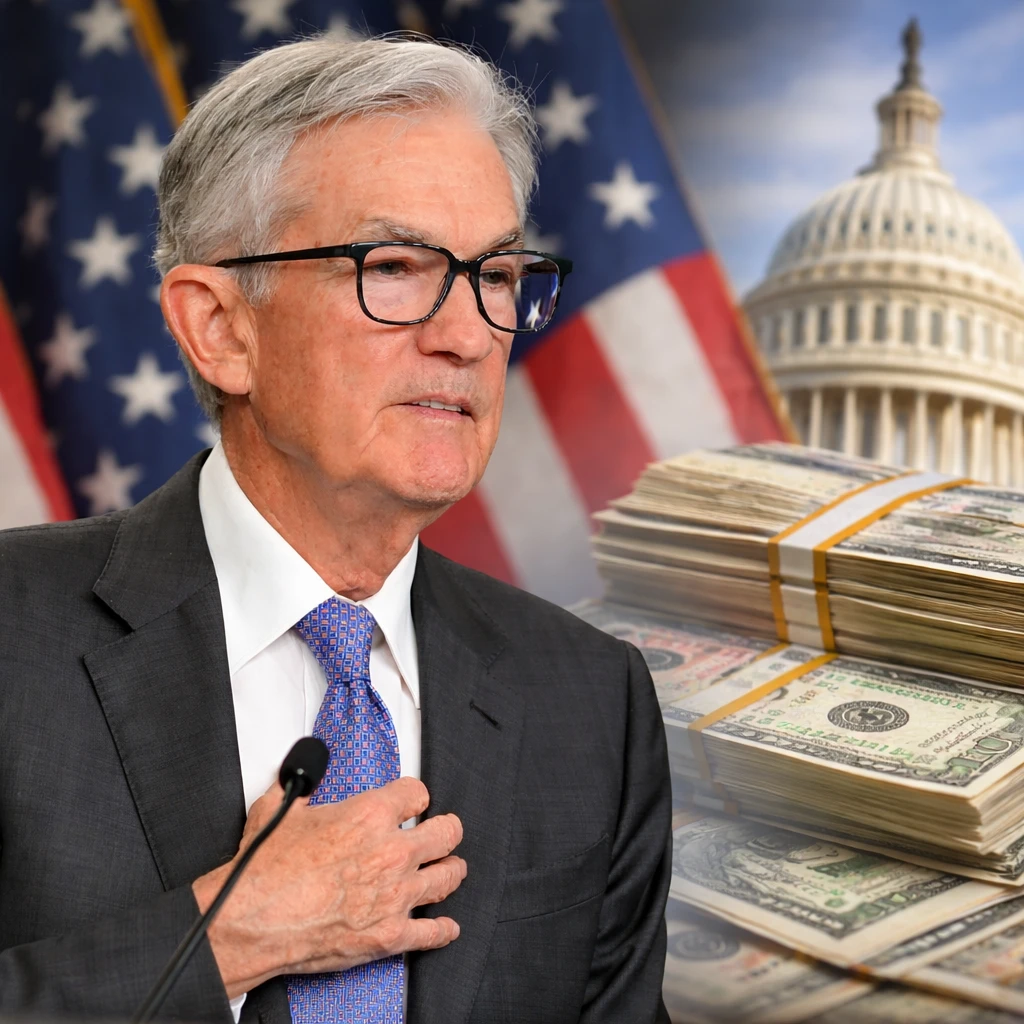

In a comprehensive report published Thursday, the nonpartisan Congressional Budget Office (CBO) outlined expectations for key economic indicators over the coming years, including Federal Reserve policy, Treasury yields, gross domestic product (GDP), unemployment, and inflation. The analysis incorporates factors such as President Donald Trump's policies on tariffs and immigration, alongside last year’s federal government shutdown.
According to the CBO’s assessment, the Federal Reserve is projected to reduce its benchmark short-term interest rates starting in 2026. These rates are forecasted to decline to approximately 3.4% toward the end of President Trump's administration in 2028. In contrast, the CBO anticipates that the yield on 10-year Treasury notes will gradually ascend from 4.1% in late 2025 to 4.3% by the final quarter of 2028. Given the role of 10-year Treasury yields as benchmarks for mortgage lending rates, this suggests mortgage borrowing could become more costly over the next two years.
The report notes that the aggregate adjustments made by the CBO, encompassing tariffs, immigration restrictions, and the federal shutdown, influence the short-term trajectories of GDP, employment, and inflation. However, these factors are not expected to substantially alter the broader economic outlook through 2028. Notably, the unemployment rate is projected to rise initially before improving within this timeframe.
Specifically, the CBO projects the national unemployment rate to peak at 4.6% in 2026 before easing to 4.4% by 2028. This pattern is largely attributed to the effects of tax and spending legislation enacted in July, in addition to a decreased influx of migrants. Economic growth measured by real GDP is expected to increase to 2.2% in 2026, supported by the fiscal measures and a recovery following the late-2025 government shutdown. Growth rates are then expected to decelerate to an average of 1.8% in both 2027 and 2028, reflective of diminishing fiscal stimulus and a slowdown in labor force growth. These projections are in line with Federal Reserve expectations, which forecast GDP growth near 2% in 2027 and just below that in 2028.
Inflation rates are anticipated to remain above the Federal Reserve's 2% target in the short term, driven by tariffs and sustained demand, before gradually falling to 2.1% by 2028. Additionally, the CBO released demographic data indicating a projected 15 million increase in the U.S. population over the next 30 years, a reduced forecast compared to prior estimates. This slower growth is linked to the Trump administration’s stringent immigration policies and anticipated lower fertility rates.
Established over five decades ago, the Congressional Budget Office serves to provide impartial and objective analysis to support the federal budgetary process, ensuring policymakers have nonpartisan information to guide economic decision-making.