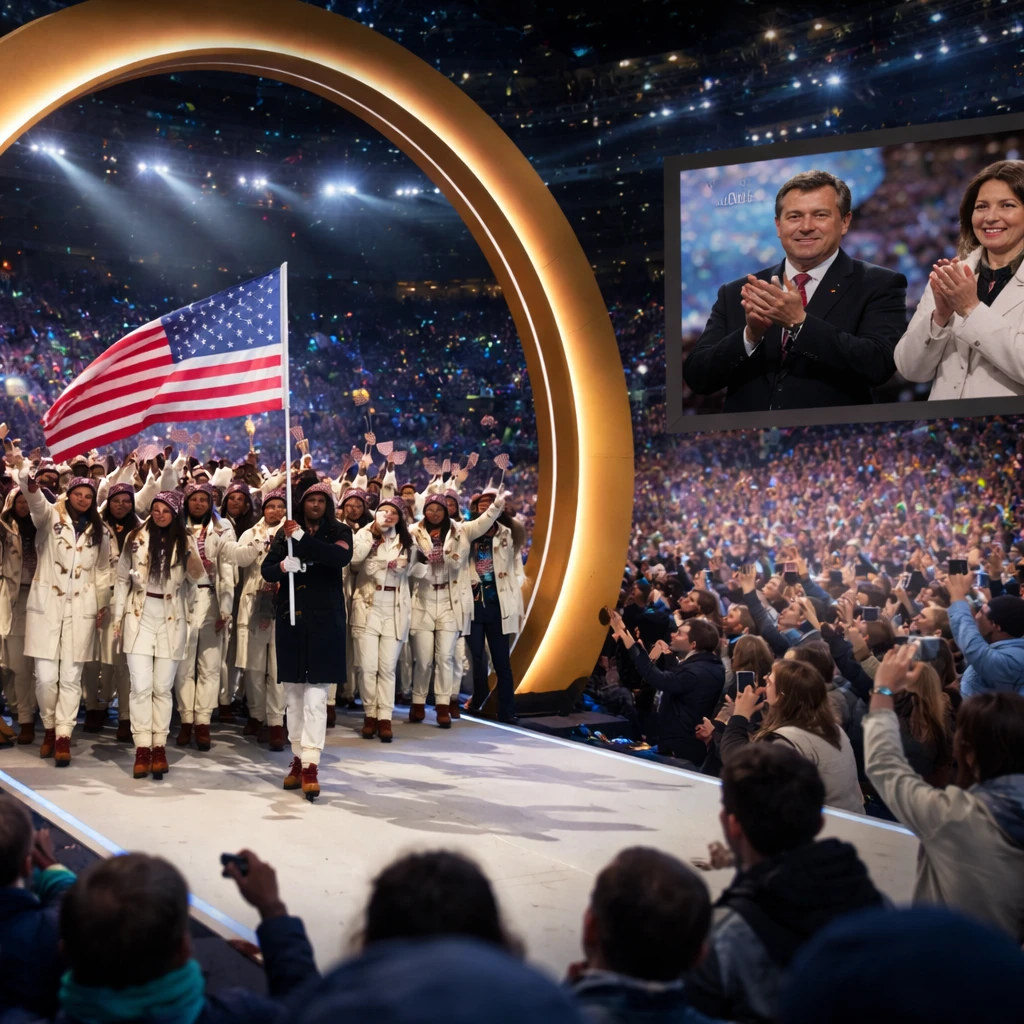

The Milan Cortina Winter Olympics commenced with a stirring opening ceremony that spotlighted the arriving delegations in an extensive parade of nations through Milan’s famed San Siro stadium. Among the participants, the United States team, spearheaded by the accomplished speedskater and flag bearer Erin Jackson, was positioned toward the end of the procession and was greeted with vigorous applause from the spectators gathered.
However, the atmosphere visibly shifted when the broadcast focus briefly turned to the official U.S. delegation’s presence in the stands, where Vice President JD Vance and his spouse, second lady Usha Vance, were shown waving American flags. At this moment, distinct jeers and whistles from the crowd became apparent, marking a contrast to the earlier acclaim for the athletes themselves.
This reception appears to mirror recent international dynamics where support for the United States has undergone strain. The shift in sentiment is linked to assertive policies enacted under the Trump administration, involving contentious trade measures such as tariffs, military interventions in regions including Venezuela, and controversial discussions about territorial acquisitions like Greenland.
It was not only the U.S. delegation that elicted negative reactions; similar responses were observed when the Israeli delegation entered the stadium, indicating broader regional or political sensitivities among the attendees.
Importantly, the Milan ceremony was part of a distributed set of opening events held not just in Milan but also in Cortina d’Ampezzo, Livigno, and Predazzo, accommodating the wide geographic spread of the Games. This arrangement renders the 2026 Winter Olympics the most spatially extensive in its history, with venues spread across northern Italy’s diverse landscapes.