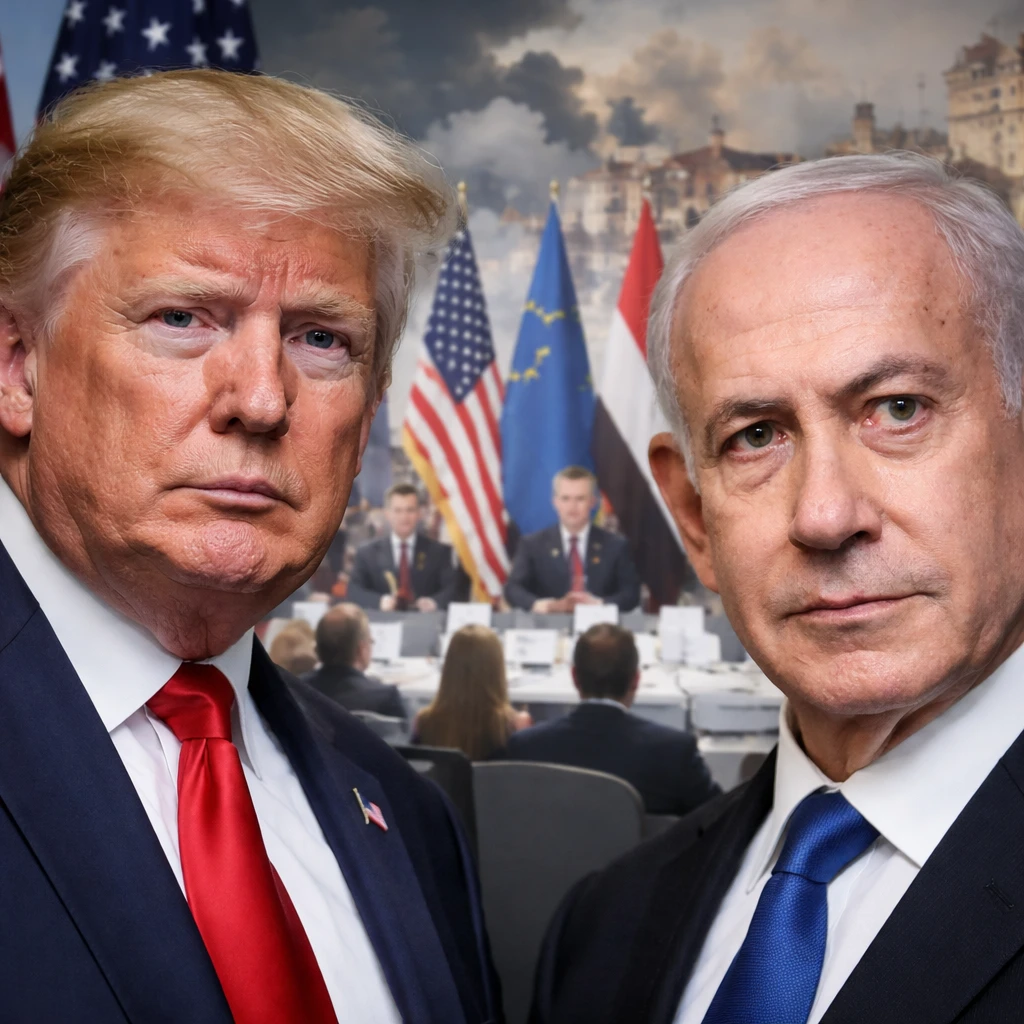
Jerusalem witnessed rising tensions on Wednesday surrounding the newly formed Peace Panel initiated by former US President Donald Trump aimed at implementing a peace plan for the Gaza Strip. Despite invitations extended to approximately 50 nations, the composition of the panel has been met with reticence and dissent notably from Western European countries. This development highlights growing unease about the panel’s objectives, which some observers interpret as an attempt to replace the United Nations as the primary mediator in global conflicts.
A White House official, who spoke anonymously to discuss internal plans not yet made public, indicated that around 30 countries have accepted invitations to join the panel. However, specific details about these nations have not been disclosed. The announcement coincides with Trump’s arrival in Davos, Switzerland, where he was expected to elaborate on the panel’s role.
Norway and Sweden publicly confirmed their refusal to join the panel, following France which expressed similar concerns. French Foreign Minister Jean-Noel Barrot conveyed support for the peace plan itself but rejected the formation of a new organization that would overshadow the United Nations’ traditional role. Norway's State Secretary Kristoffer Thoner mentioned that the invitation raised several complex questions necessitating further dialogue with the United States, and confirmed Norway’s decision not to attend the upcoming signing ceremony. Swedish Prime Minister Ulf Kristersson also indicated that Sweden would not enroll in the panel under its current terms, though a formal response is pending.
President Emmanuel Macron of France chose not to participate in the panel, prompting a dismissive comment from Trump who suggested that the lack of French involvement was due to Macron's impending departure from office. Neither the United Kingdom, Canada, Russia, Ukraine nor China have made their stances known regarding their invitations.
The peace panel, envisioned as a supervisory body for the ceasefire in Gaza, has expanded in scope since its inception. Initially conceived as a small group of global leaders focused on monitoring the ceasefire, the Trump administration invited numerous countries with aspirations for the body to act as a mediator for broader conflicts. Israeli Prime Minister Benjamin Netanyahu accepted membership, a shift from earlier criticisms regarding the panel’s composition, which includes Turkey, a regional rival.
Despite this acceptance, Netanyahu’s decision may create friction within his right-wing coalition, particularly with figures like Finance Minister Bezalel Smotrich, who opposes the panel and favors Israel independently managing Gaza’s future.
Key regional players Israel and Egypt have confirmed their participation, alongside Bahrain, Kosovo, and Azerbaijan, as well as nations like the United Arab Emirates, Armenia, Morocco, Vietnam, Belarus, Hungary, Kazakhstan, and Argentina. This diverse membership reflects the panel’s evolving international dimension.
The humanitarian situation in Gaza remains dire despite the ceasefire implemented over two years ago, with over two million Palestinians languishing in precarious conditions following extensive conflict. Recent Israeli fire on Wednesday led to the deaths of five Palestinians, including a woman and two children, highlighting ongoing volatility. The Gaza Ministry of Health, affiliated with Hamas, reports more than 460 Palestinian deaths attributed to Israeli fire since the ceasefire commenced in October. Accusations of breaches of the truce persist between Hamas and Israel.
The panel’s operational details still face numerous questions. When asked if the group might supplant the United Nations in its mediator role, Trump responded ambiguously, suggesting it "might". The executive committee for Gaza within the panel is tasked with overseeing the challenging second phase of the agreement, including deploying an international security force, disarming Hamas, and reconstructing the war-ravaged territory. This committee will also supervise a newly established group of Palestinian technocrats managing daily affairs in Gaza.
White House disclosures note that members include Trump envoy Steve Witkoff; Jared Kushner, Trump’s son-in-law; former UK Prime Minister Tony Blair; Apollo Global Management's Marc Rowan; Turkish Foreign Minister Hakan Fidan; Qatari diplomat Ali Al-Thawadi; Hassan Rashad of Egypt’s General Intelligence Agency; UAE Minister Reem Al-Hashimy; Israeli businessman Yakir Gabay; and Sigrid Kaag, former Deputy Prime Minister of the Netherlands and Middle East expert. Ex-politician and former UN envoy for the region Nickolay Mladenov will represent the panel overseeing daily matters.
The founding members beyond the Gaza executive committee also include US Secretary of State Marco Rubio; banking leader Ajay Banga, President of the World Bank; and Trump’s deputy national security advisor Robert Gabriel. Despite this broad participation, the panel’s acceptance and effectiveness remain uncertain amid dissent and unresolved operational questions.