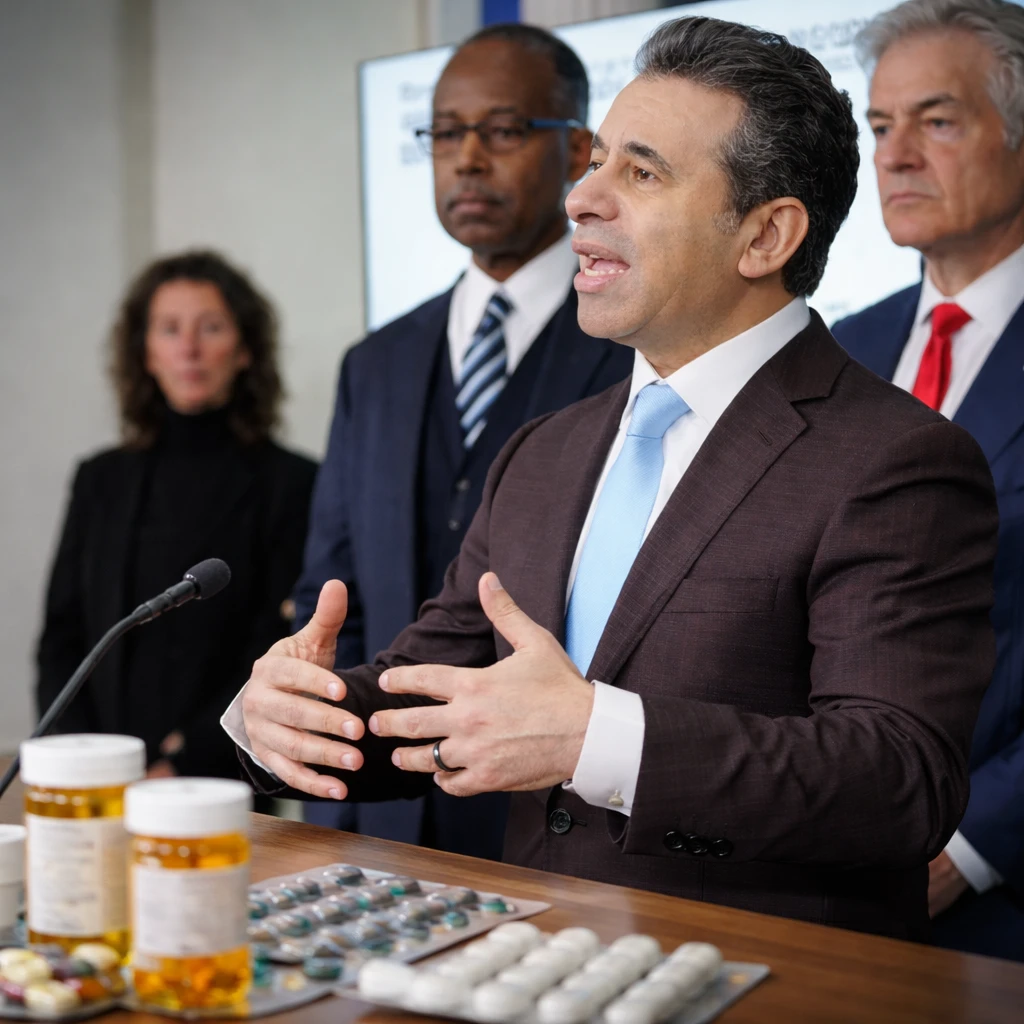

In Washington, D.C., a novel initiative by the Food and Drug Administration (FDA) spearheaded by Commissioner Marty Makary aims to significantly expedite the evaluation process for selected pharmaceuticals deemed critical to U.S. national interests. This National Priority Voucher program pledges drug approvals within as brief a timeframe as one month, markedly accelerating the conventional review period for medicines.
This ambitious approach has, however, precipitated widespread concern among FDA personnel. A group of seven current and recent agency employees, speaking anonymously due to the sensitive nature of internal discussions, disclosed apprehensions regarding the program’s compliance with established legal, ethical, and scientific standards traditionally central to verifying drug safety and efficacy.
Historically, the FDA’s drug approval protocol engages review scientists and their direct supervisors who meticulously examine applications to determine suitability for market entry. Contrary to this custom, the new program appears to vest political appointees and senior officials with significant decision-making authority. The precise identity of officials authorized to endorse drugs under this expedited pathway remains unclear at the highest echelons of the agency.
Staff responsible for reviewing pharmaceuticals have reported minimal briefings on the procedural details of the new program. Specifically, personnel involved in assessing a forthcoming anti-obesity medication were recently instructed to omit standard regulatory procedures in order to adhere to the tight deadlines imposed by senior leaders.
Experts external to the FDA have noted that the agency's existing evaluation timelines, which range from six to ten months, are among the shortest globally. Dr. Aaron Kesselheim, a Harvard Medical School professor, emphasized the unprecedented nature of compressing reviews into one to two months, asserting that such rapid reviews lack scientific justification and adequate resourcing.
Further complicating the situation, recent reports indicate delays in reviewing two drugs under this program, partly due to safety concerns including a patient fatality linked to one of the treatments. These developments contribute to uncertainty surrounding the program's viability and safety oversight.
Despite these issues, Health and Human Services spokesman Andrew Nixon maintains that the voucher initiative upholds rigorous scientific standards and seeks to deliver impactful therapies. The White House continues to endorse the program, integrating these accelerated approvals with pricing concessions offered by pharmaceutical companies, as demonstrated by recent agreements with Eli Lilly and Novo Nordisk on obesity drugs.
This intertwining of political considerations with drug approval procedures has raised alarms about potential compromises to the FDA’s historically objective and standardized mechanisms.
Paul Kim, a former FDA attorney, criticized the program’s opaque application process as vulnerable to political interference. Moreover, the lack of formal codification in federal regulations exacerbates institutional uncertainty, contrasting with other pre-existing FDA expedited review programs that are formally legislated and regulated.
Presently, details about the voucher pathway are largely restricted to summary information on the FDA website. Applications are submitted via brief 350-word statements of interest. Senior FDA personnel, notably Dr. Vinay Prasad, the top medical officer and vaccine center director, have taken an active role in engaging with drug companies directly, sometimes bypassing traditional vetting channels. This shift has caused confusion among agency staff about the formal awarding of vouchers, especially to companies not formally seeking them.
Legal concerns prompted the then-drug director, Dr. George Tidmarsh, to refuse signing off on any approvals under this expedited program; he resigned later on unrelated matters. Successive senior FDA officials, including Principal Deputy Commissioner Sara Brenner, have also declined this responsibility due to unresolved legal ambiguities. Currently, Deputy Chief Medical Officer Dr. Mallika Mundkur, reporting to Prasad, has assumed this role despite the associated legal liabilities stemming from certifying drug safety and efficacy.
The reallocation of authority departs markedly from the standard model where drug office directors collaborate closely with review teams to reach approval decisions. Under the voucher program, senior leaders approve applications following committee votes that exclude the input of frontline scientific reviewers.
Dan Troy, a former FDA chief counsel, acknowledges the commissioner’s statutory latitude to reorganize drug review processes but warns the program's lack of regulatory entrenchment renders it vulnerable to reversal under future administrations.
The initial expectation was for a limited pilot involving no more than five drugs; however, the initiative has expanded markedly to include 18 vouchers granted to date, with additional applications pending. This expansion intensifies operational strains on the agency’s drug center, which has experienced a 20% reduction in workforce over the past year due to attrition.
Commissioner Makary initially indicated that nominations for voucher consideration would arise from FDA career staff, who selected candidates amenable to expedited review. Contrary to this, senior leaders like Dr. Prasad are increasingly driving drug selection, sometimes without the knowledge of agency reviewers, further unsettling internal protocols.
Complications extend to review timelines for companies receiving vouchers. For instance, Eli Lilly executives reportedly anticipated an anti-obesity drug approval within two months, compressing customary agency timelines including the established 60-day prefiling stage designed to ensure application completeness. Negotiations shortened this window but raised concerns about omitted regulatory safeguards and scientific data gaps.
When reviewers highlighted these deficiencies, directives from senior officials encouraged overlooking procedural regulations if underlying scientific evidence appeared robust. This approach contrasts starkly with traditional review practices designed to verify drug safety comprehensively and carries risks if subsequent FDA leadership questions the adequacy of the review.
Experts forecast that the program may not outlast the current administration due to its fundamental departure from established scientific and legal principles governing FDA drug evaluations.
This program exemplifies tensions at the FDA between the desire to accelerate access to therapeutics considered vital to national interests and the imperative to maintain rigorous, transparent, and legally defensible review processes safeguarding public health.
Contact Information: The FDA and involved officials have declined further comment on these matters. For additional details or confidential communications, interested parties may reach investigative teams via secure channels.