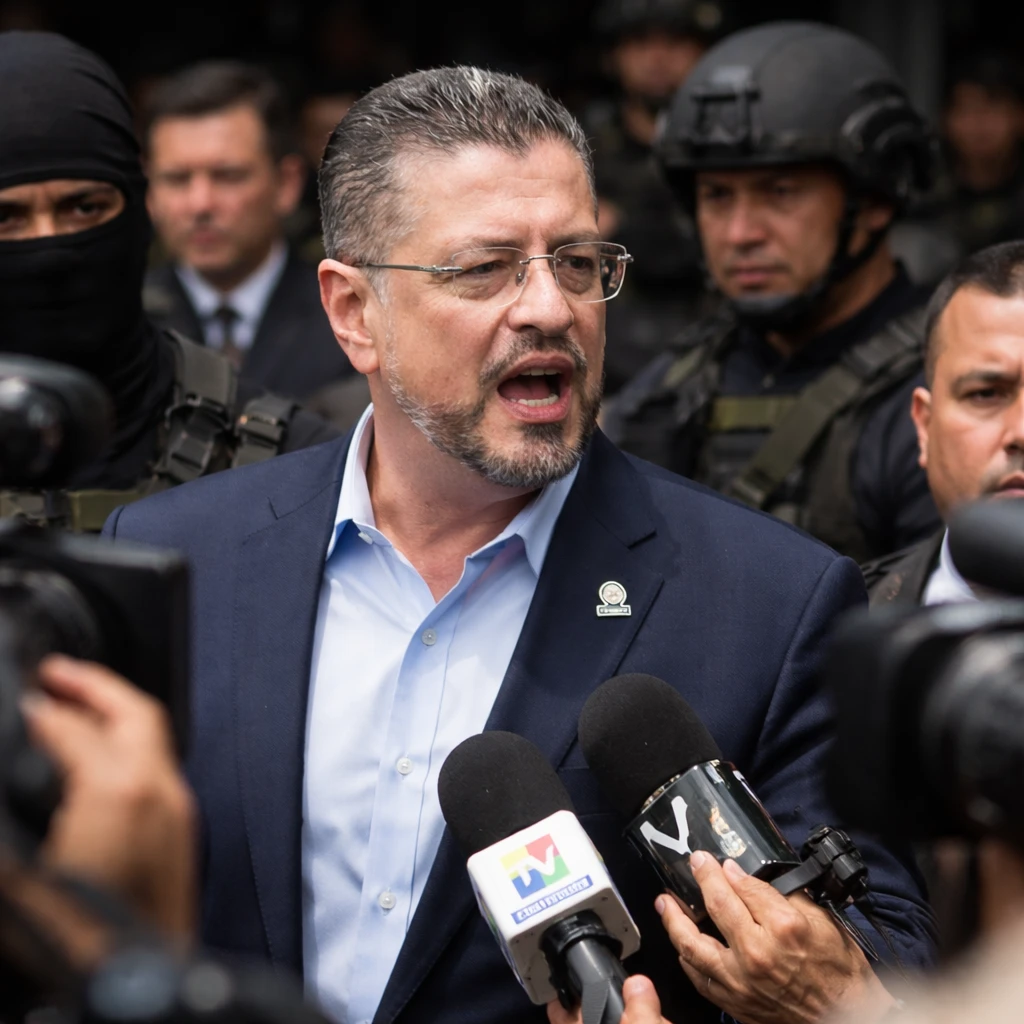

Authorities in Costa Rica have moved to investigate an alleged conspiracy to assassinate President Rodrigo Chaves in the lead-up to the nation's upcoming elections. Jorge Torres, who leads the Intelligence and National Security Directorate, provided insights into the situation during a briefing where he prepared to submit a formal report to the public prosecutor.
Torres conveyed that the information came through confidential channels, specifically from a woman who contacted officials to disclose a supposed plot involving a financial transaction made to a hitman poised to target the president. While Torres refrained from sharing explicit details, he underscored the seriousness by noting that the threat directly involves the president's safety. This disclosure has led to heightened security protocols to protect Chaves, a conservative populist recognized for his assertive stance on crime reduction.
The remarks from Torres coincided with a scheduled visit to Costa Rica by El Salvador's President Nayib Bukele, known regionally for his aggressive security policies. This visit aligns with Costa Rica's broader security initiatives, including the forthcoming construction of a "mega-prison" modeled after a similar facility in El Salvador. President Chaves is set to lay the foundation stone for this project on Wednesday.
The timing of these events is significant, as Costa Rica prepares for presidential and legislative elections slated for February 1. Although President Chaves is barred from seeking re-election, his ruling party's candidate, Laura Fernández, is actively contesting the presidential race.
The developments surrounding the threat to the president's life and the bolstered security measures form part of a complex backdrop for the electoral process. The move to build a new prison facility also reflects ongoing security policy priorities under Chaves' administration, presenting a notable point of political focus as candidates campaign for the upcoming election.