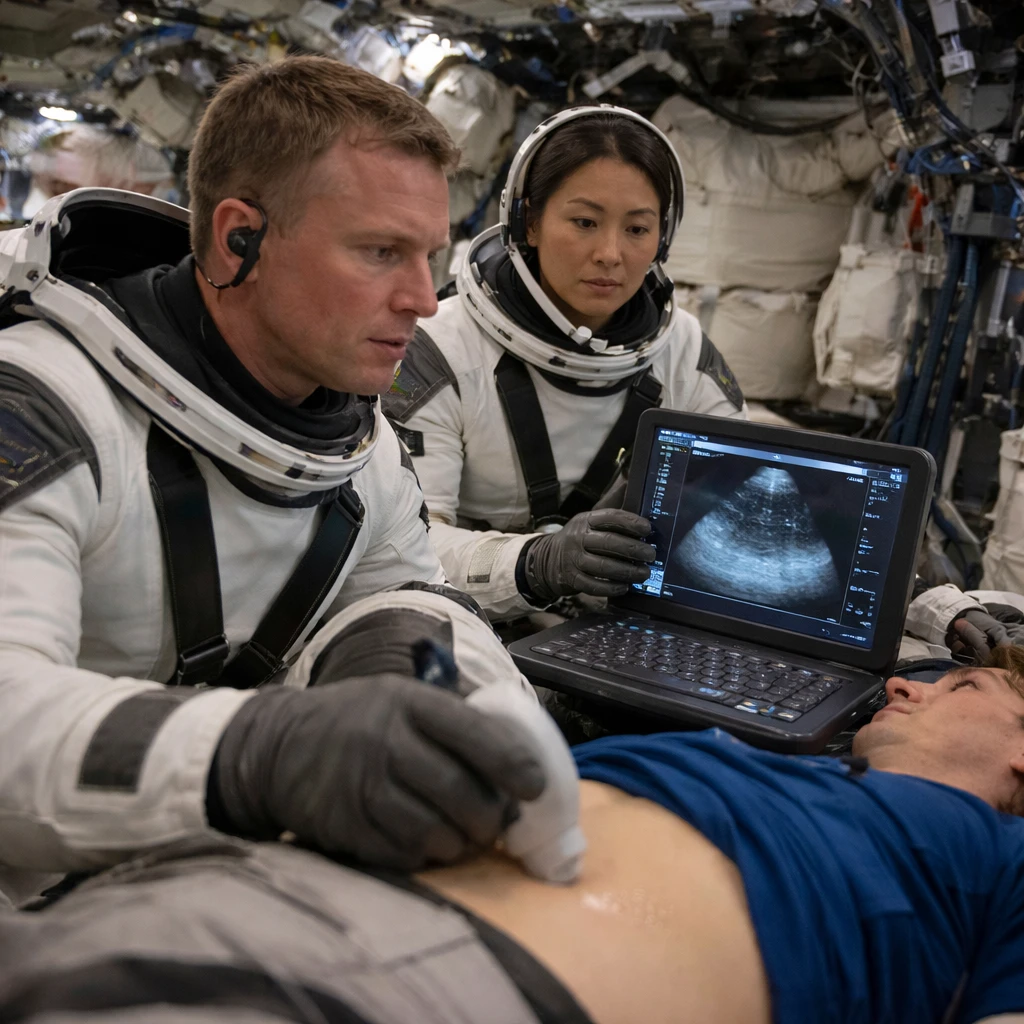

Last week marked a significant moment in spaceflight history as four astronauts returned to Earth following an emergency medical situation aboard the International Space Station (ISS). The crew, speaking publicly for the first time since their evacuation, refrained from disclosing which member required medical care or the specifics of the condition involved. This event represents the inaugural medical evacuation amid 65 years of human spaceflight by NASA.
Mike Fincke, a NASA astronaut, detailed that the onboard portable ultrasound device became indispensable once the medical issue arose on January 7, a day before a previously planned spacewalk was abruptly canceled. He explained that the astronauts had routinely used the ultrasound machine to monitor physiological changes due to weightlessness, which contributed to its effectiveness during the emergency. Fincke highlighted the device's value by advocating for its inclusion on all future manned missions, emphasizing, "It really helped."
He further elucidated on the limitations of space medicine compared to terrestrial capabilities, noting the absence of large diagnostic machines available on Earth. This limitation makes preflight health screening critical to mitigate unforeseen medical events during missions. However, Fincke acknowledged that despite thorough preflight evaluations, medical surprises can still occur, reinforcing the importance of readiness and adequate preparation.
Commander Zena Cardman, who led the crew's return flight aboard SpaceX, described the ISS as optimally equipped to handle medical emergencies in orbit. She praised NASA’s decisive actions in canceling the initial spacewalk, which would have been her first, prioritizing the health and safety of the crew at all times.
Japanese astronaut Kimiya Yui reflected on the practical benefits of extensive preflight training, expressing surprise at how well it translated into managing in-flight health challenges. Yui remarked, "We can handle any kind of difficult situation," acknowledging the experience as invaluable for advancing the future of human spaceflight.
The crew consisted of astronauts who had embarked on a mission lasting approximately five and a half months, slightly shorter than initially planned. Alongside Fincke, Cardman, and Yui was Russian cosmonaut Oleg Platonov. Their mission commenced with a launch from Florida the previous August, concluding with a Pacific Ocean splashdown near San Diego last week.
Upon their return, their replacements awaited them in Houston, with new crew members scheduled to launch in mid-February. NASA and SpaceX are actively working to advance this subsequent mission. Reflecting on the reunion, Fincke noted their initial hopes to welcome the new team in space, but instead, they experienced that moment back on Earth.
This occurrence underscores the inherent risks and complexities of long-duration human spaceflight and the essential role of medical technology, such as portable ultrasounds, in ensuring crew safety in the isolated environment of space.