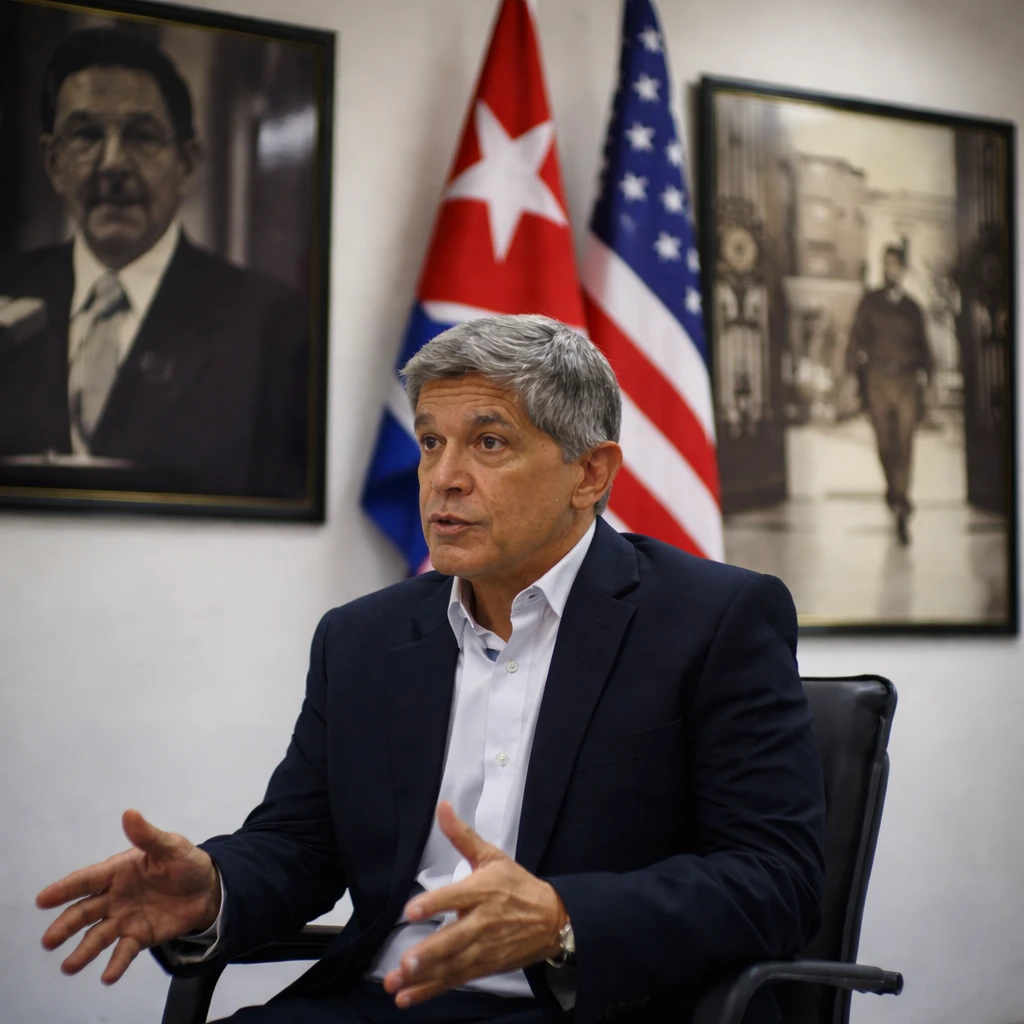
Havana – Cuban officials have affirmed that no official negotiation table exists with the United States following a significant ramping up of sanctions by the U.S. government last week, which has further strained the already tense relationship between the two countries. This confirmation came via a statement by Carlos Fernández de Cossío, the Cuban deputy foreign minister, during an interview where he delineated the current state of Cuba-U.S. interactions.
Fernández de Cossío clarified that communications and discussions between the countries persist within their usual framework, chiefly addressing issues such as migration and drug trafficking, which are customary components of their bilateral diplomatic relations. However, when explicitly asked about the existence of a formal dialogue platform, he asserted clearly, "We do not have such a dialogue table with the United States at present." Nonetheless, he expressed Cuba's openness to continue conducting informal exchanges with the United States to address bilateral differences, emphasizing respect for Cuba's political system.
The context for this declaration lies in the recent executive order issued by President Donald Trump, which announced the imposition of tariffs on goods from countries that supply Cuba with oil. This move intensifies sanctions that have been in place for over sixty years, designed to compel political change within the island nation.
During the weekend, President Trump also indicated that the U.S. was engaging in conversations with Cuban leadership as part of efforts to disrupt Cuba's oil supply chain, primarily sourced from Venezuela and Mexico. He suggested that these developments could eventually compel Cuba to engage in negotiations with the U.S.
Fernández de Cossío rebutted by describing Cuba as a peaceful nation seeking relations with the United States comparable to those it maintains with the rest of the world, underscoring that the U.S. is currently an exception in this regard.
Questioned on Cuba's capacity to endure the existing harsh economic conditions—marked by prolonged energy blackouts and shortages of essential goods—Fernández de Cossío refrained from disclosing any concrete strategies Cuba plans to deploy to secure oil supplies. He did note, however, that the country is preparing strategically with creativity, resilience, and austerity.
Cuba currently produces only about 40% of the oil it requires for economic operations and has historically depended on imports from Venezuela, Mexico, and Russia. The recent sanctions have inflicted an estimated $7.556 billion in losses for the period spanning March 2024 to February 2025, representing a 49% increase compared to the previous year. Over the past six years, Cuba has experienced a 15% contraction in its gross domestic product accompanied by significant migration flows.
Following the sanction announcement, President Trump described Cuba as "a bankrupt nation" reliant on Venezuelan support—a country recently targeted by a U.S. operation that resulted in the detention of then-President Nicolás Maduro on January 3rd. He urged Cuba to negotiate with the United States before it becomes too late.
In addition to these developments, Russia and Mexico have expressed their commitments to assist Cuba amid the sanctions pressure. On Monday, the Russian Embassy in Cuba disclosed that Cuban Foreign Minister Bruno Rodríguez and Russian counterpart Sergei Lavrov held a phone discussion following the U.S. tariff imposition. They reaffirmed Russia's firm readiness to continue providing Cuba with political and material support, although specific aid details were not shared.
Moreover, Mexican President Claudia Sheinbaum announced that her government would dispatch food and humanitarian aid to Cuba. She stressed efforts to resolve diplomatically issues related to petroleum shipments to the island, with the Mexican Navy overseeing the coordination of this assistance. Sheinbaum also highlighted concerns over the impact of U.S. sanctions on Cuba amidst Mexico's complex economic ties with the United States, especially given ongoing negotiations for the renewal of the free trade agreement involving Canada.
Meanwhile, diplomatic frictions surfaced as videos circulated showing Cuban citizens expressing outrage during a visit by Mike Hammer, the U.S. Chargé d’Affaires in Cuba, to the central city of Camagüey. Hammer’s recent travels across Cuba have included meetings with general citizens, provincial dissidents, and expressions opposing Cuba's government, previously proceeding without incident. However, during this visit, locals voiced expletives and allegations against him, including demands to end the U.S. embargo and labels such as "terrorist" and "puppet of Trump."
In response, the United States’ Office of Western Hemisphere Affairs called on Cuba to halt acts of repression, including dispatching individuals to interfere with the diplomatic efforts of Hammer and other embassy staff.