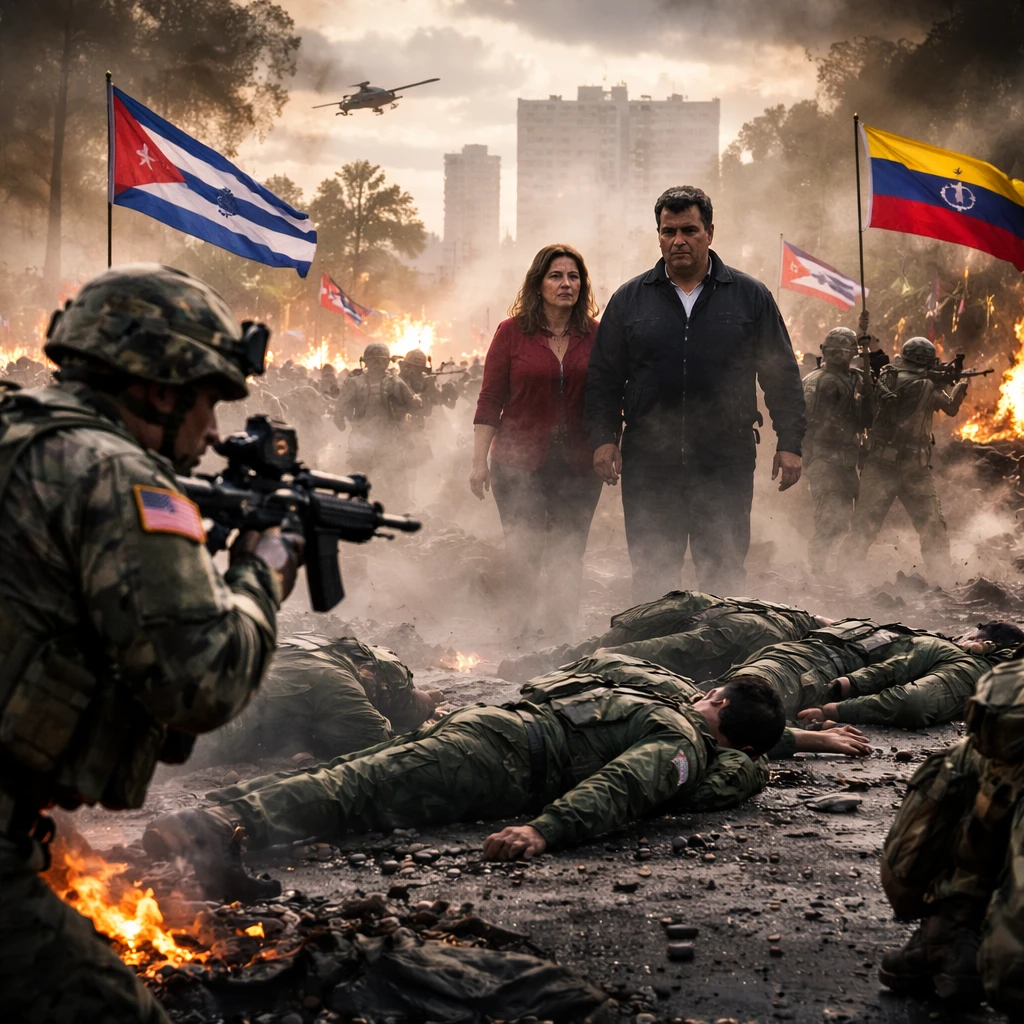

The Cuban authorities disclosed on Sunday that 32 of their military and police officers lost their lives as a result of a recent American military operation conducted in Venezuela. This announcement represents the first official death toll provided by Cuba concerning the strikes executed over the weekend within the South American country.
According to a statement broadcast on Cuban state television Sunday evening, the deceased Cubans were engaged in a mission commissioned by Venezuela's government, reflecting Cuba's longstanding military and law enforcement collaboration with the South American nation. However, specific details regarding the nature of their assignment in Venezuela were not clarified by Cuban officials.
The revelation follows weekend rumors about the casualties in Cuba, which were confirmed by Cuban government notices that included the declaration of two days of national mourning. High-ranking Cuban leaders, including former president Raúl Castro and current President Miguel Díaz-Canel, extended their condolences to the families of the fallen soldiers. The Cuban authorities have withheld specifics such as the identities and ranks of the officers who died.
An official Cuban communiqué lauded the officers for their dedication, stating that they "faithfully fulfilled their responsibilities for security and defense" and died with dignity and heroism. It acknowledged that these individuals either fell during direct combat against the attackers or as a consequence of bombings targeting facilities.
While Venezuela's government acknowledged fatalities resulting from the American strikes, it did not disclose the number of casualties to outside media outlets. The U.S. military operation on Saturday was aimed at apprehending Venezuelan President Nicolás Maduro and his wife to answer an indictment related to alleged involvement in a narco-terrorist conspiracy.
President Donald Trump commented via Air Force One that many Cubans were killed during the operation and asserted no American casualties occurred. His remarks underline the serious impact of the raid, emphasizing the significant loss of life on the side of Cubans and by extension their Venezuelan collaborators.
U.S. Secretary of State Marco Rubio, who is of Cuban descent, emphasized the role of Cuban personnel within Venezuela's security framework, noting that the government's internal security and intelligence apparatus comprises a substantial Cuban presence. Rubio stated, "All the guards that help protect Maduro — this is well known — their whole spy agency, all that were full of Cubans," highlighting the influence Cuba exerts within Venezuelan state security.
The implications of these developments extend beyond diplomatic relations, as Cuba's military engagement in Venezuela represents an ongoing strategic alliance with potential repercussions on regional stability. The American military action and resulting Cuban casualties mark a significant escalation, reflecting the complexities entangling these nations.