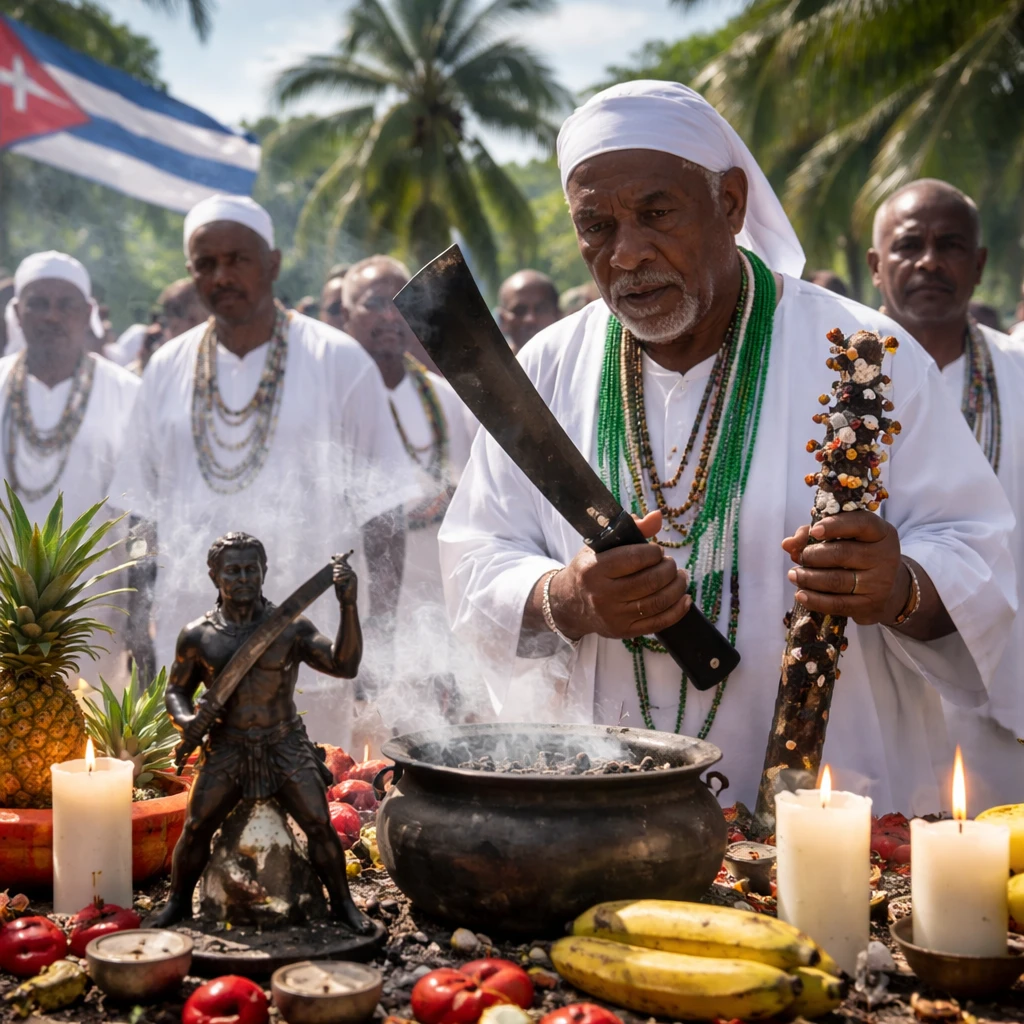
In Havana, the two principal groups of Cuban Santería priests revealed their Letra del Año for 2026 on Friday, a traditional prophecy that outlines the expected spiritual and social climate for the upcoming year. Both the Comisión de la Letra del Año de 10 de Octubre and the Asociación Yoruba concurred in naming the deity Oggún as the presiding spiritual force for the year.
Oggún, revered as the lord of metals, weapons, roads, and conflicts, holds patronage over blacksmiths. His selection underscores a looming potential for armed confrontations and increased violence. Víctor Betancourt, a babalawo involved in organizing the Comisión's ceremony, commented, "The risk of war is present. Cuba must prioritize diplomatic channels since a conflict would result in severe losses for us." This cautionary note comes amid regional tensions generated by the United States' naval deployments and explicit threats from President Donald Trump toward Venezuela's government, factors that have intensified geopolitical polarization within the Caribbean.
The Letra del Año further identifies the accompanying emblematic sign as Ogunda Masa, whose prophetic invocation reads, "loss established by neglect of what is indicated." The priests interpret this as a warning that longstanding unresolved problems—such as urban sanitation issues—will manifest in adverse and conflict-prone consequences over the year.
Furthermore, the deity Oya is described as accompanying Oggún in the spiritual hierarchy for 2026. The combined influence of these forces is predicted to result in significant public health challenges, notably infectious diseases including those affecting the stomach and liver. The report also anticipates a surge in fires and accidents, an escalation in violence and criminal activity, alongside "meaningful changes within the government," as detailed by the Comisión de 10 de Octubre.
Lázaro Cuesta, a babalawo, emphasized the limited power of the Letra del Año itself, asserting it serves primarily as an early warning rather than a solution. He called on both governmental bodies and citizens to act decisively to enhance living conditions and prevent conflicts or wars from materializing.
In parallel, the Asociación Yoruba released a congruent Letra del Año, affirming Oggún's status as the principal deity and designating the sign Ogunda Otrupom. Their forecast similarly highlighted the threats from social violence, conflicts, and health epidemics impacting the populace.
The publication of the Letra del Año is an event awaited annually by thousands across the island, involving the collaboration of various religious houses. These communities, deeply rooted in Santería—the most widespread spiritual tradition in Cuba, which subsequently expanded to nations including Mexico, Venezuela, Brazil, Spain, and the United States—receive ritualistic guidance and instructions from Santería priests each new year.
Emerging from a fusion of African slave traditions and Spanish colonial influences, Santería's symbolic and spiritual leadership revolves around babalawos, familial patriarchs typically gathering on December 31. These gatherings involve ceremonial drum performances and offerings prior to the revelation of the Letra del Año, consisting of the year's guiding signs and deities. The priesthood then interprets these spiritual messages and publicly presents their prophecies in early January, setting the tone for the year ahead.