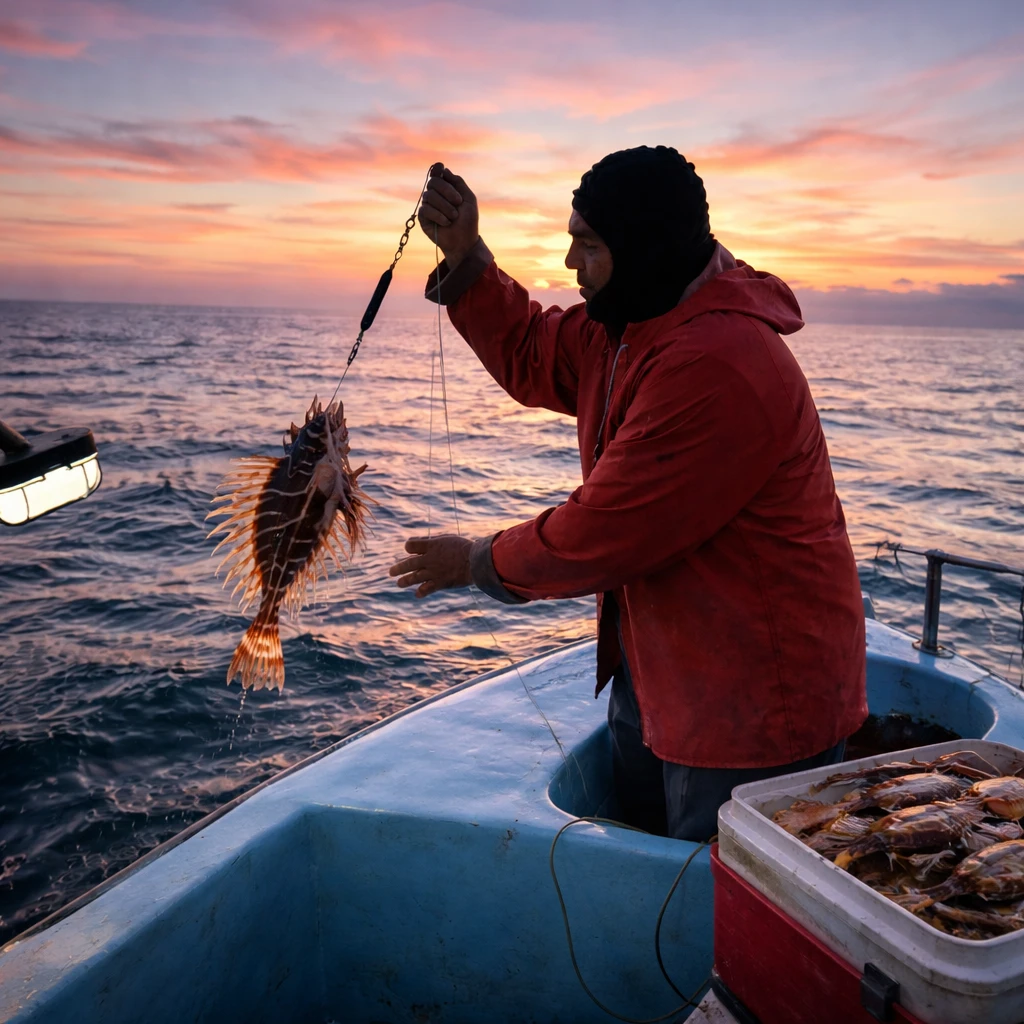

Near the shores of Larnaca, Cyprus, seasoned fisherman Photis Gaitanos skillfully extracts a venomous lionfish from his fishing net, placing the strikingly striped creature alongside the day's catch inside an ice-filled bin. Historically focused on traditional species such as sea bream, red mullet, and bass, Gaitanos now increasingly targets lionfish, an invasive species that has migrated from the Red Sea into the Mediterranean’s warming waters.
Characterized by their distinct red and orange stripes and sharp, antennae-like spines that deter predators, lionfish are endangering the native fish population, threatening the livelihoods of about 150 professional fishermen in Cyprus. The impact extends beyond Cyprus, with reports of lionfish sightings as far north as the Ionian Sea, prompting Italian authorities to urge the public to document encounters.
Another invasive species, the silver-cheeked toadfish, has also established itself in the eastern Mediterranean during the past decade. Known for its voracious appetite and formidable jaws capable of ripping through fishing nets, this predator has no natural enemies in Cypriot waters, allowing its population to proliferate unchecked. Notably, the toadfish secretes a potent toxin, rendering it inedible.
Gaitanos, 60, who has fished off Larnaca's coast for years, laments the disappearance of once-abundant species. He notes it has been over two years since he last caught a red mullet, a popular fish among consumers. "Having spent four decades in this line of work, I can attest to the steady decline in income, particularly following the arrival of these two foreign species. It’s a pressing issue jeopardizing the future of fishing," he commented. "Solutions are needed urgently."
The European General Fisheries Commission for the Mediterranean highlights that as the sea warms faster than the global average by about 20%, the prevalence of invasive species is rising, especially in the western basin. Climate models predict that lionfish may spread throughout the Mediterranean by century’s end. Factors including rising temperatures and an expanded Suez Canal corridor have allowed several Indo-Pacific species to infiltrate the region, according to Cyprus’ Fisheries Department.
EU Fisheries Commissioner Costas Kadis explained that increased extreme weather patterns linked to climate change are likely enhancing the Mediterranean's suitability for invasive species. This development places additional strain on the European fishing sector, where catches are dwindling and operational costs escalate due to damage inflicted by these powerful intruders on fishing equipment.
"Local marine biodiversity in places like Cyprus faces aggressive competition from these newcomers, threatening not only ecosystems but also industries depending on them," Kadis said.
Despite these challenges, fishing communities have sought aid from EU initiatives. One program introduced last year offers financial incentives, paying approximately 4.73 euros ($5.5) per kilogram for fishermen who catch toadfish, which are then destroyed by incineration. Another project, RELIONMED, launched in 2017, employs about 100 scuba divers to remove lionfish from reefs, wrecks, and protected marine zones. Though these removal efforts help native species recover temporarily, authorities caution that culling is not a definitive solution.
To capitalize on the invasive fish, local fishermen hope to promote lionfish as a culinary choice. Since 2021, the EU has supported a social media campaign, #TasteTheOcean, encouraging the consumption of invasive species as sustainable alternatives to traditional fish. Renowned Cypriot chef Stavris Georgiou has developed lionfish recipes, contributing to this effort.
Many local taverns, known for diverse meze platters, have incorporated lionfish into their menus, although wider consumer acceptance is gradual. The fish’s competitive pricing compared to favorites like sea bass makes it an attractive option. At Larnaca’s fish market, lionfish costs less than half the price of sea bass.
Stefanos Mentonis, owner of a popular fish tavern in Larnaca, has added lionfish to his meze offerings. He remarked, "Most customers are unfamiliar with lionfish, but they find the flesh tender and fluffy, comparable to sea bream." The initiative seeks not only to offer an alternative seafood choice but also to transform an ecological inconvenience into an economic opportunity.