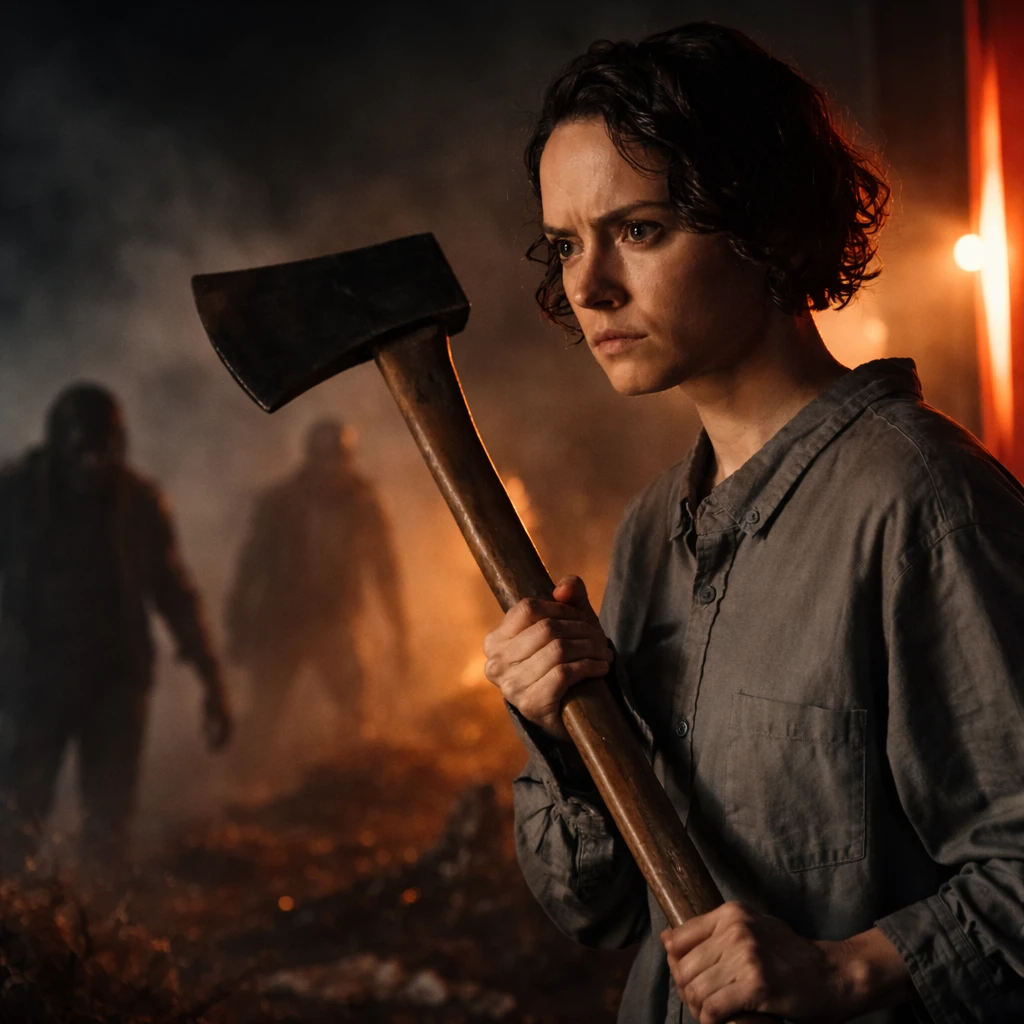

Beginning with a wedding scene, a narrative that typically signals an optimistic start, 'We Bury the Dead' immediately signals impending disaster. An unforeseen explosion of an experimental weapon instantly claims approximately 500,000 lives across Tasmania, including that of Mitch (Matt Whelan), the husband of Ava (Daisy Ridley). This catastrophic event upends what should have been a moment of joy, setting the tone for the film’s grim progression.
In response to her overwhelming grief, Ava takes to the skies in an effort to locate Mitch, although his survival seems improbable. The area where Mitch was staying for work lies just south of an active wildfire zone, strictly off-limits to the humanitarian cleanup teams to which Ava has attached herself. In addition to the devastation, there is an unsettling phenomenon emerging: certain deceased individuals have begun to "come back". The military advises the cleanup workers not to engage with these reanimated beings but to use flares as distress signals, prompting prompt lethal responses from specialized forces.
Rather than retreating in fear, Ava's determination deepens upon the possibility that Mitch might be among the reanimated. This hope compels her to consider what distinguishes those who return from death from those who do not. However, the creatures display terrifying behaviors, including menacing teeth grinding and aggressive demeanors, casting doubt on the prospect of salvation. As if Ava’s plan alone is not daring enough, she encounters an individual harboring even more radical ideas about these reanimations.
During her initial efforts within the cleanup operation, Ava performs the grisly, thankless task of recovering bodies from the devastated landscape. The process involves confronting unpleasant odors, bodily fluids, and sudden scares. Her companion, Clay (Brenton Thwaites), appears largely indifferent to the grim reality, exhibiting a demeanor reflecting a bygone era with his long hair and mustache reminiscent of the 1970s. His interests skew toward material remnants like abandoned drugs and luxury vehicles rather than engaging with the larger mission. Ultimately, Ava persuades Clay to assist her in venturing into the forbidden zones where the reanimated may reside.
The directorial vision of Australian filmmaker Zak Hilditch, known for his apocalyptic thriller 'These Final Hours,' manifests in 'We Bury the Dead' as another exploration of existential themes ranging from extinction to the paradoxes of life and death. Hilditch's script and direction aim to intertwine the zombie genre with a profound exploration of mourning and human connection.
At its core, 'We Bury the Dead' is a film centered on grief and the complexities of coping with loss. The narrative unfolds gradually, offering glimpses into the deterioration of Ava and Mitch's relationship primarily through flashbacks, which sometimes leaves contemporary Ava’s emotional state conveyed predominantly through her expressions. While zombies traditionally symbolize broader social metaphors, this film touches on the idea that some of the undead might retain elements of their former selves worthy of redemption, though it ultimately hesitates to fully embrace this concept. Instead, the plot at times reverts to familiar horror tropes without fully clarifying the mechanics of infection or transformation associated with contact from the undead creatures.
The ongoing threat posed by the zombies provides intermittent tension, sustaining viewer interest amid the film's contemplative pacing. Nevertheless, both Ava and the film itself appear engaged in a search for resolution or meaning, a quest culminating in an unexpected and unsettling finale. This conclusion shifts the tone of the film, suggesting a narrative continuation rather than a definitive ending, which may elicit mixed responses from audiences seeking closure.
'We Bury the Dead,' distributed by Vertical, premiered in theaters on a Friday and is rated R by the Motion Picture Association for strong violent content, brief drug use, language, and gore. With a running time of 95 minutes, the film has been rated at two and a half stars out of four, reflecting its blend of originality and familiar genre elements.