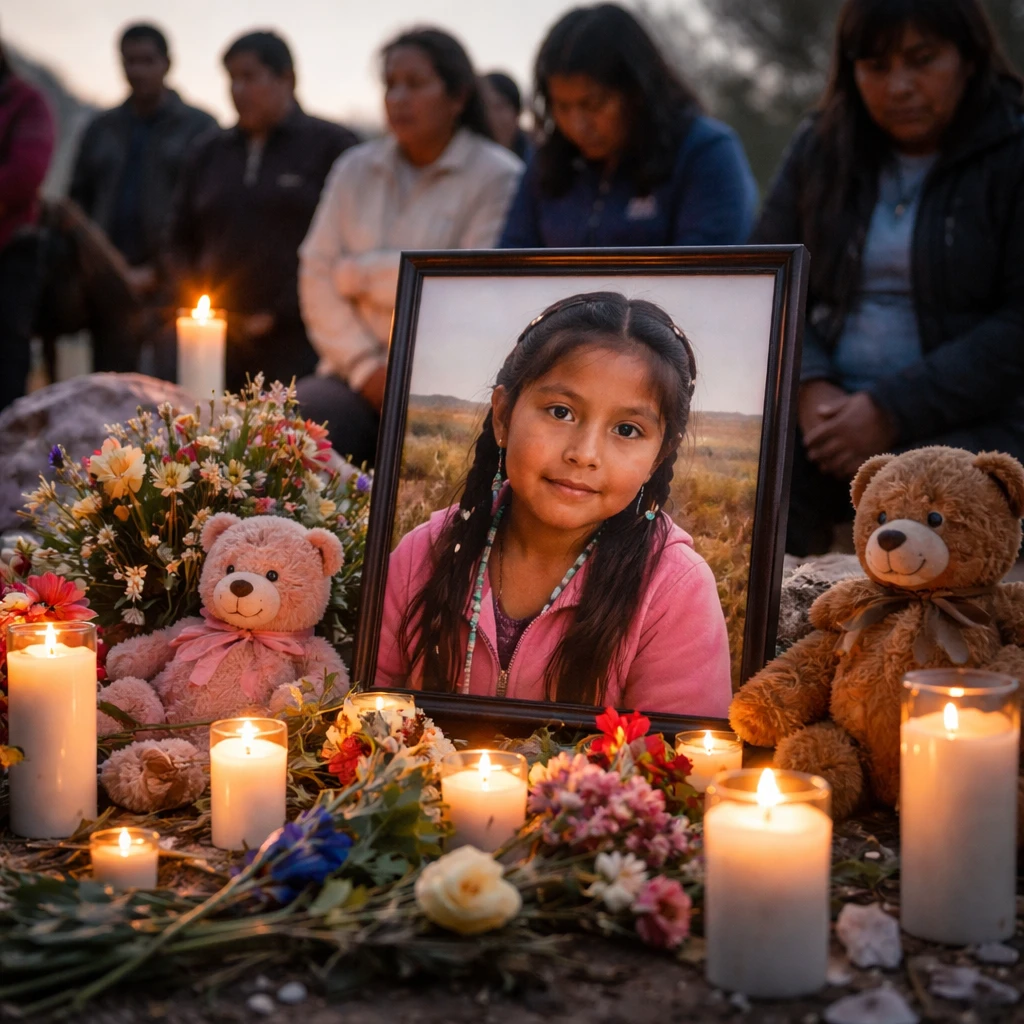

An 8-year-old girl, Maleeka Boone, who disappeared on tribal lands in the northern region of Arizona, was found deceased on Friday according to authorities involved in the case. She had last been seen on the evening of Thursday in the Coalmine Canyon vicinity, approximately 240 miles north of Phoenix. The FBI is collaborating with tribal police agencies on the investigation; however, specific details about the cause or circumstances of Maleeka’s death have not been disclosed by an FBI spokesperson who declined further comment. Attempts to obtain information from a tribal police representative via email were also made but were not immediately fruitful.
Navajo Nation President Buu Nygren expressed deep sorrow over the loss in a video statement released through social media platforms, acknowledging the profound impact the event has had on the community. He remarked, "This tragedy weighs heavy on my heart," underscoring the emotional toll of the incident.
The disappearance of Maleeka triggered the activation of a Turquoise Alert, a notification system designed specifically to aid in locating missing Indigenous persons. This alert mechanism was instituted under Arizona's legislation informally known as "Emily’s Law," which pays tribute to Emily Pike, a Native American girl whose remains were recovered in mid-February, more than 100 miles from the group home she left in Mesa, Arizona. Pike’s case catalyzed renewed efforts and advocacy aimed at raising public consciousness about the disproportionately high rates of missing persons and violent deaths impacting Native American populations over a prolonged period.
The enactment and utilization of the Turquoise Alert reflect a legislative and community response to these pervasive challenges, aiming to improve swift action in disappearance cases among Indigenous peoples. The situation surrounding Maleeka Boone has therefore not only been a matter of immediate local concern but is also tied to broader systemic issues within Native American communities regarding safety, law enforcement coordination, and public awareness.
Navajo Nation President Buu Nygren expressed deep sorrow over the loss in a video statement released through social media platforms, acknowledging the profound impact the event has had on the community. He remarked, "This tragedy weighs heavy on my heart," underscoring the emotional toll of the incident.
The disappearance of Maleeka triggered the activation of a Turquoise Alert, a notification system designed specifically to aid in locating missing Indigenous persons. This alert mechanism was instituted under Arizona's legislation informally known as "Emily’s Law," which pays tribute to Emily Pike, a Native American girl whose remains were recovered in mid-February, more than 100 miles from the group home she left in Mesa, Arizona. Pike’s case catalyzed renewed efforts and advocacy aimed at raising public consciousness about the disproportionately high rates of missing persons and violent deaths impacting Native American populations over a prolonged period.
The enactment and utilization of the Turquoise Alert reflect a legislative and community response to these pervasive challenges, aiming to improve swift action in disappearance cases among Indigenous peoples. The situation surrounding Maleeka Boone has therefore not only been a matter of immediate local concern but is also tied to broader systemic issues within Native American communities regarding safety, law enforcement coordination, and public awareness.