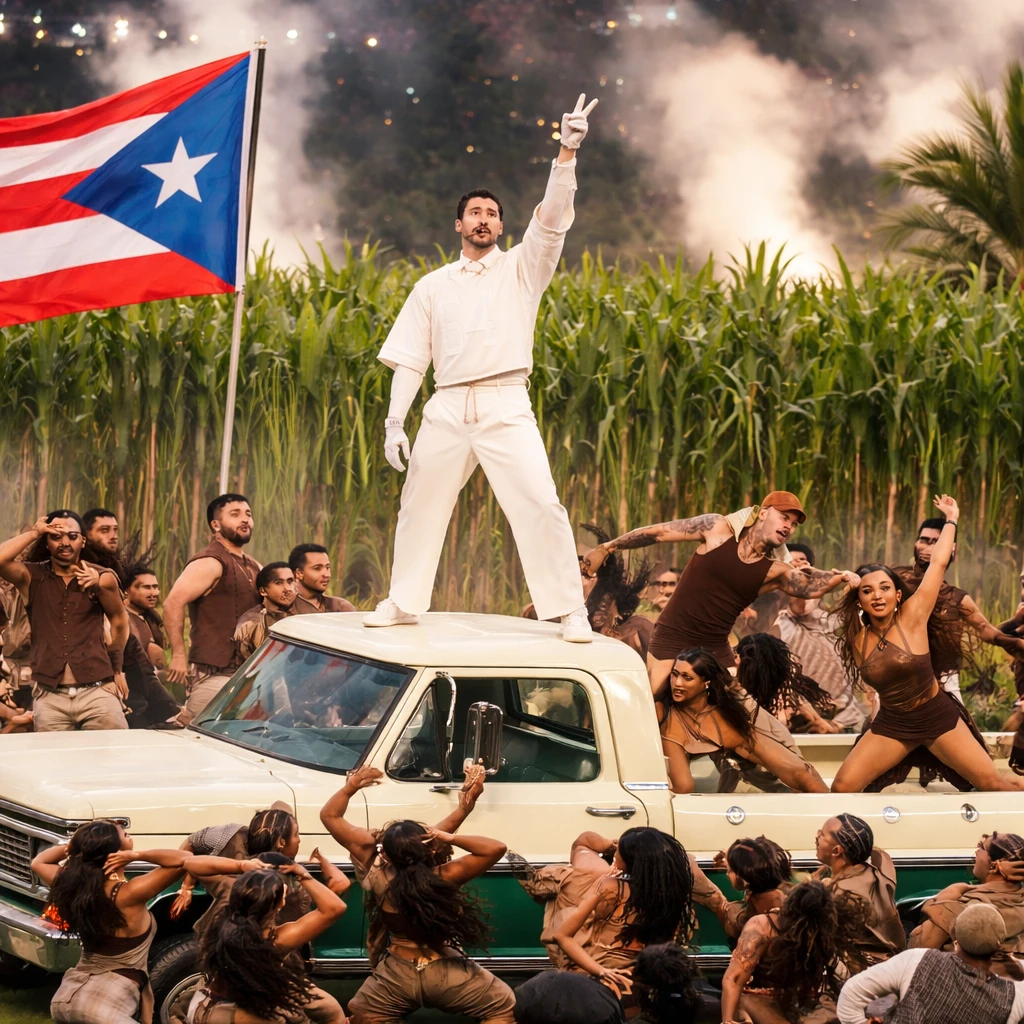

At the Super Bowl halftime show in Santa Clara, California, Bad Bunny recreated an evocative scene reminiscent of Puerto Rico’s rural landscapes, effectively transporting the Northern California stadium more than 3,500 miles away to the Caribbean island. From the moment the performance began, even before the opening notes of "Tití Me Preguntó," the stage was imbued with vibrant emblems of Puerto Rican life and culture, while also emphasizing a sense of connection across the Americas.
The show launched in a representation of a sugarcane field, a deliberate tribute to Puerto Rico’s longstanding agricultural sector, historically its chief economic engine since it became a U.S. territory at the century's close. Despite the island’s economic evolution towards industrialization from the 1950s onward, with tax policies fostering manufacturing, the traditional figure of the jíbaro — the granulated white-clad farmer sporting a pava hat — remained an integral and iconic image, embodied by Bad Bunny himself throughout the concert.
The traditional all-white wardrobe of jíbaros, mirrored in Bad Bunny's attire, serves not only to reflect practical Caribbean attire suited for the heat but also underscores a cultural phrase prevalent in Latin America: “Esta vestido de punta en blanco.” This expression translates literally as 'dressed in all white,' but figuratively refers to one who is impeccably well-dressed.
Throughout the stage setup, the theme of Puerto Rican street culture was vividly illustrated. Among the notable recreations was a roadside coconut stand offering fresh “coco frio,” directly inspired by the Caribbean custom of chilling and serving coconut water straight from the fruit, rather than the processed and packaged variants common in supermarkets. The presence of this stand, along with artistic touches such as footballs drawn in the shape of coconuts during the show's opening, embellished the authentic feel. Complementing the coconut imagery were depictions of other familiar neighborhood fixtures, including a dominoes game table — a widely beloved pastime — a simple nail salon, a vendor selling gold and silver for cash transactions only, and a taco stall, emblematic of pan-Latin American cuisine and culture.
Further emphasizing a Pan-American identity, Bad Bunny paused at a representation of piraguas — a type of shaved ice with sugary syrups popular across Latin America. Each syrup bottle proudly displayed different Latin American flags, reinforcing an ongoing motif throughout the set of interconnectedness among countries across the hemisphere. This continental solidarity extended to sports symbolism when two boxers took center stage, each dons shorts featuring the flags of Puerto Rico and Mexico. Their participation referenced the storied rivalry and shared history of boxing excellence between these two nations.
The performance also featured a diverse roster of celebrities with deep roots or familial connections to Latin America: singer Cardi B representing the Dominican Republic, Colombian superstar Karol G, Puerto Rican artist Young Miko, actors Jessica Alba of Mexican heritage, and Pedro Pascal from Chile, alongside Venezuelan baseball icon Ronald Acuña Jr. These appearances, along with influencer Alix Earle and Bad Bunny's frequent collaborator Dave Grutman, symbolized the interconnected cultural fabric of the Americas. Musically, the show incorporated visual elements such as the projection of the "sapo concho" cartoon, an emblematic motif of Bad Bunny's identity and Puerto Rican pop culture, further enriched by the presence of Nicaraguan conductor Giancarlo Guerrero.
One of the most visually and symbolically compelling moments was a staged wedding ceremony, officiated live on stage and followed immediately by a surprise performance from Lady Gaga. Gaga, adorned in a light blue dress and wearing a large pinkish-red flor de maga — Puerto Rico’s national flower — added to the tapestry of cultural references. The wedding scene subtly featured a sleeping child on chairs at the edge of the gathering, a familiar and tender sight at many Latin American celebrations where children often nap amidst the festivities while adults dance and socialize.
Tapping into Brooklyn's vibrant Puerto Rican community, Bad Bunny showcased Toñita, owner of the Caribbean Social Club, a notable cultural stronghold in New York. Toñita’s presence and a sidebar marked “Conejo,” referring to Bad Bunny's moniker 'El Conejo Malo' (The Bad Bunny), added layered textures to the performance. Further, renowned Puerto Rican singer Ricky Martin appeared, seated on a white plastic chair in front of a plantain tree, mirroring the cover of Bad Bunny’s Grammy-winning album "Debí Tirar Más Fotos." The white plastic chair — a ubiquitous element at communal gatherings — and the inclusion of the plantain tree conveyed a deeply personal and recognizable cultural moment.
In a powerful segment, Bad Bunny and others portrayed jíbaros climbing electrical poles amid sparks, evocatively referencing the devastating impact of Hurricane Maria and its lingering effects, such as ongoing power outages on the island. This tableau served as a sober acknowledgment of Puerto Rico’s recent hardships.
Notably, the Puerto Rican flag waved during the show was rendered in a lighter shade of blue than the official version. This deliberate choice alluded to the original flag closely linked with the Puerto Rican independence movement, differing from the darker blue hue adopted after the United States assumed control of the island to align with the U.S. flag colors.
As the performance drew toward a close, Bad Bunny exclaimed, “God bless America,” while enumerating the countries spanning the North and South American continents. Behind him, a sequence of flags representing these nations displayed in tandem, encapsulating the show's overarching theme of Pan-American unity and reframing “America” as a diverse and inclusive hemisphere rather than exclusively the United States.