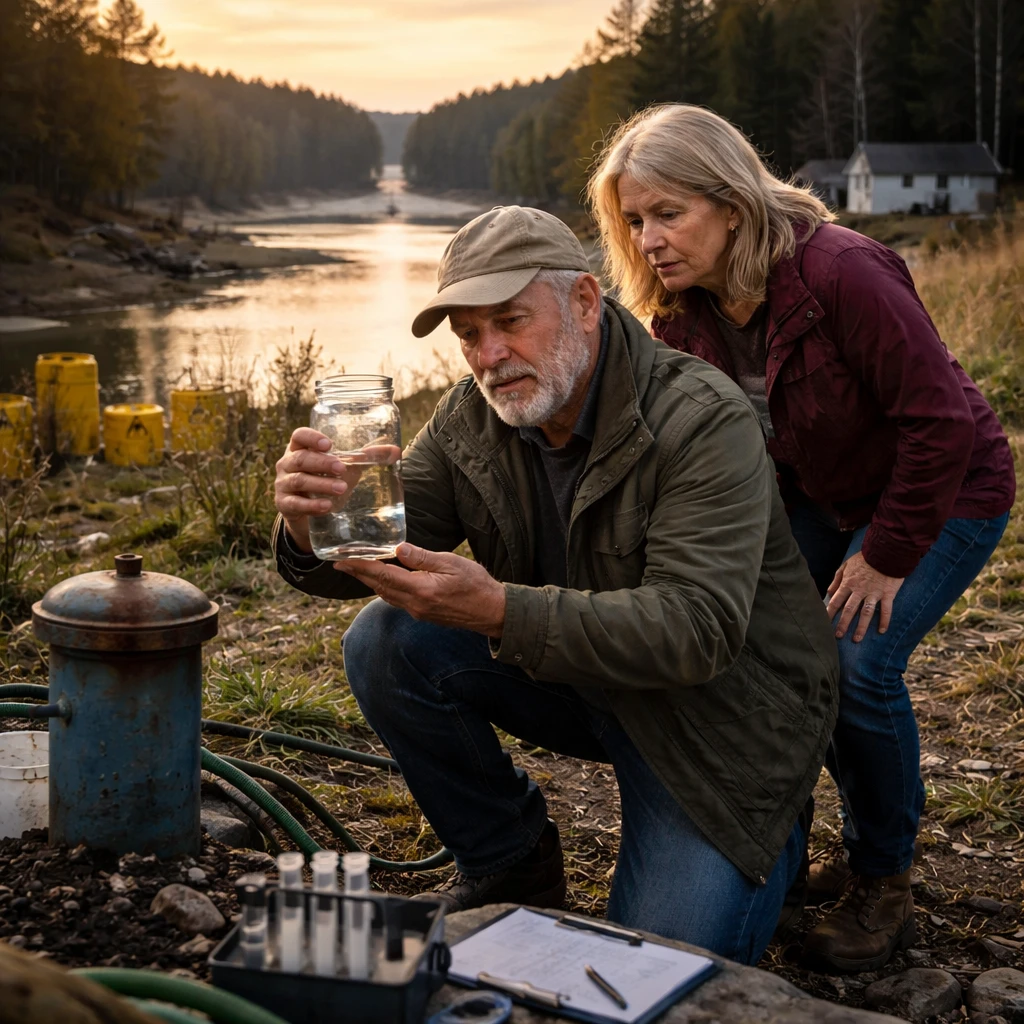

In 2022, a routine offer from state scientists to test private drinking water wells in Wisconsin led Kristen Hanneman of Stella to inadvertently uncover a major public health threat. Without prior concern, she consented to test the well supplying her family home, nestled among potato farms and forested areas. The results revealed dangerously high concentrations of per- and polyfluoroalkyl substances (PFAS), chemicals resistant to degradation and known colloquially as forever chemicals, at levels dramatically exceeding federal safe drinking water thresholds.
This revelation marked the beginning of a broader crisis in Stella, as a growing body of evidence showed PFAS contamination was not confined to Hanneman’s property. Once renowned for its pristine natural surroundings and abundant wildlife, the area now faces advisories limiting the consumption of local fish and game due to contamination. Long-standing community ties complicate relocation efforts, with damaged property values and reluctance among potential buyers exacerbating distress.
PFAS compounds, prized in manufacturing for their water and heat resistance, have been widely used in products ranging from waterproof footwear to firefighting foams and microwave popcorn packaging. Their persistence in the environment and resistance to degradation in human organs elevate concerns about chronic exposure, linked in research to various cancers and developmental challenges.
Nationwide, government data suggest that up to half of U.S. households encounter PFAS traces in their water systems. However, the approximately 40 million Americans relying on private wells, particularly in rural regions, often remain unprotected by regulatory frameworks that enforce limits on municipal water supplies.
Except for targeted, randomized testing initiatives like Wisconsin’s, private well owners frequently do not discover contamination, as many states refrain from testing unless contamination is already suspected. Approximately 20 states omit routine PFAS screening for private wells, leaving numerous households unaware and vulnerable. Among states that do conduct testing, prompt access to remediation resources can still lag behind, positioning these residents at a disadvantage compared to municipal utility customers.
Local industrial legacies account for many contamination sources. In Stella, investigations implicated a paper mill in Rhinelander located roughly 10 miles away. Historically, the mill produced greaseproof paper used for microwave popcorn bags, a process that involved applying PFAS. State-approved sludge from the mill, used as fertilizer since 1996, likely released significant PFAS volumes that infiltrated the sandy substrata feeding groundwater aquifers fundamental to local wells, lakes, and streams.
Regulatory responses have included notifications initiated in September assigning cleanup and investigation duties to past and current mill owners. These companies defend their actions by citing regulatory permissions granted prior to the scientific recognition of PFAS hazards. The Finnish company Ahlstrom, which owns the mill as of 2018, reported phasing out certain PFAS types by 2023 and has initiated a bottled water provision program for affected residents, while previous proprietors cooperate with state inquiries.
Efforts to address contamination contrast with the relatively early management of municipal supplies: Rhinelander’s city wells underwent PFAS testing beginning in 2013, leading to early shutdowns of contaminated public water sources by 2019. Meanwhile, private well owners like the Hanneman family only discovered their exposure years after initial contamination onset, raising long-term health concerns given the cumulative nature of PFAS absorption.
Scientific understanding has informed increasingly stringent federal safety limits, with current acceptable PFAS levels in drinking water set at a mere 4 parts per trillion. Cleaning contaminated well water is technologically challenging and financially burdensome, often requiring specialized filtration systems that demand continuous maintenance. Alternatives like drilling deeper wells or connecting to municipal services may be prohibitively expensive or unavailable, causing many residents to rely on bottled water as a stopgap measure.
Adding complexity, contamination is uneven, defying simple geographic delineations. For instance, Tom LaDue, whose property fronts the highly contaminated Snowden Lake, found low PFAS levels in his well, in contrast to neighbors with shallow wells containing PFAS concentrations thousands of times above federal limits. Such unpredictability frustrates remediation planning and community trust.
Regional disparities in remediation obligations manifest beyond Stella. In Peshtigo, Wisconsin, liability for PFAS pollution stemming from firefighting foam has resulted in contested boundaries over responsibility for well testing and replacement, with some residents required to pay out of pocket depending on their location relative to company-acknowledged contamination zones. Such fragmented approaches accentuate inequities and prolong resolutions.
Further afield, the scale of PFAS contamination along the Cape Fear River in North Carolina illustrates the persistent challenge of addressing legacy pollution. Contamination from a chemical plant in Fayetteville has been documented over nearly 100 miles of river, with thousands of wells tested and many exceeding federal PFAS limits. The responsible company has agreed to testing and water treatment programs, though it has not admitted liability. Yet, testing remains ongoing years after initial disclosures, illustrating the extended timelines and uncertainties endemic to managing PFAS impact.
State-level responses exhibit wide variation, often constrained by budgetary limitations. Michigan offers a proactive example by implementing free testing near PFAS hotspots and allocating substantial grant funding to assist well owners, implementing programs to connect nearly a thousand household wells to public water systems. Conversely, other states lag due to financial and logistical obstacles, leaving many well owners responsible for testing costs or unaware of the risks.
Wisconsin’s limited funding landscape has necessitated drawing from other environmental programs to support PFAS sampling and water provision efforts in Stella. While state legislators recently allocated $125 million for cleanup initiatives, disbursement remains stalled amid political debates over liability protections. Federal allocations tend to prioritize public utilities, leaving private well remediation less supported.
The uncertain future looms large for Stella. Federal agencies are currently assessing the community’s eligibility for the Superfund program, which could enable comprehensive environmental remediation but would require years of planning and implementation. State officials have endeavored to expand testing capacity but emphasize that budgetary and logistical constraints preclude unlimited free testing for all well owners, forcing individuals to bear costs for prompt assessments.
Meanwhile, the ongoing controversy over accountability persists, with involved companies highlighting past regulatory permits, and the state asserting that those who contributed to contamination must bear consequences. Residents, having unwittingly endured significant chemical exposure, now often depend on legal representation to pursue reparations from both polluters and chemical manufacturers.
For Kristen Hanneman, who has taken on a community leadership role in response to the crisis, the challenges are deeply personal. Her family continues to rely on state-provided bottled water due to persistently high PFAS concentrations in their well, nearly four years after initial detection. Assistance programs for installing safer wells impose income limits and often cover only a portion of the considerable costs, forcing difficult financial decisions amid uncertain health prospects.
Compounding concerns, some well replacements fail to yield uncontaminated water, as at least three Stella households discovered, underscoring the complexity of groundwater contamination and treatment. Residents frequently express anxiety over the long-term safety of their water and the depreciation of their property values.
Notably, the paper mill remains authorized to apply sludge within the region under revised, stringent PFAS thresholds. Experts caution that industrial sludge constitutes a primary PFAS source, and criticize ongoing use without comprehensive testing of all waste types, including treated septic system waste applied to farmlands. The latter practice occurs unchecked in Stella, potentially perpetuating soils’ exposure to PFAS.
The persistent contamination of Snowden Lake exemplifies the environmental impact, with bans on fish consumption reflecting concerns over bioaccumulation of these substances within local ecosystems, further affecting community lifestyles and economic activities.