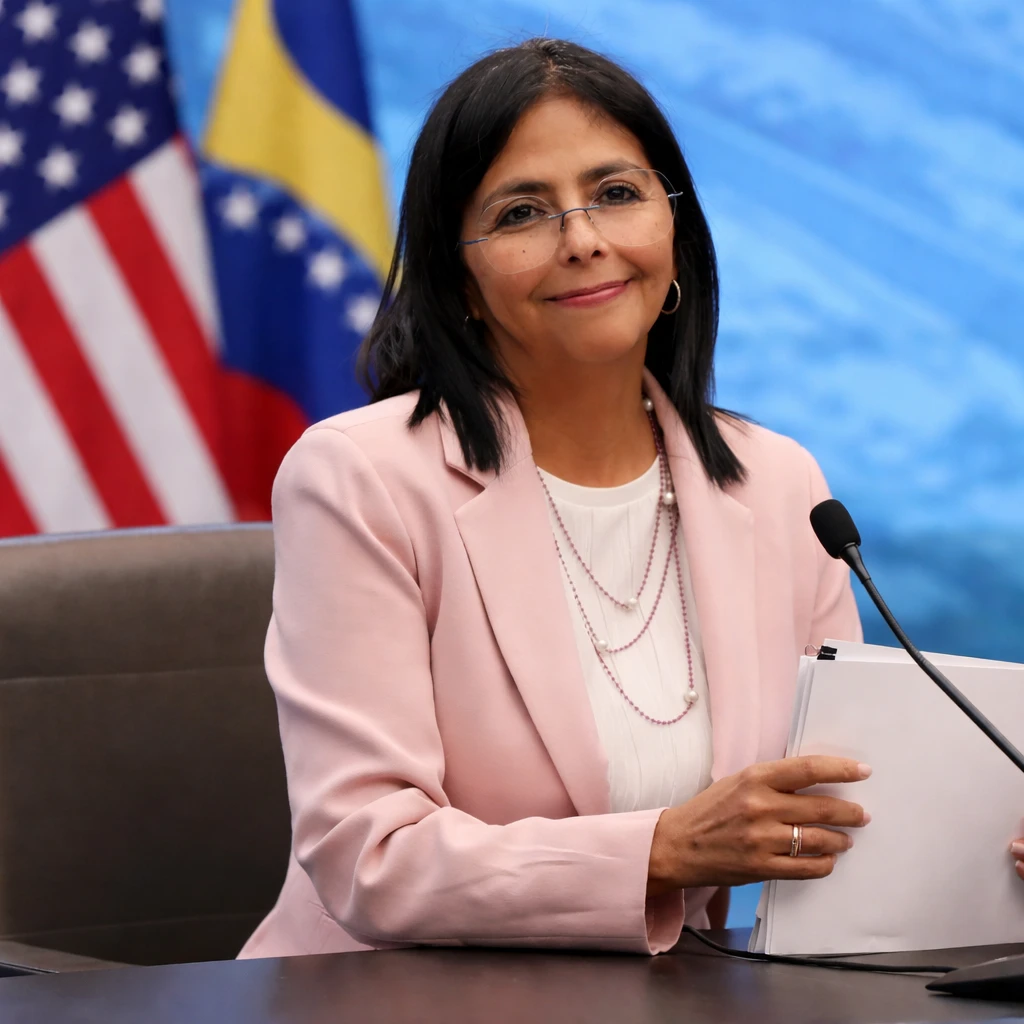
In 2017, as Donald Trump prepared to assume the U.S. presidency, Venezuela's then-foreign minister Delcy Rodríguez sought to capitalize on an opening to improve bilateral ties. She instructed Citgo, a U.S.-based subsidiary of Venezuela’s state oil company, to make a $500,000 contribution to Trump's inauguration. This overture aimed at fostering goodwill came amid Venezuela's socialist government grappling with severe economic hardship, including food shortages.
Parallel to this monetary gesture, Rodríguez orchestrated a lobbying campaign targeting key Republican figures in Washington. Citgo enlisted Trump's former campaign manager as a lobbyist, sought Congressional Republican support, and attempted to arrange a meeting with ExxonMobil’s leadership. Despite these strategic advances, the initiative was swiftly undermined. Shortly after Trump took office, prompted notably by then-Senator Marco Rubio, the administration prioritized restoring democracy in Venezuela as a reaction to President Nicolás Maduro's authoritarian suppression of dissent.
Although the diplomatic bid failed to soften the U.S. stance, Rodríguez heightened her profile among political and business leaders in America. This exposure contributed to her political elevation within Venezuela. According to Lee McClenny, a retired U.S. diplomat stationed in Caracas during this period, Rodríguez exhibited ideological steadfastness coupled with pragmatic recognition of the urgent need to revive Venezuela's flailing oil-dependent economy. Her willingness to engage with the Trump administration reflected this balance.
More than six years later, Rodríguez now serves as Venezuela’s interim president following Maduro's ousting. Her repeated assertion that Venezuela welcomes foreign investment aligns with the Trump administration's recent characterization of her as an accommodating partner. While President Trump has praised Rodríguez for this demeanor, he has simultaneously issued warnings demanding that she curb the ruling party’s power and grant comprehensive U.S. access to the country's significant oil assets. Notably, discussions remain silent on the constitutional mandate ordering elections within 30 days after a permanent presidential vacancy.
This detailed account of Rodríguez’s rise is sourced from interviews with ten former U.S. and Venezuelan officials and business figures closely acquainted with her over many years. These individuals, speaking largely under condition of anonymity due to concerns about reprisals, describe Rodríguez as intellectually formidable and occasionally personable but ultimately a ruthless political tactician who suppresses opposition decisively. Efforts to obtain her direct commentary were unsuccessful.
Rodríguez’s enduring leftist convictions are underscored by personal tragedy. During the Cold War era in 1976, her father, a socialist leader, died in Venezuelan custody after being apprehended in a case connected to an urban guerrilla kidnapping. This formative event deeply influenced the ideological path she and her older brother Jorge—who later swore her in as interim president—followed.
Despite initial challenges in Chavismo governing circles, where Rodríguez was perceived as aloof and at times clashing with peers, her political fortunes revived after Hugo Chávez's death. While Maduro ascended to power, Rodríguez’s background in law education from Britain's and France's institutions and proficiency in English positioned her as a bridge figure within factions of the ruling movement. Support from affluent 'boligarchs' and key figures such as media tycoon Raul Gorrín, linked to both Venezuela’s elite and U.S. money laundering indictments, aided her maneuvering.
Elevated to vice president in 2018, Rodríguez gained command over important segments of the Venezuelan oil economy, recruiting international advisors with economic acumen, including former Ecuadorian finance ministers adept at managing dollarized economies. She also collaborated with French legal expert David Syed in attempts to renegotiate Venezuela’s substantial foreign debt amidst stringent U.S. sanctions.
Rodríguez’s consolidation of power involved sidelining rivals like former Oil Minister Tareck El Aissami, who was incarcerated in 2024 for corruption as part of her internal crackdown. Observers note her role as Venezuela’s de facto chief operating officer portrays her as more adaptable and credible to U.S. interlocutors than Maduro himself, prompting comparisons to figures like Deng Xiaoping in terms of economic pragmatism.
Nonetheless, the political future raises questions about democratic processes. Although the U.S. has expressed support for opposition elements, including figures like Maria Corina Machado who secured election victories deemed legitimate by foreign observers, President Trump and others have cast doubt on their suitability to govern. Former special envoy Elliott Abrams asserts that the existing power-sharing among Chavismo factions hinders immediate political transition and that there are no clear indications of imminent elections or departure from Rodríguez’s rule despite official rhetoric.