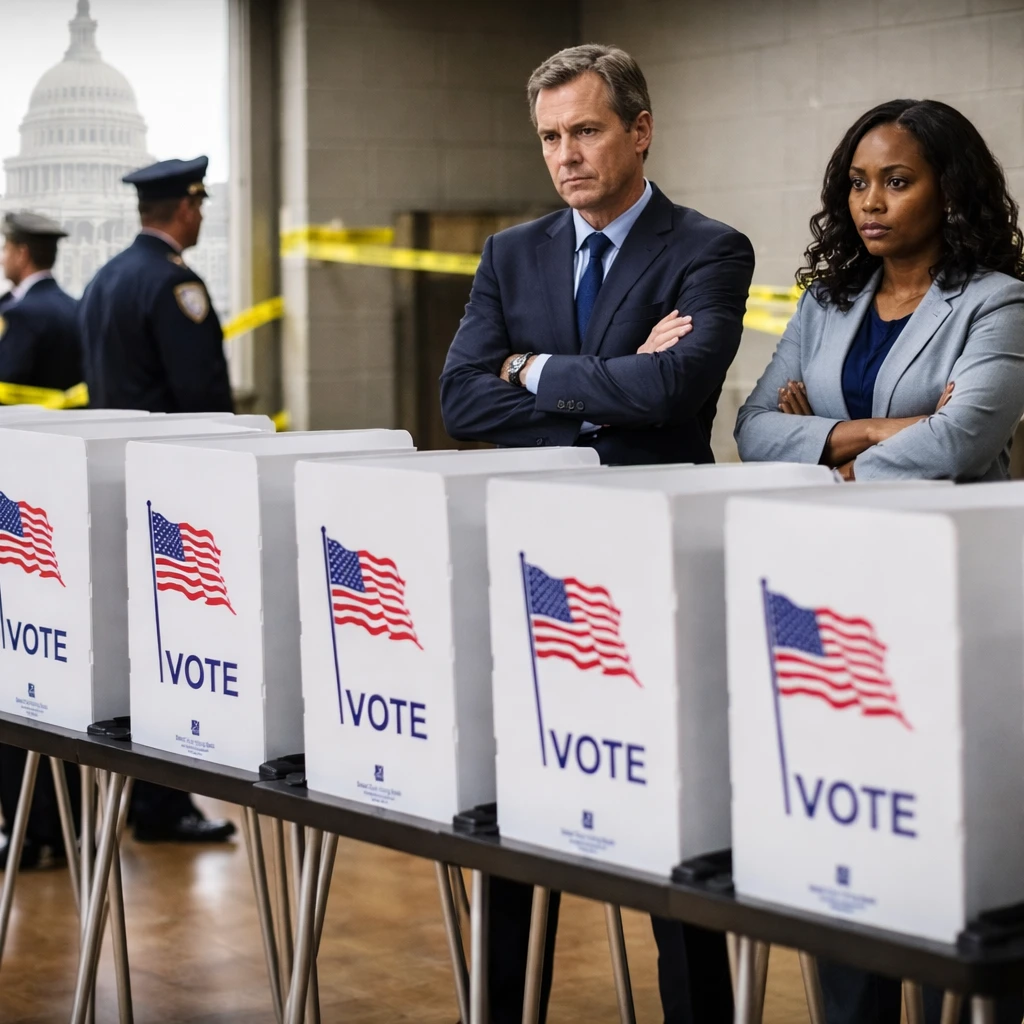

Looking ahead to the 2026 midterm elections, analysis indicates that the Republican Party may face difficulties maintaining control of the House of Representatives. Holding a slim majority, they confront a historical trend where the party in the White House tends to lose seats during midterms. President Donald Trump is actively working to counter this trend through various strategic measures.
Trump’s efforts include spearheading a nationwide redistricting campaign aimed at crafting more conservative-favored congressional seats. While intended to secure Republican positions, this approach carries risks and could potentially undermine his objectives. Concurrently, his administration has targeted Democratic politicians, activists, and donors, actions that have elicited concerns among Democrats who fear unprecedented federal intervention in the midterm process.
Democratic critics cite examples of Trump deploying military personnel to Democratic-controlled cities, often in defiance of objections from local leaders. Additionally, there is alarm over the Department of Homeland Security’s assertive conduct, which once led to the detention of a Democratic U.S. senator. Some warn that if the Republicans maintain Senate control but lose the House, there could be a refusal to seat duly elected Democratic members, reminiscent of the 2020 aftermath when Trump resisted election results, culminating in the Capitol attack.
Ken Martin, chairman of the Democratic National Committee (DNC), voiced apprehensions about continued military presence near polling locations, suggesting that intimidation tactics designed to deter voters could be sustained throughout the election period. "If people fear leaving their homes, voter turnout will likely diminish," he explained, highlighting the strategic consequences of such measures.
These assertions echo Democratic voices from the November prior year, who anticipated similar federal escalations that ultimately did not materialize. In California, Governor Gavin Newsom, an outspoken Trump critic, warned of disguised immigration agents potentially disrupting voting amid efforts to challenge Trump-influenced redistricting. Contrary to these worries, voter integrity measures passed overwhelmingly without incident.
In response to these allegations, White House spokesperson Abigail Jackson dismissed Democratic fears as politically motivated "fearmongering," attributing them to attempts to energize the political left. Similarly, Trump's chief of staff, Susie Wiles, categorically denied any intention to deploy the military for voter suppression, labeling such claims as erroneous and ill-conceived.
DNC litigation director Dan Freeman acknowledged no direct evidence confirming plans for immigration enforcement agents at polls but noted the party's vigilant stance. Through public records requests and legal preparedness, the DNC is positioning itself to respond should federal agents intervene during voting, signaling skepticism toward official reassurances.
It is important to note that electoral administration largely resides with individual states rather than the federal government. The 2025 off-year elections, though limited in scope, saw the Department of Justice send federal observers to select counties without affecting voting processes, and no significant electoral disturbances were recorded. Expert legal opinions stress constitutional limitations on presidential authority over elections, reinforced by court rulings that curtailed previous executive actions aimed at changing voting rules.
Despite these institutional boundaries, experts highlight other avenues by which a president could disrupt electoral integrity. Attempts to influence state election officials to alter vote counts or disseminate misinformation to erode public trust remain possibilities warranting vigilance.
Particular concern arises from the Department of Justice’s demands for extensive voter data, prompting lawsuits against multiple Democratic-led jurisdictions that have resisted handing over sensitive personal information. Critics view this as a troubling use of executive power with potential privacy and security implications.
Both political parties are advancing initiatives related to voting processes, with Democrats emphasizing "voter protection" aimed at identifying and preventing issues, and Republicans focusing on "election integrity." The DNC has augmented its legal capacity to backstop voting rights enforcement in the face of diminishing Department of Justice compliance. Meanwhile, coalitions of law enforcement and election officials report surging engagement in training programs to manage heightened tensions and ensure safe polling environments.
With these developments, the political landscape ahead of the 2026 midterms is complex, characterized by strategic jockeying and legal maneuvering. The stated concerns and preparations underscore the ongoing contest over electoral control and integrity in the United States.