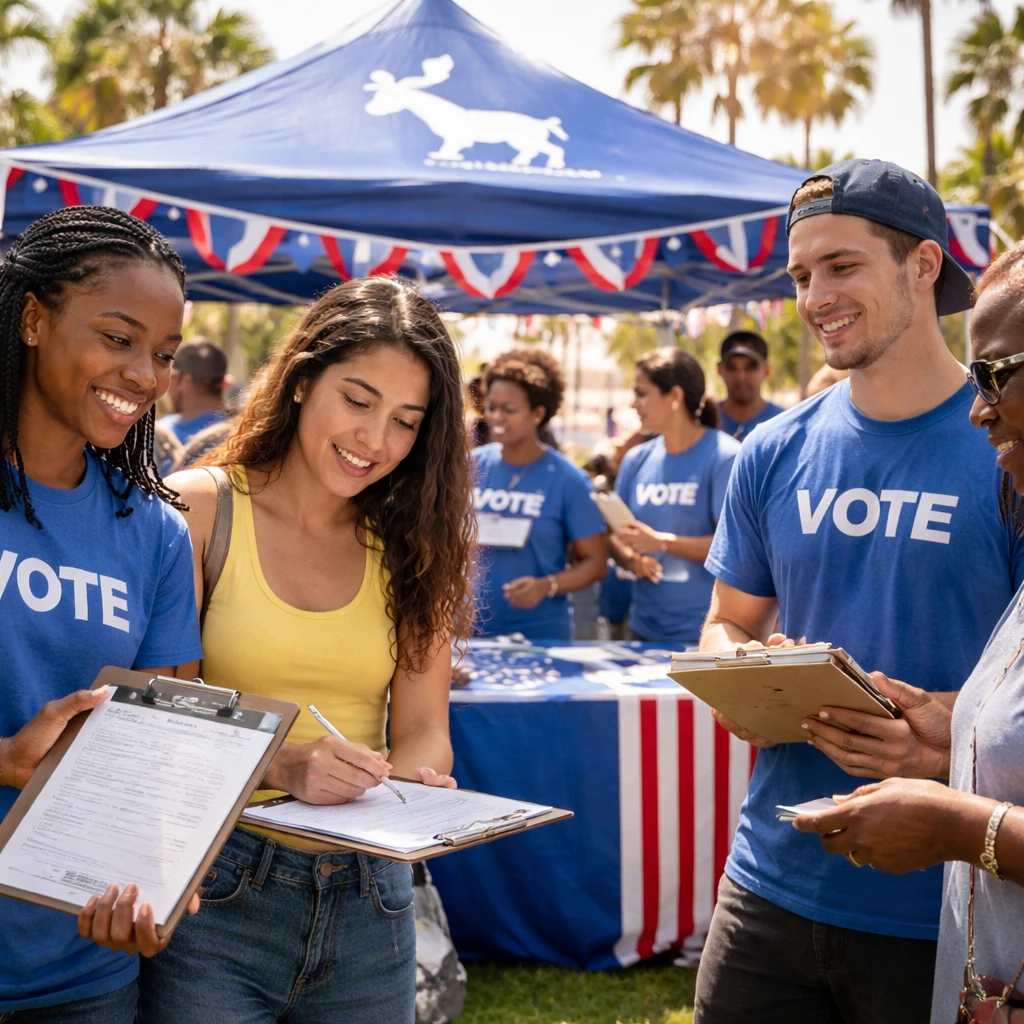

The Democratic National Committee (DNC) has announced a significant new investment in voter registration efforts, signaling a strategic shift from their traditional reliance on external nonprofit advocacy groups and independent campaigns. This move aims to enhance the party's ability to appeal to voters ahead of the midterm elections, with an initial focus on Arizona and Nevada.
Allocating at least $2 million to train new organizers, the program represents the DNC's most considerable push to increase voter engagement. This initiative prioritizes young voters, communities of color, and individuals without college degrees—groups that notably distanced themselves from Democrats during the recent presidential race, which resulted in Republican Donald Trump reclaiming the presidency.
Ken Martin, Chair of the DNC, emphasized the critical nature of the challenge facing Democrats: "It's a crisis. And for our party to actually win elections, we have to actually create more Democrats." He insists this requires all members of the party, not only external organizations, to be deeply involved in voter outreach efforts as Democrats seek to regain congressional authority and address the Republican dominance in Washington.
Historically, Democrats have depended on a range of advocacy groups and civic organizations to register voters. These organizations typically operate under nonpartisan legal mandates, limiting overt political alignment. However, the DNC now aims to adopt a strategy more akin to the Republican approach, where the party plays a direct role in organizing and mobilizing its base, potentially enhancing voter turnout and loyalty.
Despite the importance of nonprofit partners, Martin acknowledged the need to expand beyond these alliances: "Allied nonprofits are really important partners who have done amazing work to engage people in democracy. Yet, given our current disadvantage and the advantage held by Republicans, we have to do more."
The voter registration campaign intends to engage organizers from diverse backgrounds—including gig economy workers and young parents—who historically have been underserved by the party's grassroots efforts. By recruiting organizers who share the lived experiences of blue-collar and working-class Americans, the DNC hopes to rebuild connections with voters disenchanted by politics and alienated in recent elections.
Santiago Mayer, founder of the progressive youth group Voters for Tomorrow, praised the initiative: "I think it’s incredible that Democrats are investing in reaching voters who have been left behind. We suffered heavily in persuasion in 2024, so this is a crucial step to prevent recurrence in 2026." Mayer's group is collaborating with the DNC to help drive these efforts.
The program's launch will feature a series of videos from elected officials, activists, and party leaders nationwide. It also aims to foster enthusiasm through competitive engagement among state parties throughout the year, building momentum for the midterm elections.
Looking beyond the immediate electoral cycle, Martin describes the investment as foundational infrastructure for sustained success: "This is a critical piece of the infrastructure we’re building not only to win in ’26 but also in ’28, ’30, and ’32. Consistent effort is essential to maintain and grow our position."