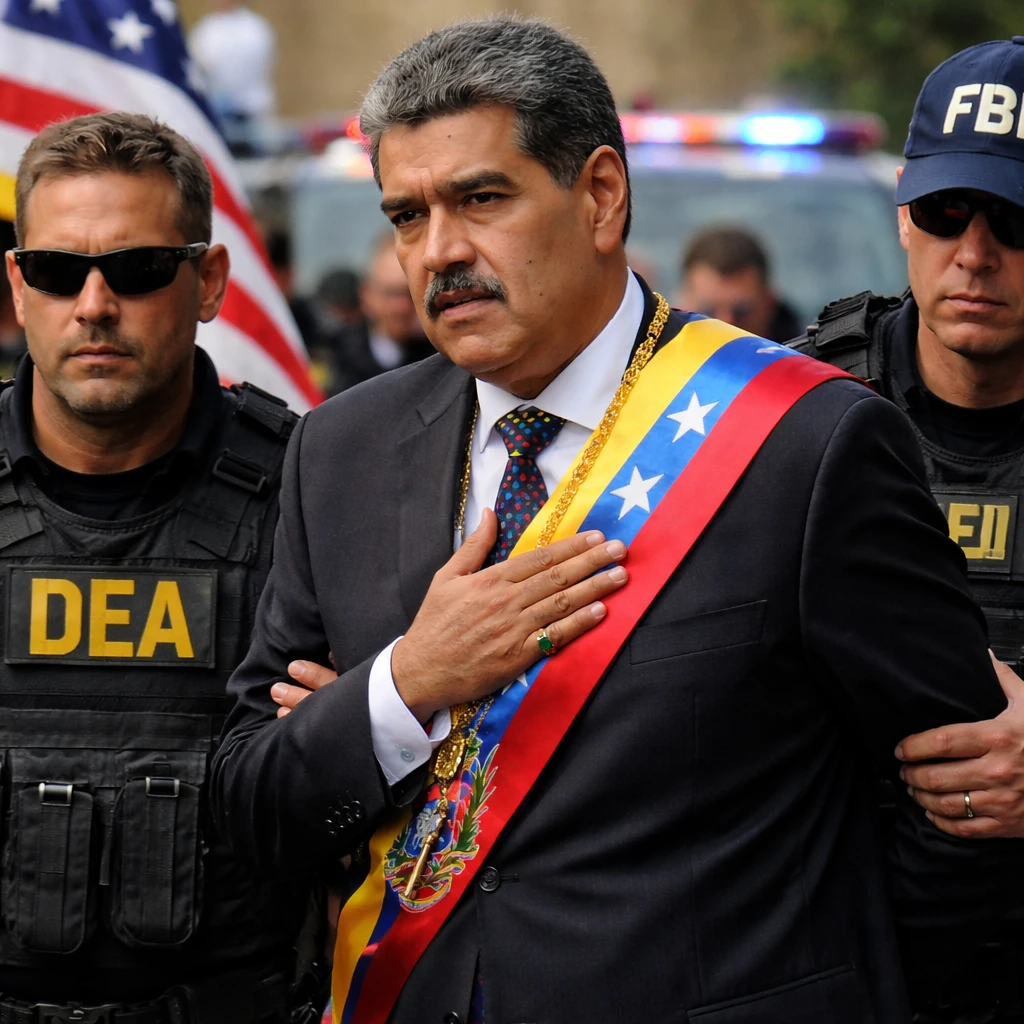
On Monday, Nicolás Maduro, the ousted Venezuelan president, is scheduled to appear for the first time in a U.S. court to face serious charges related to narco-terrorism. These charges were the basis for the Trump administration's justification of his apprehension and transfer to New York. Maduro and his wife are expected to be present at a Manhattan courthouse for a brief procedural hearing before a judge. This event marks the opening of what is anticipated to be an extended legal contest about the viability of prosecuting Maduro under U.S. jurisdiction.
The couple is to be transported from a Brooklyn detention center to the courthouse located near the one where former President Donald Trump was found guilty in 2024 for falsifying business records. As defendants under the American judicial system, Maduro and his wife will be afforded the same protections and rights as any other accused individuals, including the right to a trial by a jury composed of citizens from New York.
What sets Maduro's case apart is the contestation from his legal team regarding the legitimacy of his arrest. His defense is expected to argue that as a sitting head of state, Maduro possesses immunity from prosecution. However, precedent such as the failed defense by former Panamanian leader Manuel Noriega after a U.S. military capture illustrates the challenge faced. The U.S. government currently does not recognize Maduro as the legitimate ruler of Venezuela, especially after his contested reelection in 2024.
In response to this situation, Venezuela's interim president, Delcy Rodríguez, has demanded Maduro's return to Venezuela. Although she had previously denied Maduro's involvement in drug trafficking, Rodríguez appeared more conciliatory in a recent social media communication, expressing openness to cooperation with U.S. authorities and respectful bilateral relations.
Prior to his detainment, Maduro and his affiliates contended that U.S. hostility was driven by interest in Venezuela's abundant oil and mineral reserves. The U.S. operation that led to Maduro's capture occurred over the weekend, with agents apprehending him and his wife at a military base where they resided. Following this, former President Trump declared an intention for the U.S. to temporarily manage Venezuelan affairs. Contrastingly, Secretary of State Marco Rubio clarified that the U.S. does not plan to govern Venezuela on a day-to-day basis, aside from enforcing an existing oil embargo.
Further expanding his remarks, Trump criticized Colombian President Gustavo Petro aboard Air Force One, labeling him negatively and accusing him of involvement in cocaine trafficking to the U.S., asserting that such activities would soon cease. Trump also urged Venezuelan interim leader Rodríguez to grant full access to her country or face repercussions.
Officially, a detailed 25-page indictment has been released which accuses Maduro and several associates of conspiring with drug trafficking organizations to ship massive quantities of cocaine into the United States. Conviction could result in life imprisonment. At the time of release, it remains uncertain whether Maduro has retained American legal representation.
Both Maduro and his wife, Cilia Flores, have been subject to U.S. sanctions for several years. These sanctions prohibit American individuals from conducting financial transactions with them without authorized Treasury Department permission. Despite the indictment alleging coordination between Venezuelan officials and the criminal gang Tren de Aragua, a U.S. intelligence community report released earlier in the year found no evidence that the Venezuelan government directly collaborated with this specific criminal group.
The charges extend beyond Maduro and his wife to include Venezuela's interior and justice minister, a former minister with the same portfolio, and Hector Rusthenford Guerrero Flores, alleged leader of Tren de Aragua, who remains fugitively wanted under separate charges. The indictment describes serious crimes attributed to Maduro and his wife, including orchestrated kidnappings, violent assaults, and murders targeting individuals who refused to pay drug debts or threatened their criminal operations. Notably, the death of a local drug kingpin in Caracas was cited. Dolores Flores is additionally accused of receiving substantial bribes in 2007 to facilitate meetings between a major drug trafficker and the head of Venezuela’s National Anti-Drug Office, resulting in recurring illicit payments, some allegedly benefiting her personally.
The continuing investigation and legal proceedings involving Maduro carry significant geopolitical and judicial gravity, reflecting ongoing tensions between the United States and Venezuela concerning governance, international law, and counter-narcotics efforts.