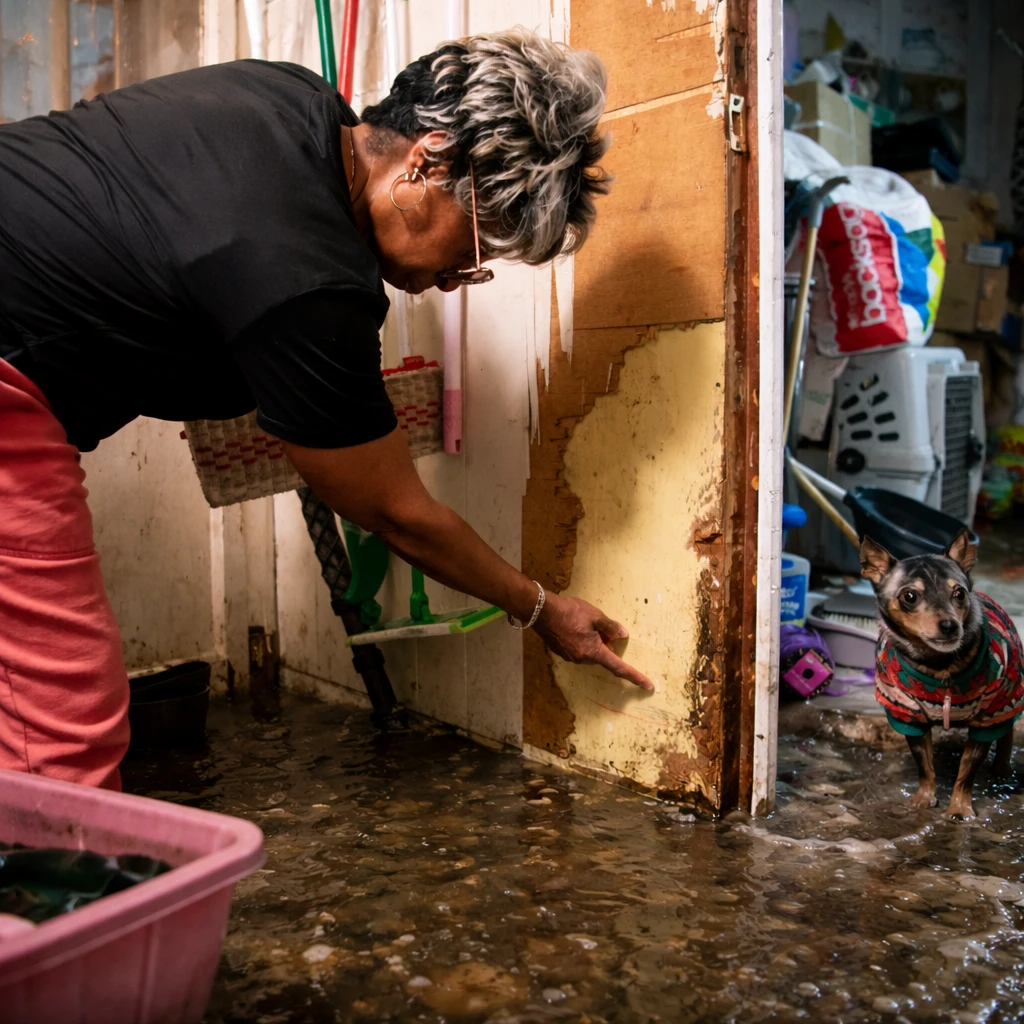

Yvette Lyles purchased a modest brick ranch home in Cahokia Heights, Illinois, envisioning a safe haven for her family where they could enjoy outdoor activities at a nearby state park. The home was meant to be a place for lifelong memories, but soon after moving in, her family encountered a severe issue plaguing the area: the frequent flooding of untreated sewage.
Heavy rainfall routinely overwhelms the community's aging wastewater system, causing it to back up and release raw sewage into streets, yards, and residences. This contamination has resulted in substantial property damage including buckling floors and cracked walls, alongside the destruction of personal belongings. Lyles recalls being trapped inside her home for several days during the initial incident, describing the emotional toll it took on her and her family. "I had to turn my back so my children wouldn’t see me cry," she said.
Cahokia Heights is a predominantly Black city where approximately one-third of residents live below the poverty line. The deteriorating wastewater infrastructure in such marginalized communities poses significant health risks, as exposure to untreated sewage can transmit diseases. These challenges are typical in rural regions and cities experiencing economic decline, where resources and technical expertise to resolve infrastructure issues are scarce.
Efforts to rectify these systemic problems had been bolstered by allocations from the Bipartisan Infrastructure Law and initiatives under the Biden administration, which aimed to reduce racial and economic disparities through substantial grants and loans. However, many of these funds have been withdrawn or face elimination under the current presidential administration, undermining ongoing and future remediation projects.
The reduction in federal support leaves numerous vulnerable communities exposed to persistent infrastructural failures and associated public health hazards. Without renewed financial commitment, the cycle of damage and disease linked to failing wastewater systems threatens to continue unabated, particularly in economically disadvantaged areas.