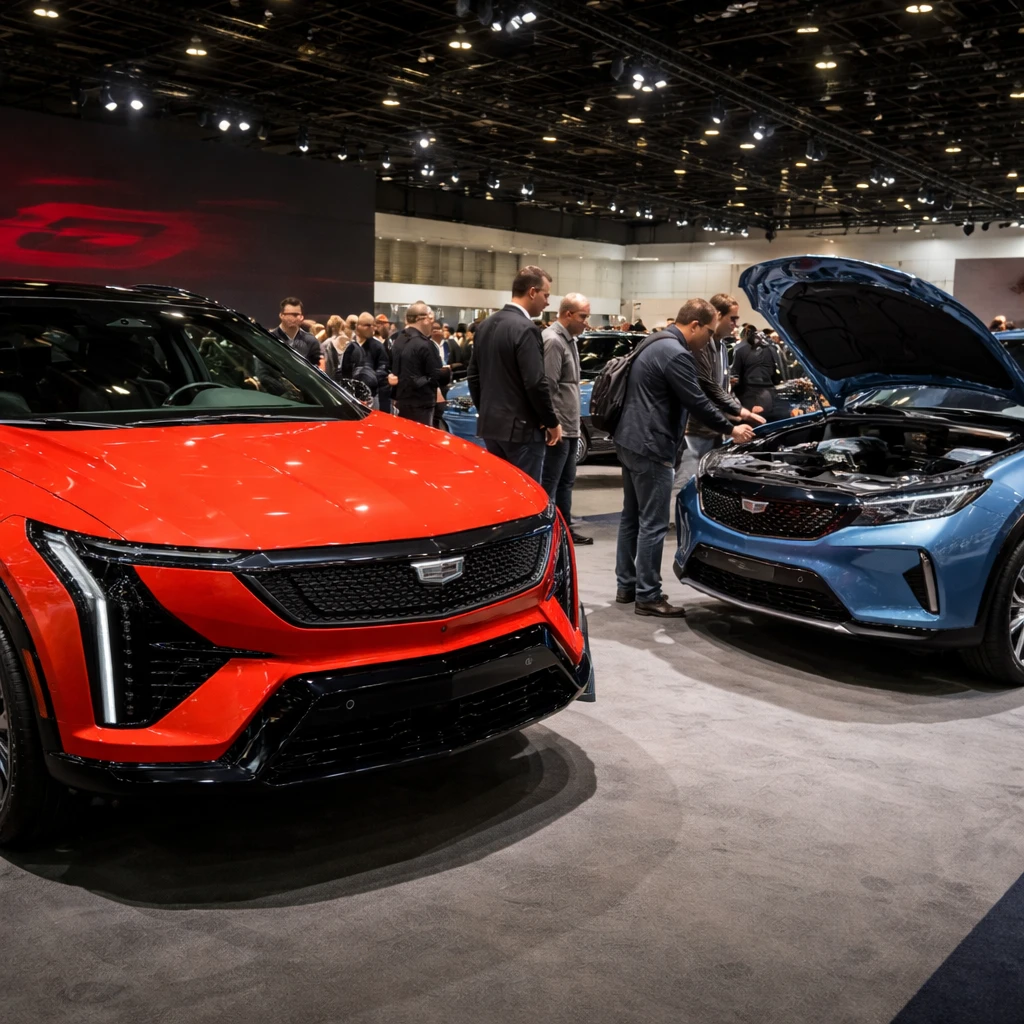

Within the spacious confines of the North American International Auto Show, the sharp screech of tires on two indoor test tracks reverberates as car enthusiasts and media representatives experience the agility of newly unveiled vehicles. Notably, what was once a dedicated track for electric vehicles (EVs) has transitioned to accommodate a variety of propulsion types including hybrids and internal combustion models. This change reflects a broader strategic redirection within the U.S. automotive sector in response to shifting policy priorities after President Donald Trump’s return to office, which emphasized support for fossil fuels over aggressive electrification.
Todd Szott, chair of the event and an automotive dealer, remarked that the show serves as a mirror to prevailing industry trends and consumer preferences, acknowledging, "Obviously things have changed in the EV landscape." Automakers participating in the Detroit showcase emphasize offering consumers a wider range of options, positioning this approach as prioritizing "consumer choice." However, analysts caution that this moderated focus on EVs may hinder the United States’ competitive position internationally, especially as countries like China intensify their electrification efforts.
Michael Robinet, vice president of forecast strategy at S&P Global Mobility, voiced apprehensions during a panel discussion, stating, "What we worry about is how competitive will we be on the global stage as the market continues to advance around us." His comments underline concerns that the U.S. may lag as global markets progressively adopt electric technologies.
Data from Benchmark Mineral Intelligence underscores these divergent trajectories. In the United States, total sales of electrified vehicles, including plug-in hybrids, registered only a marginal increase of 1% in the preceding year, compared to robust growth rates of 17% in China and 33% in Europe. The U.S. market share for pure electric vehicles declined slightly to just under 8%, with 1.23 million units sold in 2025.
During a recent visit to Ford’s River Rouge Complex in Dearborn, President Trump asserted that his administration's policies have revitalized the U.S. automotive sector, focusing on traditional vehicle production and energy independence. He emphasized policy reversals including nullifying Biden-era electric vehicle sales targets, curbing federal incentives such as tax credits up to $7,500 for EV purchasers, and halving enforcement of fuel economy standards. Trump advocates a more diversified automotive future where consumers are not compelled to adopt electric vehicles.