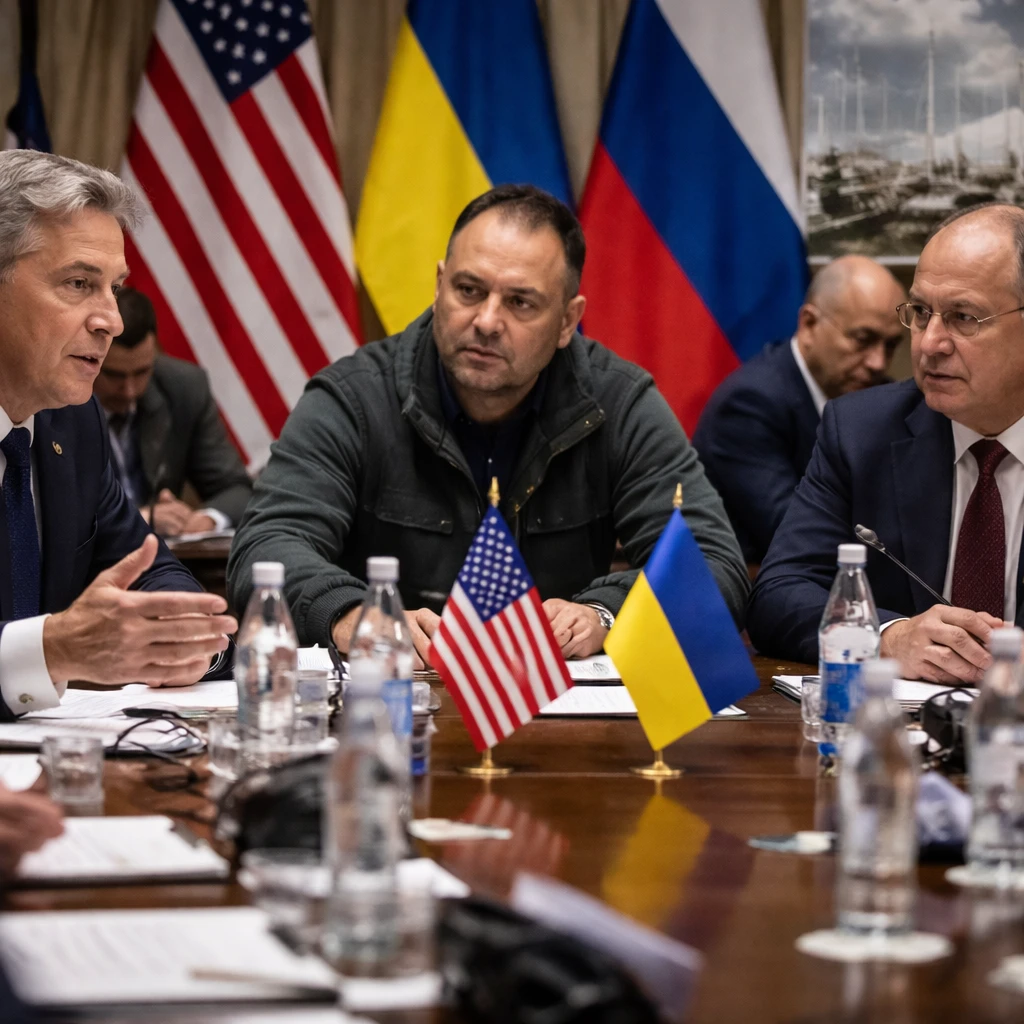

After two days of intensive discussions, representatives from Ukraine, Russia, and the United States concluded talks on Saturday in what Ukrainian President Volodymyr Zelenskyy characterized as "constructive" engagement concerning possible terms to conclude the enduring conflict. This series of negotiations marks a notable diplomatic development, encompassing military and economic dimensions of the crisis, and is the first occasion that officials from the Trump administration have participated simultaneously with both countries in attempts to advance a resolution to Russia's protracted invasion.
According to a U.S. official privy to the proceedings, the talks were largely positive, engaging a wide spectrum of issues including the potential for implementing a ceasefire prior to finalizing any agreement. Coordination between delegations involved a reciprocal commitment to update their respective governments on each element discussed and to consult leaders on subsequent actions.
A prominent topic of deliberation was oversight and operational control of the Zaporizhzhia Nuclear Power Plant, the largest facility of its kind in Europe, currently under Russian occupation. While the energy produced is agreed to be shared equitably, full control of the plant remains unresolved.
President Zelenskyy also noted an emerging consensus on the need for American supervision and regulatory involvement in the termination of hostilities and the establishment of lasting security mechanisms.
The diplomatic contingent for Ukraine included chief negotiator Rustem Umerov and the chief of staff to Zelenskyy, Kyrylo Budanov, accompanied by U.S. envoys Steve Witkoff and Jared Kushner. In contrast, Russia was represented by officials from their military intelligence and armed forces sectors.
While Zelenskyy had earlier indicated in Davos that a comprehensive peace proposal was close to fruition, the talks revealed persistent challenges, especially relating to territorial disputes which remain unsettled.
A U.S. official indicated that further bilateral discussions between Russian and Ukrainian officials, potentially hosted within their respective nations, are a likely prerequisite for any meeting between Zelenskyy and Russian President Vladimir Putin or joint sessions involving President Donald Trump. Nonetheless, there appears to be a constructive momentum directed towards enabling high-level leadership dialogues.
Just prior to the commencement of the trilateral meetings, President Putin engaged in extended overnight discussions with the U.S. envoys Witkoff and Kushner concerning terms for a Ukraine settlement. Moscow's position remains firm on the prerequisite that Kyiv must withdraw its military presence from areas in eastern Ukraine that Russia claims but has yet to fully control.
These discussions unfolded against the backdrop of continuing hostilities, including drone attacks that caused casualties in Kyiv and Kharkiv, Ukraine's capital and second-largest city, respectively. Ukrainian authorities reported one fatality and multiple injuries in Kyiv, with 27 wounded in Kharkiv as a result of these attacks that coincided with ongoing peace negotiations.
Ukrainian Foreign Minister Andrii Sybiha condemned the timing of these assaults, emphasizing their cynical nature as they disrupted the diplomatic efforts underway in Abu Dhabi.