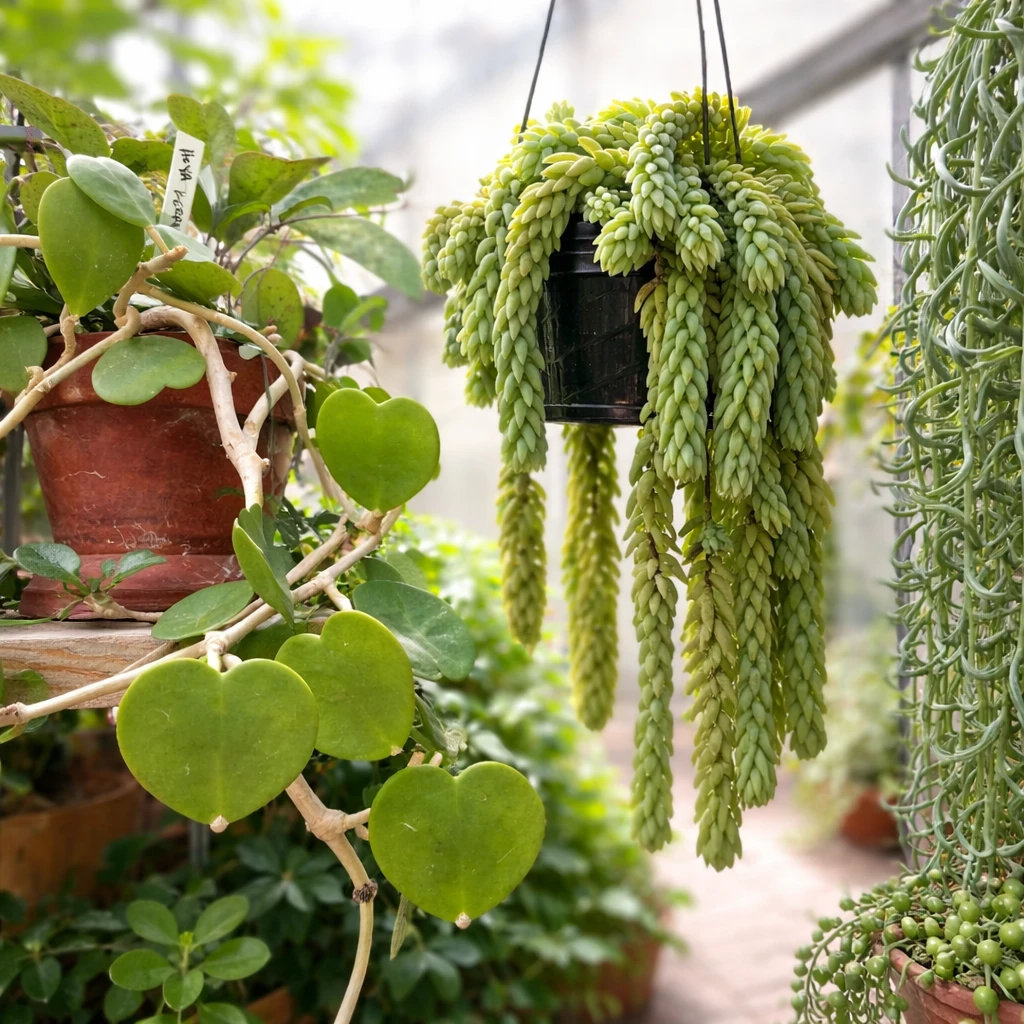

Houseplants serve many purposes, from providing a calming connection to nature to enhancing the aesthetic appeal of interior spaces. Among the most visually captivating options are succulents that showcase distinctive leaf formations rather than relying on fleeting blooms. These plants maintain their unique foliage as a continuous feature, giving them a lasting decorative presence.
Essential to cultivating succulents is the choice of a well-draining potting medium, ideally one designed specifically for cacti and succulents. Containers should have drainage holes to prevent water accumulation. Allowing the soil to dry fully between waterings helps maintain healthy root systems and prevents overwatering-related issues.
Krinkle Kurl
One notable succulent is the Krinkle Kurl (Hoya carnosa), known for its vining habit and thick, waxy leaves that are tightly packed and display a cupped, crinkled texture. This slow-growing species benefits from exposure to a minimum of four hours of direct sunlight daily. Optimal placement includes south-facing windows or locations illuminated by fluorescent lighting. Nutrient supplementation involves applying a diluted all-purpose houseplant fertilizer at half strength every two months during the spring and summer seasons. While small pink flowers emerge in warmer months, the primary attraction remains the distinctive waviness of its foliage.
Burro’s Tail
The Burro’s Tail (Sedum morganianum) is recognizable for its long trailing stems covered in layered silvery-blue, teardrop-shaped leaves that evoke the appearance of an artichoke. This durable plant thrives near bright, south-facing windows and is ideally displayed on a tall stand or suspended from the ceiling, emphasizing its pendulous stems which may extend up to four feet. Fertilizing once during each of the spring and summer periods suffices for its nourishment.
Sweetheart Plant
Among succulents, the Sweetheart Plant (Hoya kerii) is often noted for its charming heart-shaped leaves. In retail, it is commonly sold either as a single leaf rooted in a small container—often gifted on Valentine’s Day—or as a mature vine with thick heart-shaped leaves along each stem. These plants prefer bright but indirect light and do well when positioned directly in front of a north-facing window or slightly offset from south- or west-facing windows. Regular feeding involves a balanced houseplant fertilizer, diluted by half, administered every two to four weeks during the spring and summer months.
String of Dolphins
Named for its leaves that curve to resemble dolphins breaching with fins, the String of Dolphins (Curio peregrinus) is an easy-to-care-for succulent best situated in a south-facing window for adequate sunlight. It requires thorough watering when its soil dries, approximately monthly during fall and winter, and more frequently—every one to two weeks—through spring and summer. A once-annual feeding with a balanced liquid fertilizer, diluted to half strength, suffices at the onset of active spring growth. It is important to note this plant is toxic to dogs and cats.
String of Pearls
The String of Pearls (Curio rowleyanus) features bead-like structures along its vines, typically growing up to three feet long. Though the spherical shapes resemble peas, "string of peas" is not the commonly used name. This succulent shares a genus with String of Dolphins, both of which were recently classified under Curio rather than their former Senecio genus, so older tags might reflect the previous classification. Care consists of placing the plant in bright indirect sunlight and watering only when the soil becomes dry. Monthly feeding with a balanced liquid fertilizer diluted to half strength is recommended during the growing seasons of spring and summer, with no feeding necessary during fall and winter. Like the String of Dolphins, String of Pearls is also toxic to cats and dogs.
Overall, these succulent varieties combine intriguing natural forms with manageable care routines. They offer enduring decorative appeal and can be adapted to a range of indoor lighting conditions and container setups, providing options for plant enthusiasts seeking distinctive, low-maintenance greenery.