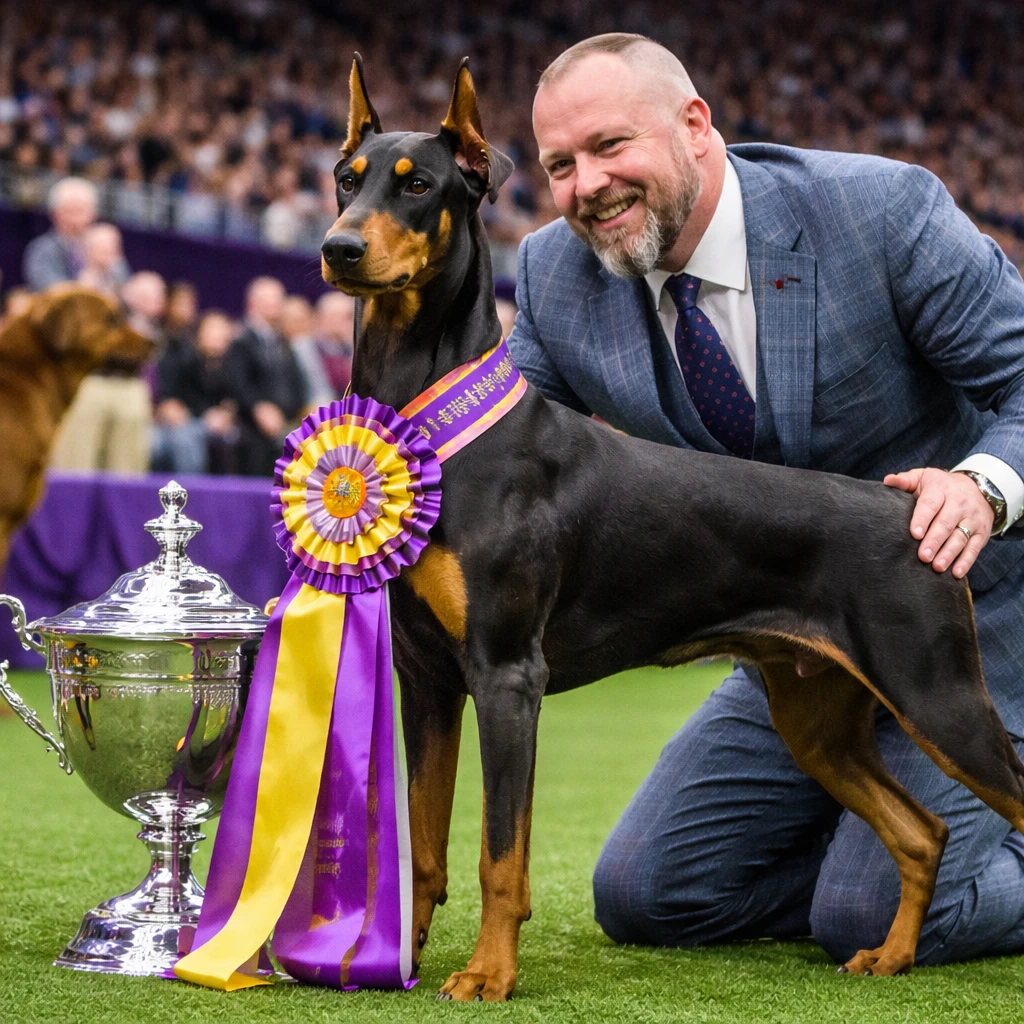

In New York City on Tuesday evening, Penny, a Doberman pinscher, captured the highly coveted best in show honor at the Westminster Kennel Club Dog Show. This victory marked a significant achievement for handler Andy Linton, who previously attained a similar accolade in 1989 with another Doberman named Indy. Linton praised Penny as possibly the finest Doberman he has ever seen, acknowledging the dog's resilience in overcoming health issues while delivering a precise and polished performance before an enthusiastic audience.
Reflecting on his long career nearing retirement, Linton noted that winning at the landmark 150th annual Westminster event was particularly meaningful. Penny's runner-up was a Chesapeake Bay retriever named Cota, whose supporters were equally spirited. While Dobermans have won the best in show five times, retrievers have yet to secure this title, making Cota's strong showing notable and well-received.
During the finals, other contenders included an Afghan hound named Zaida, a Lhasa apso called JJ, a Maltese named Cookie, an old English sheepdog dubbed Graham, and a smooth fox terrier named Wager. David Fitzpatrick, a judge and two-time Westminster-winning handler, described the group as one "that will go down in history." Each competitor was evaluated based on how closely they conformed to the breed standard, competing for trophies, ribbons, and prestige.
Penny stood out not only in the competition but also as a crowd favorite throughout the event. In early rounds held Tuesday afternoon, handlers and dog enthusiasts cheered her calm yet spirited demeanor. Off the ring, Penny gently sought attention, displaying a typically relaxed temperament with bursts of energy reserved for perceived adversaries or wildlife such as squirrels. Co-owner Greg Chan from Toronto characterized Penny as intelligent and demanding but eager to please, motivated especially by treats.
The contest featured around 2,500 dogs representing over 200 breeds. For many who did not reach the final stages, moments of levity and charm endeared them to the audience. Examples include Calaco, a hairless Xoloitzcuintli that carried himself confidently; a Vizsla named Beamer that amusingly climbed into his handler's equipment box; Storm the Newfoundland who engaged the crowd with a playful jump; golden retriever Oliver, whose cheers overwhelmed the announcer; and Lumpy the Pekingese, affectionately celebrated by chanting attendees.
A significant milestone occurred in the semifinals when Millie, a Danish-Swedish farmdog, advanced after the breed became eligible for the competition for the first time this year. Millie outperformed approximately ten peers to secure a spot in the evening round.
Westminster victories frequently favor dogs handled by seasoned professionals or owners with extensive generational experience. Nonetheless, simply qualifying for this premier event represents a considerable accomplishment, particularly for newcomers such as Joseph Carrero and his Neapolitan mastiff, Dezi. Carrero's passion for the Neo grew from youth, culminating in showing the dog upon breeder encouragement. Alongside a demanding full-time occupation, Carrero now breeds and professionally handles his dogs, enduring challenges yet enjoying the experience profoundly. Dezi, weighing 190 pounds, attracted significant attention from visitors.
Another competitor, Natalee Ridenhour, participated with Invictus, a Boerboel originally bred as a formidable guardian dog from South Africa. Ridenhour’s connection to Boerboels shaped personal life changes, including relocating from urban to rural living. Though Invictus did not progress beyond the first round, the dog’s gentle nature captivated many, with numerous strangers taking the time to affectionately engage with the 170-pound canine. Ridenhour reflected on this social interaction as a meaningful success.